
100 Amp Wire Size Chart
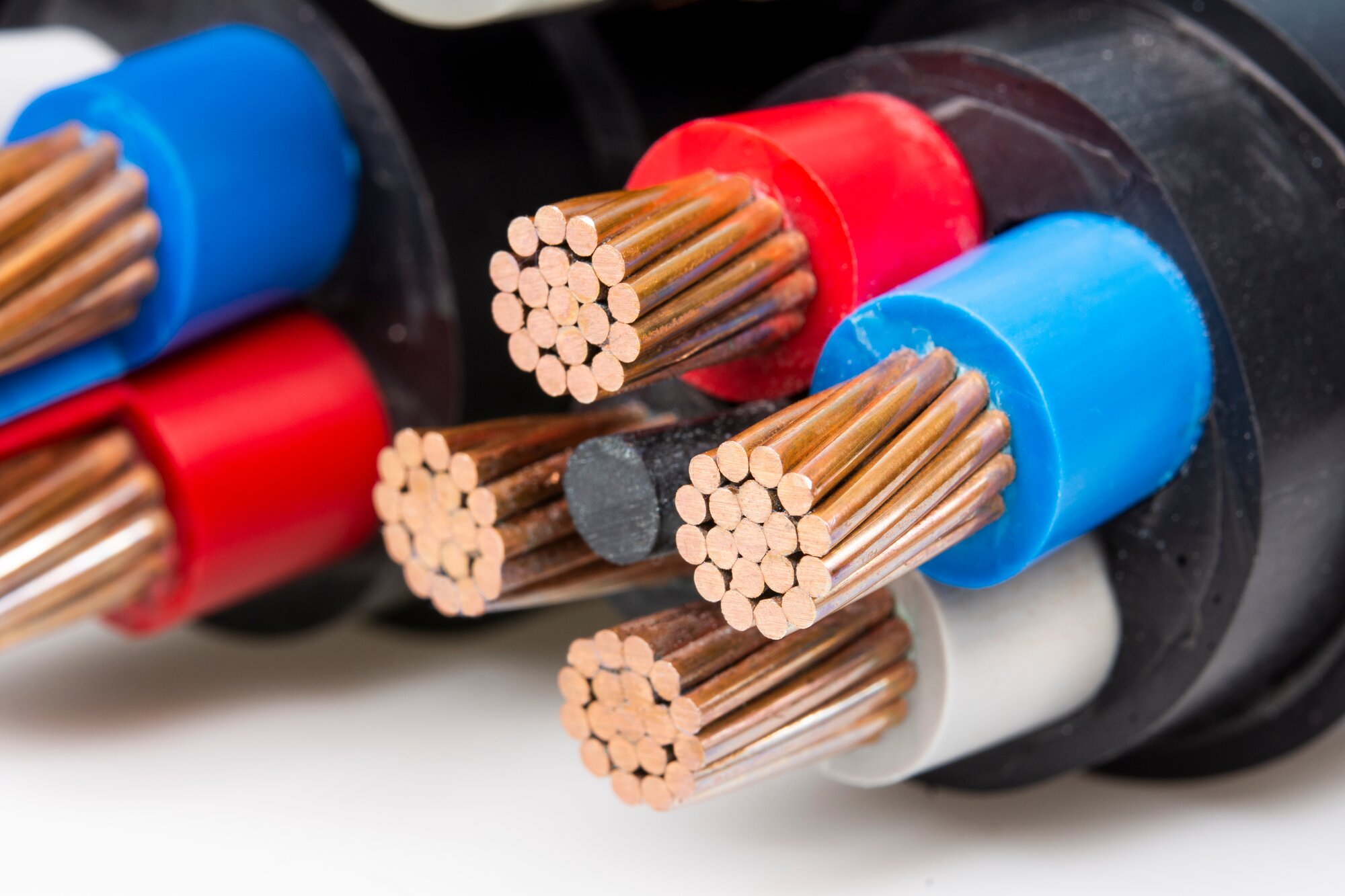
100 amp wire size chart: copper and aluminum options listed.
100 Amp Wire Size Chart
The most common question when wiring a 100 amp service or subpanel is deceptively simple: what size wire? The answer depends on the conductor material, temperature rating, run length, ambient temperature, and number of conductors in the conduit. This 100 amp wire size chart covers the NEC-compliant options for 100 amp feeders and service entrances, so you can select the right conductor for your specific conditions.
This guide is for informational purposes. Always consult local building codes and a licensed professional before beginning work. Local amendments may supersede national standards.
Wire Size Options for 100 Amp Service
The table below covers the most common conductor choices for 100 amp applications. Ampacity values reflect 75°C column in NEC Table 310.16 for copper and aluminum, with three current-carrying conductors in a conduit at 30°C ambient.
| Conductor Material | Wire Size (AWG) | Ampacity (75°C) | Max Conduit Fill (1" PVC) | Application |
|---|---|---|---|---|
| Copper | #4 AWG | 85A | 4 Wires | Main Service Only (83% Rule) |
| Copper | #3 AWG | 100A | 4 Wires | General 100A Subpanel |
| Copper | #2 AWG | 115A* | 3 Wires | Long runs / High Temp |
| Aluminum | #2 AWG | 90A | 4 Wires | Main Service Only (83% Rule) |
| Aluminum | #1 AWG | 100A | 3 Wires | General 100A Subpanel |
| Aluminum | #1/0 AWG | 120A | 2 Wires (Use 1.25") | Long runs / Voltage Drop |
*Note: While #2 Cu is often used for 100A, #3 Cu is the precise 100A match at 75°C. Check your local inspector's preference.
The 83% Rule: Residential Service vs. Subpanels
One of the most important distinctions in the National Electrical Code is NEC 310.12. This allows for a specific "83% reduction" for residential service entrance conductors.
- The Rule: For a single-phase dwelling service (the main wire from the meter to your house), the conductors only need to be rated for 83% of the service rating.
- The Result: $100\text{A} \times 0.83 = 83\text{A}$.
- The Impact: This means you can legally use #4 AWG Copper or #2 AWG Aluminum for a 100A main service entrance, even though those wires would be too small for a 100A subpanel in a garage or shed.
Why the Short Answer Is "2 AWG Copper" — But It Depends
For a standard 100 amp circuit with copper THHN/THWN conductors in conduit at 30°C ambient, #2 AWG copper at 75°C is rated at 95 amps — which is acceptable because NEC 240.4(B) allows the next standard overcurrent device size above the conductor ampacity when the conductor is rated at 800A or less. The next standard size above 95A is 100A, making #2 AWG copper the minimum permissible size.
However, if any derating applies — high ambient temperature, more than three conductors in the conduit, or a long run requiring voltage drop compensation — you need to upsize to #1 AWG or #1/0 AWG copper.
Voltage Drop: The 100-Foot Threshold
Voltage drop is the "invisible" enemy of long-distance wiring. While #2 Copper may be used for heat at 100 amps, it may cause lights to flicker or motors to burn out if the run is too long.
- The 3% Rule: The NEC recommends a maximum voltage drop of 3% for branch circuits.
- Calculated Thresholds (at 240V, 100A Load):
- Up to 100 ft: #2 AWG Copper is excellent.
- 100–150 ft: Consider #1 AWG Copper to stay within the 3% limit.
- 150–250 ft: Upsize to #1/0 AWG Copper or #3/0 AWG Aluminum.
Conduit Type and Wire Sizing
Conduit type does not affect conductor ampacity per NEC Table 310.16. What matters is the number of current-carrying conductors. A 100 amp, 240V circuit has three current-carrying conductors (two hots and a neutral when neutral carries load) — when the neutral does not carry current, it's two conductors, and derating is not required.
For long underground runs in PVC conduit, voltage drop often governs over ampacity. A 200-foot run at 100 amps and 240V with #2 AWG copper will see approximately 3.4V drop — just over the recommended 3% limit. Upsize to #1 AWG for runs over 150 feet.
Grounding Conductor for 100 Amp Service
Per NEC Table 250.122, a 100 amp circuit requires a minimum 8 AWG copper or 6 AWG aluminum equipment grounding conductor (EGC). For the grounding electrode conductor (GEC) at the service entrance, NEC Table 250.66 requires a minimum 8 AWG copper or 6 AWG aluminum when the service entrance conductor is #2 AWG or #1/0 AWG copper.
100 Amp Subpanel vs. Service Entrance
Service entrance: Connects from the utility meter to the main panel. Uses service entrance cable (SE or SER) or individual THHN conductors in conduit. The main panel ground-neutral bond is made here.
Subpanel feeder: Connects from the main panel to a remote subpanel. Requires four conductors: two hots, a neutral, and a separate equipment grounding conductor. Neutral and ground must be separated (not bonded) at the subpanel.
Sources:
- NFPA 70: National Electrical Code (NEC) — The legal authority.
- Copper.org: Residential Electrical Wiring Guide.
Product Compliance and Suitability
The statements contained in this guide are intended for general informational purposes only. Such statements do not constitute a product recommendation or representation as to the appropriateness, accuracy, completeness, correctness, or currentness of the information provided. Information provided in this guide does not replace the use by you of any manufacturer instructions, technical product manual, or other professional resource or adviser available to you. Always read, understand, and follow all manufacturer instructions. Portions of this article were generated in part by ChatGPT.
