


5 Ways Mid-Size Manufacturers Can Operate Leaner

If you run a small manufacturing business that’s growing or manage a mid-size operation with increasing complexity, you’ve likely felt the pressure: More orders. More SKUs. More people. More moving parts.
Lean thinking isn’t just for large plants. It’s for any team that wants to work better. It helps you cut waste, strengthen workflows, and keep operations moving without adding layers of complexity. The goal isn’t more process. It’s more clarity, consistency, and control over the work that keeps your business running.
If you’re looking for lean manufacturing tips to improve how work gets done in your shop, here are five steps to get started.
1. Identify Waste in Your Process
Lean manufacturing begins with understanding what adds value and what does not. In a small operation, waste can go unnoticed.
Common examples include:
- Excess inventory that ties up cash
- Waiting time between production steps
- Rework caused by inconsistent processes
- Unnecessary motion or transportation
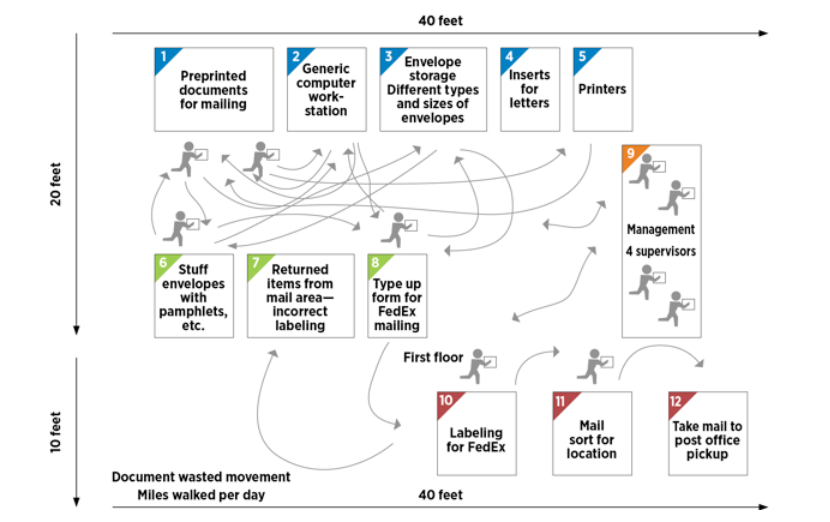
Value stream mapping is one of the most useful lean manufacturing tools for spotting waste. It walks through your production process, from raw materials to finished goods. When you map it out, inefficiencies become easier to spot. Start by identifying one area where delays or waste regularly happen. Fixing one bottleneck at a time can create steady improvement.
2. Start 5S Lean Manufacturing on the Shop Floor
5S is another practical lean method that works well for small and mid-sized manufacturers. It focuses on organizing the workplace through five clear steps: Sort, Set in order, Shine, Standardize, and Sustain.
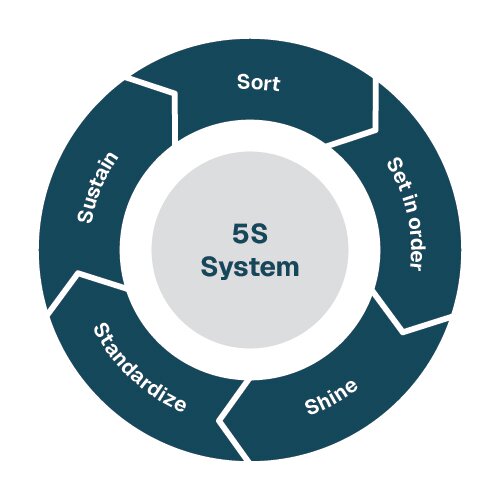
An unorganized workspace can slow production quickly, especially for smaller teams. Misplaced tools, unclear labeling, and inconsistent cleaning routines all lead to unnecessary downtime. With organized workstations, clearly labeled storage areas, and routine cleaning schedules, you reduce wasted motion and improve overall visibility. Standardizing these practices keeps everyone following the same process every shift.
Over time, 5S builds discipline into daily operations and supports broader process improvement efforts. To learn more, visit our guide to the 5S system.
3. Improve Workflow with Lean Production Methods
As your business grows, production flow becomes more important. Lean production methods improve how materials and work move between steps while reducing unnecessary slowdowns. Take a close look at how work moves through your facility. How do materials travel from one station to the next? Are there delays between departments? Are large batch sizes creating long wait times before the next step can begin?
Pull systems, such as simple Kanban boards, help align production with actual demand rather than relying on forecasts. This approach can reduce overproduction and excess inventory. Manufacturing process optimization often starts with smaller batch sizes and better workload balance across workstations. Even modest scheduling adjustments can help shorten lead times and improve predictability.
These principles work best when your workflow supports steady, consistent movement instead of stop-and-start production.
4. Involve Your Team in Continuous Improvement
Process improvement efforts are strongest when your employees are involved. Operators are often the first to notice bottlenecks, recurring defects, or delays because they work closest to the process.
A culture of continuous improvement encourages teams to:
- Identify recurring issues
- Recommend practical process adjustments
- Participate in structured problem-solving efforts
Tools such as the 5 Whys can help uncover the root causes of defects or slowdowns. The 5 Whys is a method for identifying the root cause of a problem by asking “why” typically five times until you reach the underlying issue. This keeps the focus on resolving the underlying issue rather than applying temporary fixes.
Effective implementation also requires clear performance metrics and consistent review. When employees understand expectations related to quality, delivery, and efficiency, they can better align their daily work with operational goals. Sustainable improvement is not a one-time initiative. It is an ongoing commitment to refining how work gets done.
5. Standardize and Measure Your Processes

Consistency matters in small manufacturing businesses. Without standardized procedures, results can vary from shift to shift. Documenting standard work helps define:
- Order of tasks
- Cycle times
- Required tools and materials
- Safety checkpoints
Standardization supports training and reduces variability. It also makes it easier to measure performance and identify areas for improvement. Effective implementation of lean manufacturing principles requires measurement. Track key metrics such as defect rates, lead times, and on-time delivery. Data provides direction for your next improvement effort. Lean manufacturing for small to mid-size businesses is about steady progress, not perfection.
Product Compliance and Suitability
The statements contained in this guide are intended for general informational purposes only. Such statements do not constitute a product recommendation or representation as to the appropriateness, accuracy, completeness, correctness, or currentness of the information provided. Information provided in this guide does not replace the use by you of any manufacturer instructions, technical product manual, or other professional resource or adviser available to you. Always read, understand, and follow all manufacturer instructions. Portions of this article were generated in part by ChatGPT, and edited by a member of the Zoro team.
