


6 Commercial Floor Mats Every Facility Manager Should Have

Enter a commercial building, step inside a warehouse, stand in a restaurant’s kitchen, or walk through a grocery store, and you’ll usually see floor mats at your feet. These products help protect workers, customers, and visitors from slippery surfaces and provide ergonomic comfort for those who stand for many hours at work. This guide will walk you through (no pun intended) the various types of floor mats for the applications you care about.
Floor Matting 101
There are several things you should consider when looking at commercial and industrial floor mats:
- Application
- Mat thickness
- Mat size (length and width)
The first consideration is the application. How and where will you use the floor mat?
- Office or industrial setting
- Smooth or rough floors
- For a few minutes at a time or for several hours
- In wet or dry conditions
- Protection from oil or chemicals, welding sparks, dirt or mud, or water
How you use the mat will be the primary factor in choosing which one to get. However, other considerations are the overall size of the mat, including thickness, length, and width. Thicker mats can absorb more liquids and offer long-term comfort. Long mats are good for areas with a lot of foot traffic, such as a building entrance, or places where people will be walking around a lot, such as fabrication equipment in a manufacturing facility. A small mat can be used for places where someone stands for longer periods of time, such as a standing desk or a commercial kitchen prep station.
The Different Types of Commercial and Industrial Floor Mats
Anti-Fatigue Mats
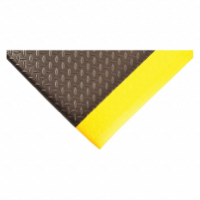
When your employees will be spending a lot of time in one place, the best anti-fatigue mats effectively relieve stress on their legs and feet. With a squishy, layered design and core that controls compression, anti-fatigue mats work by spreading weight across the mat and stimulating muscles in the feet, back, and legs, which in turn improves circulation and reduces fatigue. You’ll find anti-fatigue mats in many industrial and commercial settings, including restaurant kitchens, behind bars and retail counters, at lab or manufacturing equipment stations, and in office spaces.
Bacteria and Dust Control Mats
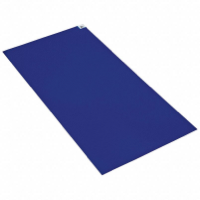
Small dust particles can damage sensitive equipment. Bacteria can contaminate a sterile research lab. Sensitive environments, such as medical and scientific labs and clean rooms, need special mats that automatically remove harmful elements from the soles of people’s shoes. Install bacteria and dust control mats at the entrances to sensitive areas to maintain a safe and sterile work environment.
Conductive and Non-Conductive Mats
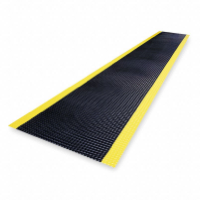
Also known as anti-static mats, these protect workers and sensitive equipment from electricity. When a person with built-up static electricity walks across a conductive floor mat, the charge is absorbed, preventing the static from damaging delicate electronics. Non-conductive floor mats insulate workers from high-voltage equipment, preventing injury from dangerous shocks.
Drainage Mats
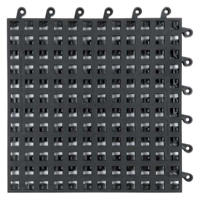
For wet conditions, drainage mats allow spilled and sprayed liquids to pass through holes or slots to the floor. As the mats channel the water to the floor, textured surfaces prevent employees from slipping and falling. These are often found in restaurants, bars, commercial kitchens, and food-processing facilities. Some drainage mats also have anti-fatigue features, providing both comfort and safety.
Entrance Mats

Prevent dirt, mud, slush, snow, grease, oils, and more from being tracked into your building with specially designed entrance mats. Most entrance mats have a raised waffle, diamond ridge, or ribbed texture or design to separate dirt and other particles from shoes. Some entrance mats have a raised border that traps water and keeps floors dry, reducing slips and falls. Other mats feature a tough fabric that scrapes debris off footwear. Sometimes two types of mats will be used, one to scrape dirt off and one to catch water.
Welding Mats
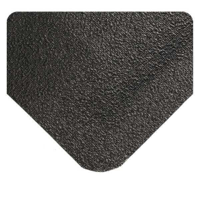
In any place where employees are cutting, grinding, brazing, or welding metal, welding mats are used to repel sparks and hot metal shards. Welding mats are important safety equipment because they prevent those hot particles from burning floors or starting fires. Like drainage mats, many welding mats are designed to reduce fatigue.
Floor Mats Aren’t Just for Looks
The primary duty of any commercial floor mat is to keep employees and visitors safe. From the time they walk through the front door to the time they walk out, people will walk all over them, but that’s what they’re there for. The best floor mats are almost completely ignored by people using them, and that’s how you’ll know a floor mat is doing its job.
Product Compliance and Suitability
The product statements contained in this guide are intended for general informational purposes only. Such product statements do not constitute a product recommendation or representation as to the appropriateness, accuracy, completeness, correctness, or currentness of the information provided. Information provided in this guide does not replace the use by you of any manufacturer instructions, technical product manual, or other professional resource or adviser available to you. Always read, understand, and follow all manufacturer instructions.
