


7 Tips for Preventing Slips and Falls in Foodservice Environments
Running a commercial kitchen means more than serving great food; you’re also responsible for keeping your team safe in a fast-paced, high-risk environment. Slip, trip, and fall hazards are among the most common safety issues in foodservice, but they’re also some of the most preventable. With the right approach and tools in place, you can help reduce risks, protect your staff, and keep your operations running smoothly. Here are seven practical ways to prevent slips and falls in commercial kitchens.
1. Use Non-Slip Mats in High-Traffic Areas
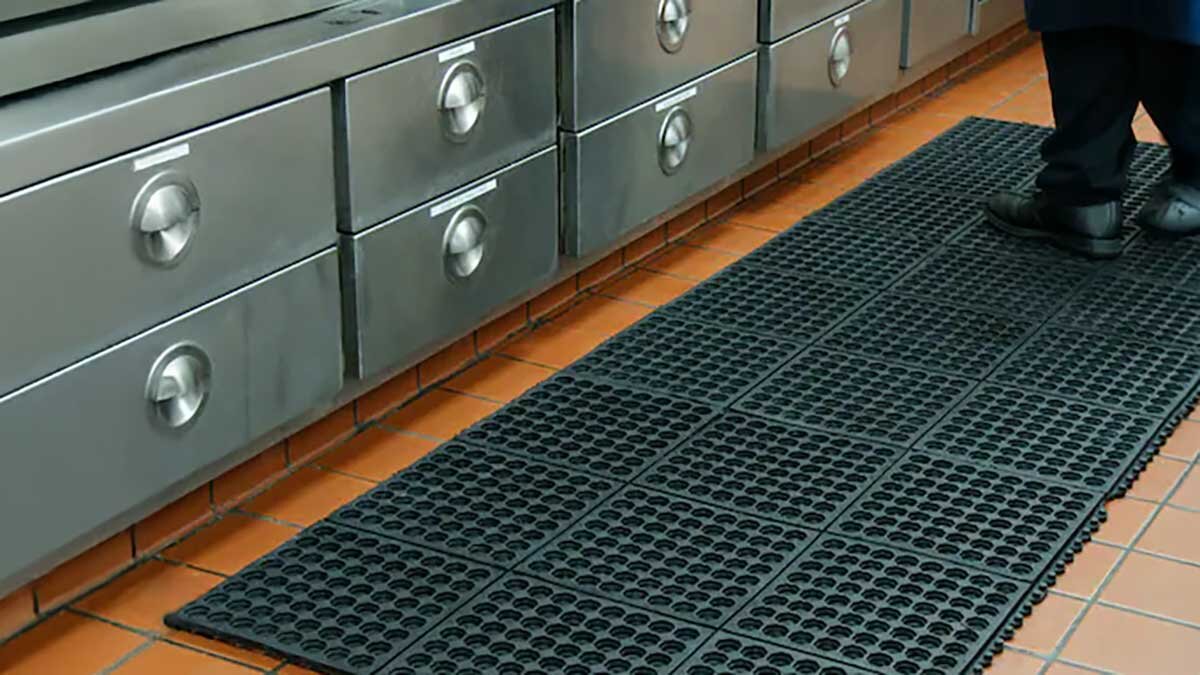
Water, grease, and food scraps are part of daily life in a kitchen. But without the right flooring, these can quickly become slip, trip, and fall hazards. Placing non-slip mats in busy zones (like food prep areas, dishwashing stations, and service lines) can provide better footing and help reduce injury risks. Look for mats designed for commercial kitchens that resist oils and are easy to clean.
2. Make Spill Response a Shared Responsibility
Spills happen, but they shouldn’t stay on the floor for long. Train your team to act fast when something hits the ground. That means every staff member, not just the cleaning crew. Keep “wet floor” signs in easy reach, and consider setting clear protocols for how to treat falls in the kitchen and how to report or clean up spills right away.
3. Require Slip-Resistant Footwear
One of the easiest ways to prevent falls in the kitchen is to make slip-resistant shoes part of the dress code. These shoes are designed to improve traction on wet or greasy surfaces and can offer a simple yet effective layer of protection. When thinking about what type of shoe helps to prevent falls in the kitchen, look for options labeled specifically for foodservice or hospitality work.
4. Keep Walkways Clear
In a busy kitchen, cluttered aisles and walkways are more than just an inconvenience; they’re a safety hazard. Encourage your team to return carts, bins, and tools to their proper places. This not only prevents trips but also supports a smoother workflow.
5. Improve Lighting in Work Zones
Dim corners, shadows under counters, and poorly lit dish stations can hide slippery spots or uneven flooring. Upgrading lighting in these areas helps your team identify hazards before they become incidents. Bright, focused lighting also improves visibility during peak hours when movement is constant.
6. Inspect Flooring and Mats Regularly
Establish a weekly routine to walk through the kitchen and check for hazards. Look for curled mat edges, cracked tiles, pooling water, or anything else that might cause someone to lose their footing. Early fixes can prevent bigger problems later.
7. Train and Refresh Often
Safety shouldn’t be a one-time conversation. New employees should learn the basics of restaurant safety tips during onboarding, including ways to prevent falls in the kitchen. But don’t stop there. Use team meetings or pre-shift huddles to remind your staff about proper procedures and what precautions they should take to prevent slipping in the kitchen.
Final Thoughts
Slip, trip, and fall hazards in commercial kitchens don’t just affect your people; they can disrupt service, raise costs, and impact morale. But with a few smart changes and ongoing attention, it’s possible to build a safer, more reliable workspace for everyone.
Whether you're managing a small café or a large commercial kitchen, safety matters. If you’re looking for solutions like slip-resistant flooring or commercial kitchen equipment, Zoro offers a wide range of products to support your goals.
Product Compliance and Suitability
The statements contained in this guide are intended for general informational purposes only. Such statements do not constitute a product recommendation or representation as to the appropriateness, accuracy, completeness, correctness, or currentness of the information provided. Information provided in this guide does not replace the use by you of any manufacturer instructions, technical product manual, or other professional resource or adviser available to you. Always read, understand, and follow all manufacturer instructions. Portions of this article were generated in part by ChatGPT, and edited by a member of the Zoro team.
