


A Guide to Programmable Logic Controller Basics for Small Business
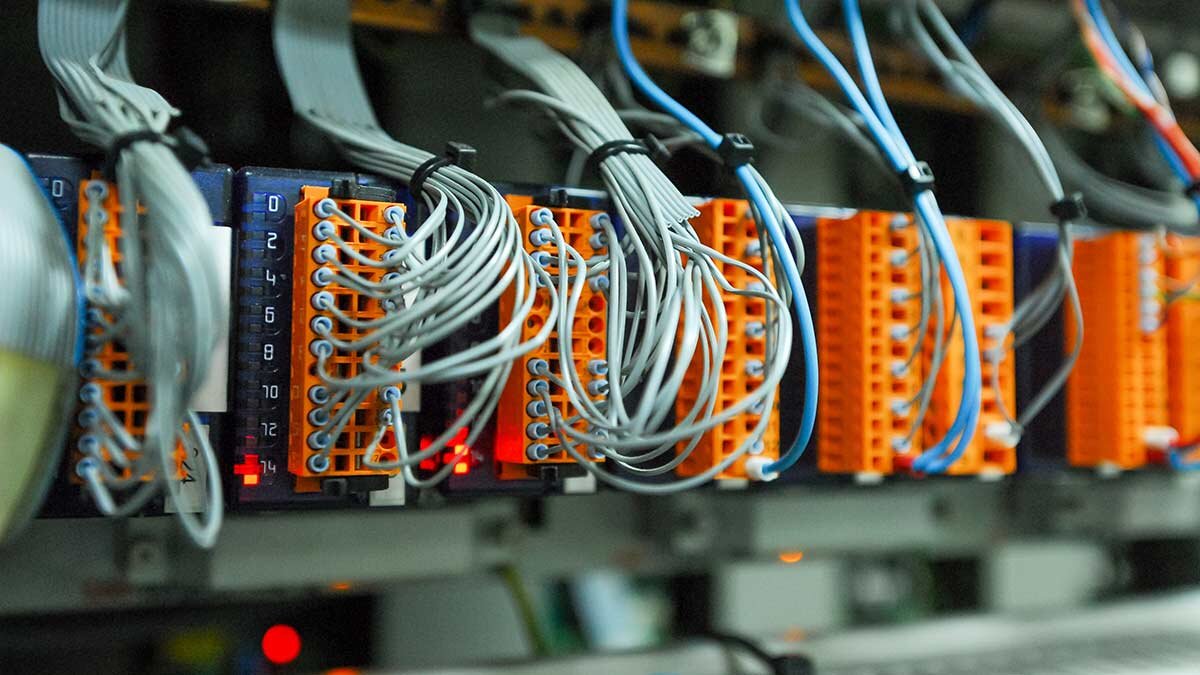
Running a small business in construction, manufacturing, or facilities management means you’re constantly balancing people, equipment, and processes. You don’t have time for guesswork—you need tools that help keep things moving without adding complexity. That’s where understanding PLCs (Programmable Logic Controllers) comes in. A PLC is a rugged industrial computer built to control machines and processes with consistency and reliability.
In this guide, you’ll learn more about how PLCs work, why they’re used in industrial automation, the different types of PLC systems, and the PLC basics every beginner should know.
Quick Summary
A PLC (Programmable Logic Controller) is an industrial computer designed to automate machines and processes. It works in a continuous scan cycle of reading inputs, applying logic, and sending outputs. Small business owners use PLCs in industrial automation to simplify tasks, improve efficiency, and reduce errors. Common types of PLC systems include compact, modular, and rack-mounted PLCs, with newer formats like soft and distributed PLCs also available.
How a PLC Works
A PLC is built to withstand harsh environments while reliably controlling equipment. It works in a continuous loop known as the scan cycle.
- Input—The PLC reads signals from devices such as sensors and switches.
- Process—It applies programmed logic, often written in user-friendly languages like Ladder Logic, Function Block Diagrams, or Structured Text.
- Output—It sends signals to equipment, such as motors, valves, or conveyors.
This cycle happens thousands of times per second, which makes PLCs consistent and reliable in industrial automation.
PLC in Industrial Automation: Why It Matters
For small business owners, PLCs can be especially valuable because they:
- Replace bulky relay-based systems with programmable alternatives.
- Deliver reliability in tough environments with dust, vibration, or extreme temperatures.
- Improve efficiency by automating repetitive tasks and reducing human error.
- Enable real-time monitoring and adjustments to keep operations moving smoothly.
Types of PLC Systems
There are several types of PLC systems, and choosing one depends on the complexity of your operation, available space, and future needs.
Compact or Fixed PLCs
These are all-in-one units with built-in inputs and outputs. They’re ideal for small, straightforward applications that don’t need expansion. Compact PLCs are space-saving and cost-effective, making them popular for simpler automation tasks.
Modular PLCs
Modular PLCs are built from individual components—such as the CPU, power supply, and I/O modules—that can be swapped or expanded. This setup makes them flexible and scalable. A key advantage is fault isolation: if one module fails, the rest of the system continues running, reducing downtime.
Rack-Mounted PLCs
Rack-mounted PLCs are a subtype of modular PLCs, designed for large, complex industrial operations. Modules are installed into a rack, and the backplane manages communication. Rack-mounted systems handle high input/output counts and are well-suited for businesses managing multiple processes at once.
Other Formats: Soft and Distributed PLCs
Beyond the three main categories, modern options also include:
- Soft PLCs—Software-based PLCs that run on standard PCs, offering flexibility where hardware investment is limited.
- Distributed PLCs—Systems where input/output devices are spread across a network, reducing wiring needs and supporting wide-spread operations.
PLC Basics for Beginners
Here’s the simplest way to understand PLC basics for beginners.
- Inputs: Devices like sensors that send signals into the PLC
- Program/Logic: Pre-coded instructions that process those inputs
- Outputs: The resulting actions, such as turning on a motor, opening a valve, or triggering an alarm
This input → logic → output loop is the foundation of every PLC and the backbone of industrial automation.
Final Takeaway
So, what is PLC? It’s a specialized industrial controller that continuously cycles through inputs, logic, and outputs to keep processes running smoothly. By understanding how a PLC works and the types of PLC systems, small business owners can confidently identify where automation can simplify operations, cut downtime, and keep teams focused on the work that matters most.
FAQs
What is PLC in simple terms?
A PLC is a rugged industrial computer used to control machines and processes. It reads inputs (like sensors), processes logic, and sends outputs (like turning on a motor).
How does a PLC work step by step?
A PLC works in a repeating cycle called the scan cycle.
- It reads input signals from devices.
- It applies programmed logic to those signals.
- It sends output commands to machines.
This happens thousands of times per second, making PLCs reliable for automation.
Why are PLCs used in industrial automation?
PLCs are used in industrial automation because they can withstand harsh environments, reduce the need for manual control, and keep processes consistent. They’re found in factories, warehouses, and facilities where dependable machine control is needed.
What are the types of PLC systems?
There are several types of PLC systems.
- Compact or fixed PLCs—small, all-in-one units for simple tasks
- Modular PLCs—expandable systems with add-on modules
- Rack-mounted PLCs—large systems for complex operations
- Soft and distributed PLCs—software- or network-based solutions for flexible setups
What are PLC basics for beginners?
The basics of a PLC are simple:
- Inputs (data from devices)
- Logic/program (the instructions)
- Outputs (the actions carried out)
This loop is the foundation of PLC operation and automation.
Can small businesses benefit from PLCs?
Yes. Small businesses in construction, manufacturing, or maintenance can use PLCs to simplify operations, reduce downtime, and manage repetitive tasks without requiring large-scale automation systems.
Product Compliance and Suitability
The statements contained in this guide are intended for general informational purposes only. Such statements do not constitute a product recommendation or representation as to the appropriateness, accuracy, completeness, correctness, or currentness of the information provided. Information provided in this guide does not replace the use by you of any manufacturer instructions, technical product manual, or other professional resource or adviser available to you. Always read, understand, and follow all manufacturer instructions. Portions of this article were generated in part by ChatGPT, and edited by a member of the Zoro team.
