
Air Hose Connector Sizes
Air hose connector sizes: compare 1/4 in, 3/8 in, and 1/2 in.
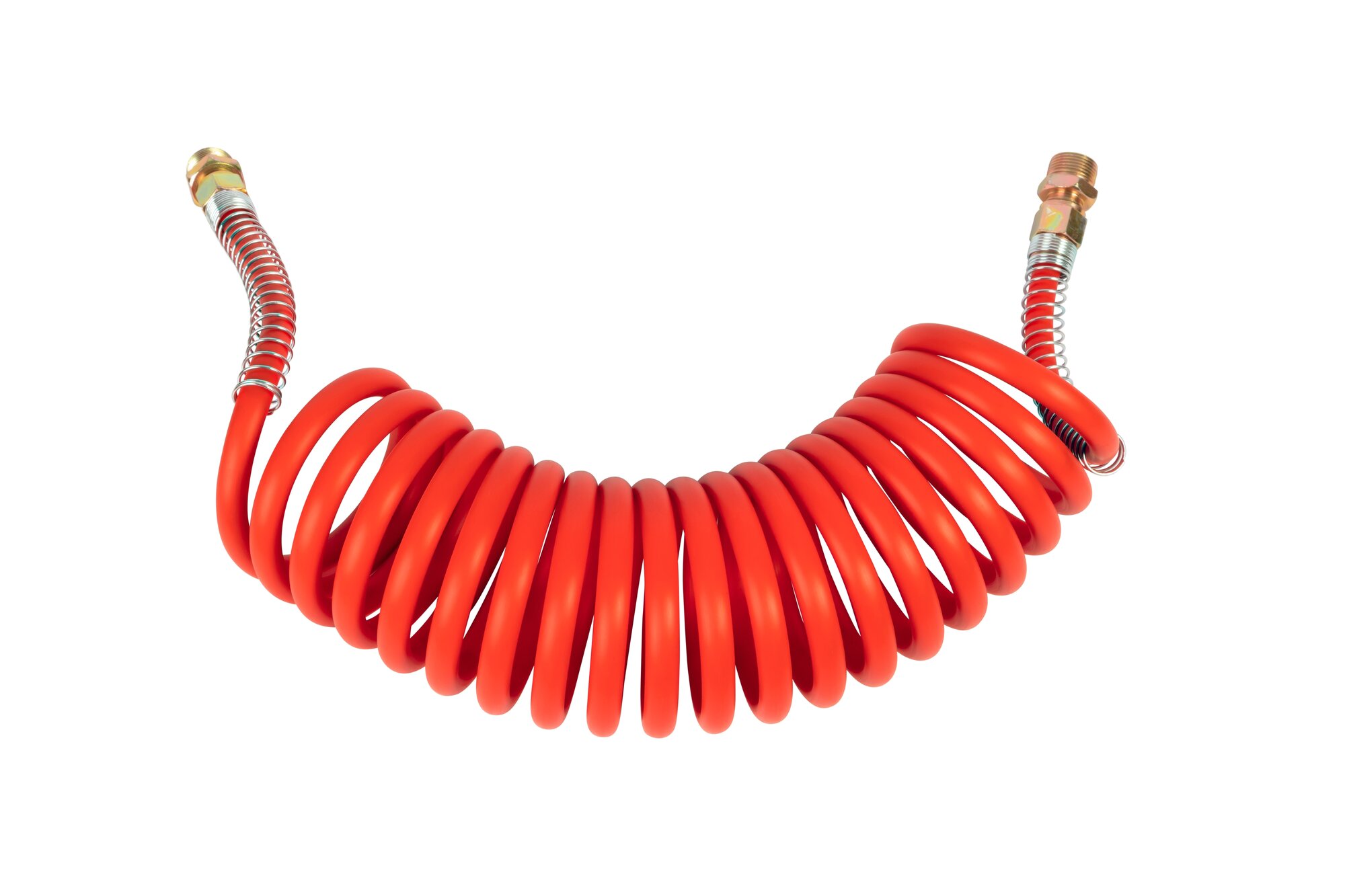
Air Hose Connector Sizes: What Buyers Need to Know Before Ordering
When building out or maintaining a compressed air system, connector size is one of those specs that's easy to get wrong — and frustrating to fix after the fact. The wrong size means restricted airflow, poor tool performance, or fittings that simply won't connect. Getting it right upfront saves time, reduces waste, and keeps your operation running without unnecessary interruptions.
Here's a practical breakdown of air hose connector sizes and how to choose the right one for your application.
| Connector Size | Thread Type | CFM Capacity | Best For |
|---|---|---|---|
| 1/4 in | NPT | Moderate | Nailers, inflators, blow guns |
| 3/8 in | NPT | High | Impact wrenches, sanders, automotive |
| 1/2 in | NPT | Very high | Sandblasters, heavy industrial |
What "Connector Size" Actually Refers To
Air hose connector size typically refers to two distinct measurements that are often confused:
1. Thread size — the diameter and thread pattern used to screw the connector onto a hose, tool, or compressor port. In the U.S., this is almost always NPT (National Pipe Thread), with 1/4 in NPT being the most common for light to medium-duty applications and 3/8 in NPT being standard for higher-flow setups.
2. Body size — the overall physical size of the coupler or plug, which affects how much air can flow through the connector at any given moment. Body size and thread size are not always the same, which is one of the most common sources of confusion when ordering.
Understanding both measurements — and how they interact — is essential before placing any bulk order.
The Most Common Air Hose Connector Sizes
1/4 in Connectors
The 1/4 in connector is the most widely used size in light to medium-duty commercial environments. It's the standard for finish carpentry tools, nailers, inflators, blow guns, and other tools with relatively low CFM demands. Most industrial-style (Type D) couplers and plugs in the U.S. are sold in 1/4 in NPT thread size as a default.
For shops running low-draw tools across multiple stations, 1/4 in connectors offer a cost-effective, widely compatible solution. The trade-off is airflow capacity — under high-demand conditions, a 1/4 in connector becomes a bottleneck.
Best for: Nailers, inflators, blow guns, light assembly tools
3/8 in Connectors
The 3/8 in connector delivers meaningfully more airflow than a 1/4 in, making it the preferred choice for impact wrenches, sanders, grinders, and other high-CFM tools. Automotive shops and industrial facilities running demanding pneumatic equipment typically standardize on 3/8 in connectors for this reason.
It's worth noting that a 3/8 in hose paired with a 1/4 in connector will still restrict airflow at the connection point. If you're running 3/8 in hose throughout your system, your connectors should match to get the full benefit of the larger hose diameter.
Best for: Impact wrenches, DA sanders, grinders, automotive and industrial use
1/2 in and Large-Bore Connectors
For the highest-demand applications — sandblasting equipment, large spray systems, heavy production tools — 1/2 in and large-bore connectors provide maximum airflow with minimal restriction. These are less common in general shop environments but are the right call when running equipment that pushes the limits of a standard compressed air system.
If your tools or equipment spec sheets call for high CFM delivery, don't let undersized connectors be the weak link in your setup.
Best for: Sandblasters, high-volume spray systems, heavy industrial equipment
Key Considerations Before You Buy
Match connectors to your hose ID. Your connector size should align with your hose's inner diameter. Mismatching the two — even by one size — creates a restriction point that limits performance across your entire air system.
Standardize across your facility. Mixed connector sizes on the shop floor mean adapters everywhere, slower tool changes, and more room for error. Pick a size standard that works for your most demanding tools and build around it.
Don't overlook thread sealant. NPT threads rely on a slight taper to seal under pressure, but most applications still benefit from thread tape or sealant to prevent slow leaks. This is especially important in high-pressure or high-cycle environments.
Verify specs on both ends. Check the connector size required at the tool, at the hose, and at the compressor port. All three need to be compatible for your system to perform as intended.
For most light to medium-duty shops, 1/4 in connectors are the practical standard. For automotive, industrial, or high-CFM applications, 3/8 in connectors are the right move. Size up when in doubt — a slightly larger connector never hurts performance, but an undersized one always will.
Product Compliance and Suitability
The statements contained in this guide are intended for general informational purposes only. Such statements do not constitute a product recommendation or representation as to the appropriateness, accuracy, completeness, correctness, or currentness of the information provided. Information provided in this guide does not replace the use by you of any manufacturer instructions, technical product manual, or other professional resource or adviser available to you. Always read, understand, and follow all manufacturer instructions. Portions of this article were generated in part by ChatGPT.
