
Air Hose Size Chart
Air Hose Size Chart: CFM, PSI & Pressure Drop Guide for Professionals
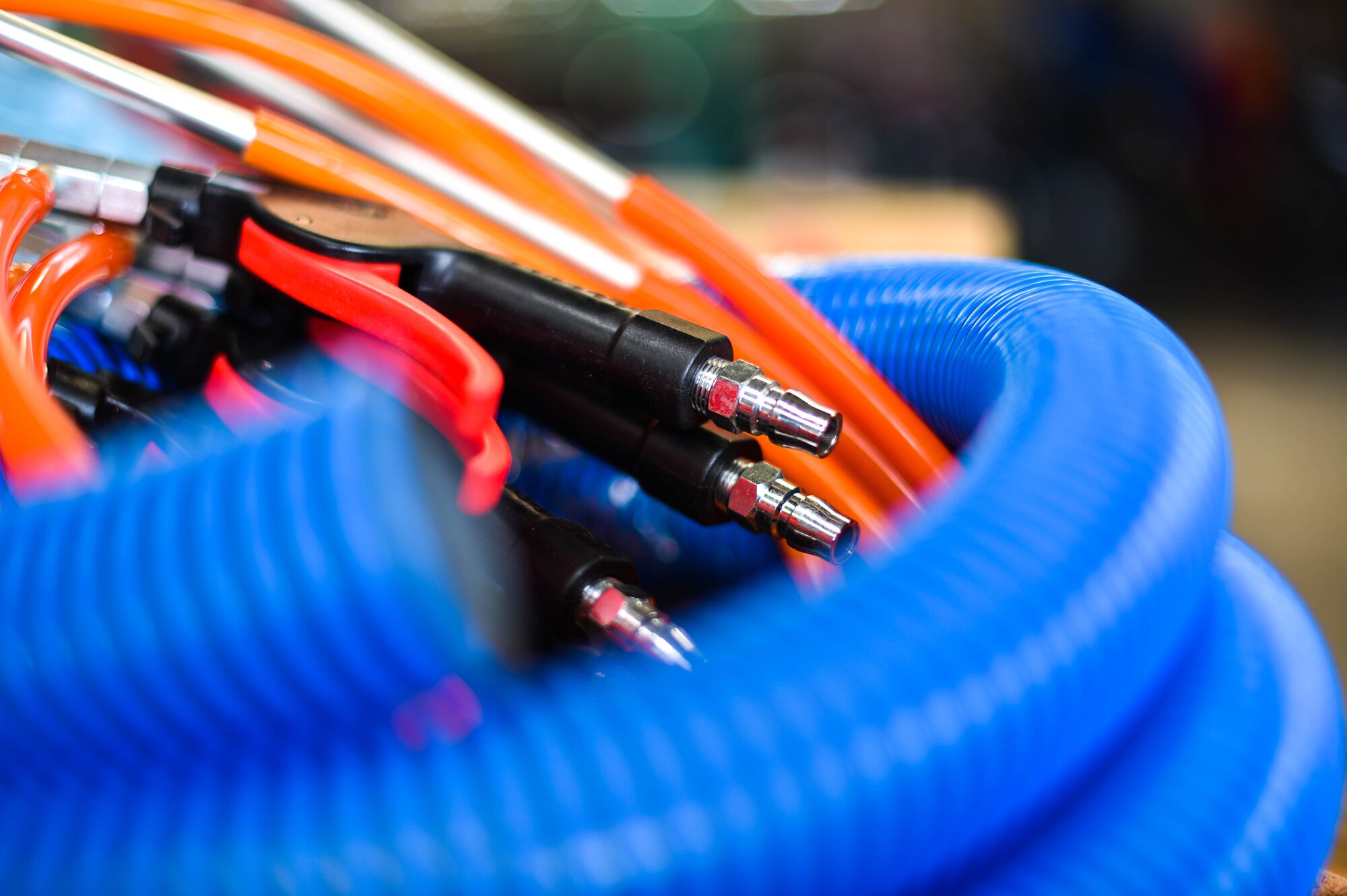
Air Hose Size Chart: Getting the Most Out of Your Tools
If you’ve ever been halfway through an impact job and wondered why your wrench just doesn't have the "oomph" it used to, the culprit usually isn't the tool. It’s the air hose.
For a small business owner—whether you’re running a three-bay auto shop, a cabinetry business, or a mobile repair unit—the air hose is the lifeblood of your operation. Choosing the right size isn’t just about making sure the ends screw together; it’s about ensuring that the pressure at your compressor actually reaches the nozzle of your tool.
In this guide, we’ll break down the specs you need to keep your shop running efficiently, from Internal Diameter (ID) to the "pressure drop" that kills productivity.
Air Hose Size & Performance Chart
The following table outlines the typical capabilities of standard air hose diameters. As a reminder, these are based on standard shop pressures (90–125 PSI).
.
| Hose Internal Diameter (ID) | Recommended Max CFM | Common Professional Applications |
|---|---|---|
| 1/4" (6.35mm) | 20 - 25 CFM | Trim nailers, air brushes, tire inflators, blow guns |
| 5/16" (8mm) | 25 - 35 CFM | Staplers, light-duty pneumatic staplers, hobbyist tools |
| 3/8" (9.5mm) | 35 - 50 CFM | Impact wrenches (1/2"), grinders, framing nailers, spray guns |
| 1/2" (12.7mm) | 50 - 75+ CFM | Heavy construction (jackhammers), sandblasting, 1" impacts |
Understanding the "Big Two": 1/4" vs. 3/8"
In most professional settings, you’re choosing between a 1/4-inch and a 3/8-inch Internal Diameter (ID) hose. While 1/8 of an inch might seem negligible, it represents a massive difference in the volume of air (CFM) the hose can carry.
- 1/4" ID Hoses: These are lightweight and highly portable. They are the "everyday" choice for finish carpenters using trim nailers or technicians using blow guns and small air brushes.
- 3/8" ID Hoses: This is the industry standard for general shop work. It carries enough volume to power 1/2" impact wrenches, sanders, and framing nailers without starving the motor.
The Silent Performance Killer: Pressure Drop
One of the most common mistakes we see is running a long 1/4" hose across a large shop floor. Every foot of hose creates friction. The longer the air has to travel, the more pressure it loses before it hits the tool. This is called Pressure Drop.
Air Hose Pressure Drop Chart
| Air Flow (CFM) | 1/4" Hose (50ft) | 3/8" Hose (50ft) | 1/2" Hose (50ft) | 3/4" Hose (50ft) |
|---|---|---|---|---|
| 5 CFM (Brad Nailer) | 1.5 PSI | 0.2 PSI | < 0.1 PSI | 0.0 PSI |
| 10 CFM (Drill/Grinder) | 6.2 PSI | 0.9 PSI | 0.2 PSI | < 0.1 PSI |
| 15 CFM (Impact Wrench) | 13.5 PSI | 2.0 PSI | 0.5 PSI | 0.1 PSI |
| 20 CFM (Framing Nailer) | 24.0 PSI | 3.6 PSI | 0.9 PSI | 0.2 PSI |
| 25 CFM (Spray Gun) | 36.0 PSI | 5.5 PSI | 1.4 PSI | 0.3 PSI |
| 30 CFM (Heavy Sandblasting) | 51.0 PSI | 7.9 PSI | 2.0 PSI | 0.4 PSI |
If your compressor is set to 100 PSI, but you’re running it through 100 feet of 1/4" hose, you might only be getting 70 PSI at the tool. That’s a 30% loss in power.
| Hose ID | Length: 25 ft | Length: 50 ft | Length: 100 ft |
|---|---|---|---|
| 1/4" | ~2-3 PSI Drop | ~5-7 PSI Drop | ~12-15+ PSI Drop |
| 3/8" | ~0.5-1 PSI Drop | ~1.5-2 PSI Drop | ~3-4 PSI Drop |
| 1/2" | Negligible | ~0.5 PSI Drop | ~1 PSI Drop |
Note: Values are estimates based on a standard 10 CFM tool requirement.
The Professional Solution: If you need to reach across a large shop, run a 1/2" or 3/4" hard-line (copper or aluminum) along the wall and drop down to a short 3/8" or 1/4" "whip" hose at the workstation.
Air Hose Fitting and Thread Size Chart (NPT)
This is where things can get a bit confusing for new buyers. The size of the hose (the ID) is often different from the size of the fitting (the thread).
In North America, we use NPT (National Pipe Thread). Most 1/4" and 3/8" hoses use 1/4" NPT fittings. Why? Because most air tools are manufactured with a 1/4" inlet.
| Hose ID | Common Fitting Size (NPT) | Tool Inlet Size |
|---|---|---|
| 1/4" | 1/4" NPT | Standard (Small tools) |
| 3/8" | 1/4" NPT | Standard (Most shop tools) |
| 3/8" | 3/8" NPT | High-Flow (Heavy impacts) |
| 1/2" | 3/8" or 1/2" NPT | Industrial / High-Volume |
Material Matters: Choosing the Right "Body"
As a small business owner, you aren't just looking for specs; you’re looking for durability. A hose that kinks every five minutes is a hose that costs you money in lost time.
- Rubber: The "Old Faithful." It’s heavy and can be a pain to coil, but it stays flexible in freezing temperatures and won't fly around the shop like a snake if a fitting fails.
- Polyurethane: The "Roofer's Choice." It’s incredibly light and slick, so it won't snag on shingles or furniture. However, it has a "memory," meaning it wants to stay coiled up.
- Hybrid (Polymer): The "Modern Standard." These hoses (often seen in neon green or blue) offer the flexibility of rubber with the weight of polyurethane. They lie flat the moment you drop them.
Summary Checklist for Your Next Purchase
- Check your tool’s CFM requirement. (Usually stamped on the tool or in the manual).
- Measure your distance. If you're going over 50 feet, step up one size in diameter.
- Choose your environment. Cold shops need rubber or hybrid; mobile jobsites benefit from polyurethane.
Check your fittings. Ensure you have the right NPT size and coupler style (Industrial, Automotive, or ARO) to match your existing setup.
Product Compliance and Suitability
The product statements contained in this guide are intended for general informational purposes only. Such product statements do not constitute a product recommendation or representation as to the appropriateness, accuracy, completeness, correctness, or currentness of the information provided. Information provided in this guide does not replace the use by you of any manufacturer instructions, technical product manual, or other professional resource or adviser available to you. Always read, understand, and follow all manufacturer instructions.
