
Blue vs Red Loctite
Compare Blue and Red Loctite threadlockers before your project.
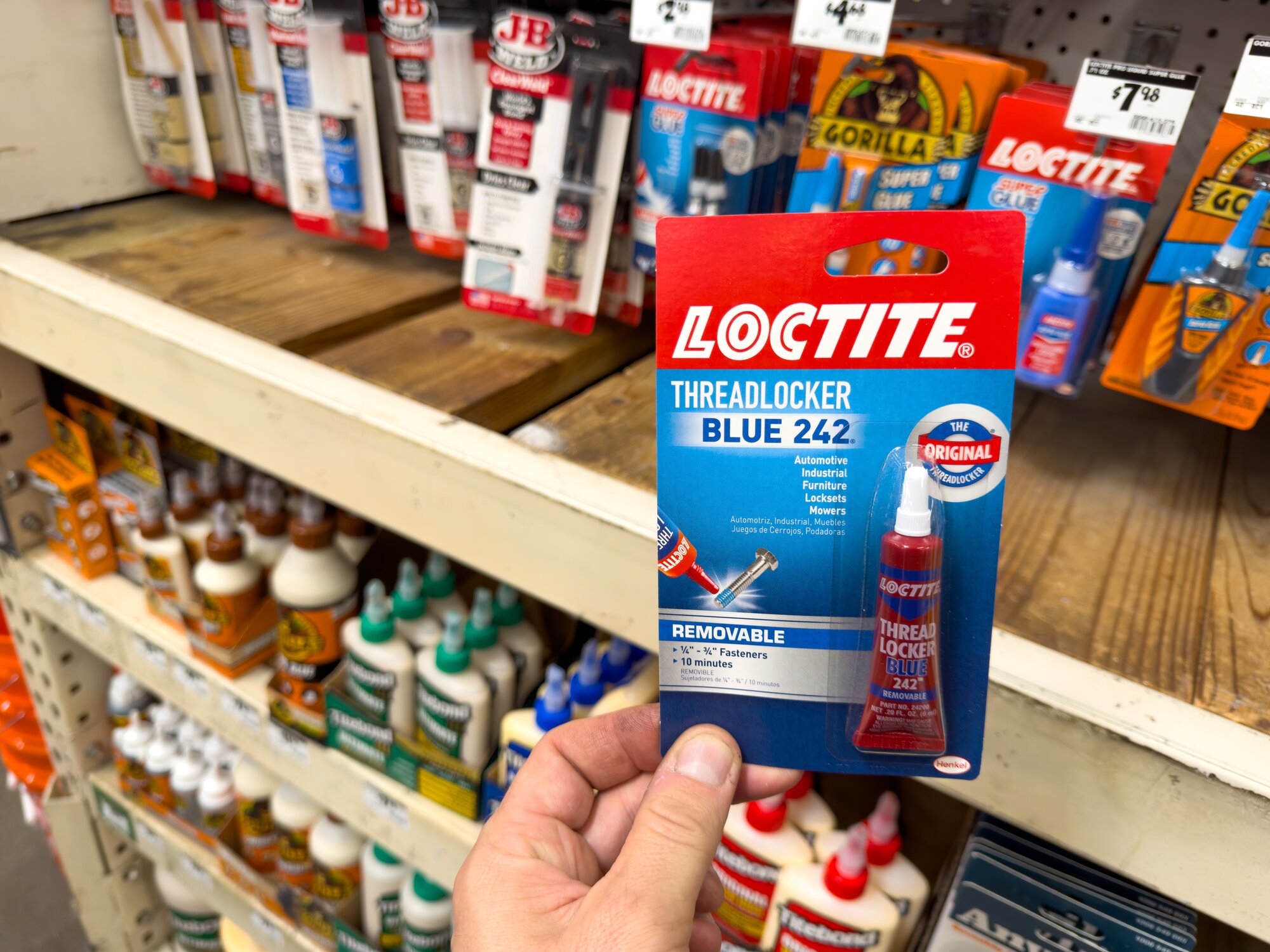
Blue vs Red Loctite
If you have ever worked on a car, a piece of industrial machinery, or even a lawnmower, you know that vibration is the enemy of threaded fasteners. Over time, the constant shaking causes bolts to back out, leading to mechanical failure. To prevent this, engineers and mechanics rely on anaerobic threadlockers.
The two most famous variants are Blue Loctite and Red Loctite. While both keep your hardware firmly in place, confusing the two can turn a simple future repair into a nightmare.
Let’s dive into the core differences, strength levels, removal processes, and ideal applications for Blue versus Red Loctite.
| Feature | Blue Loctite (e.g., 242/243) | Red Loctite (e.g., 271/277) |
|---|---|---|
| Intended Permanence | Removable / Serviceable | Permanent / Heavy Duty |
| Liquid Color | Blue | Red |
| Disassembly Method | Standard hand tools | Localized heat (482°F) + tools |
| Vibration Resistance | Medium to High | Maximum |
| Common Bolt Sizes | 1/4" to 3/4" | Up to 1" + |
The Golden Rule of Loctite Packaging
Before breaking down the technical specs, there is a classic trap that trips up beginners. Almost all industrial Loctite bottles are red.
To know which formula you are holding, look at the label text and color bars on the front of the bottle, or squeeze out a tiny drop. The color of the actual liquid inside indicates its type: Blue Loctite is a blue liquid, and Red Loctite is a red liquid.
Blue Loctite: Medium Strength & Removable
Blue Loctite (most commonly sold as Loctite 242 or the oil-tolerant Loctite 243) is a medium-strength anaerobic threadlocker designed to be semi-permanent. It secures hardware against vibrational loosening but allows for disassembly down the road.
Key Characteristics of Blue Loctite:
- Strength: Medium
- Fastener Size: Ideal for bolts ranging from 1/4" to 3/4" (6 mm to 19 mm) in diameter.
- Removal Method: Standard hand tools (wrenches and sockets) require moderate effort to break the bond. No specialized equipment or heat is needed.
Best Used For:
Blue Loctite is the go-to compound for components that require routine servicing, adjustment, or inspection. Common applications include:
- Valve covers and oil pan bolts
- Water pumps and alternator mounts
- Motorcycle components and chassis bolts
- Calibration equipment and perimeter machine guards
Red Loctite: High Strength & Permanent
Red Loctite (frequently sold as Loctite 271 or the heavy-duty Loctite 277) is a high-strength, permanent adhesive. It is engineered for critical joints that are subjected to brutal environments, heavy shock loads, and extreme vibration, where a loose bolt could mean catastrophic damage.
Key Characteristics of Red Loctite:
- Strength: High / Permanent
- Fastener Size: Recommended for larger fasteners up to 1" (25 mm) or applications requiring a maximum hold.
- Removal Method: Requires localized heat. To break the cured chemical cross-links, you must heat the area to roughly 482°F (250°C) using a blowtorch or heat gun before unbolting it with heavy hand tools.
Best Used For:
Red Loctite is intended for items you never expect to take apart again under normal operating conditions. Common applications include:
- Engine block studs and cylinder head bolts
- Transmission input/output shafts
- Heavy industrial construction equipment frames
- Ring gear and fly-wheel bolts
Summary: Choosing the Right Threadlocker
- Reach for Blue Loctite if you are performing standard maintenance, working on everyday automotive components, or working on assemblies that will need to be opened up or replaced in the future.
- Reach for Red Loctite only if the assembly is highly critical, experiences extreme stress, and will not require future servicing. Make sure the surrounding components can withstand torch heat if emergency disassembly is ever required.
Product Compliance and Suitability
The statements contained in this guide are intended for general informational purposes only. Such statements do not constitute a product recommendation or representation as to the appropriateness, accuracy, completeness, correctness, or currentness of the information provided. Information provided in this guide does not replace the use by you of any manufacturer instructions, technical product manual, or other professional resource or adviser available to you. Always read, understand, and follow all manufacturer instructions. Portions of this article were generated in part by ChatGPT.
