


Centrifugal vs. Reciprocating Pump Guide
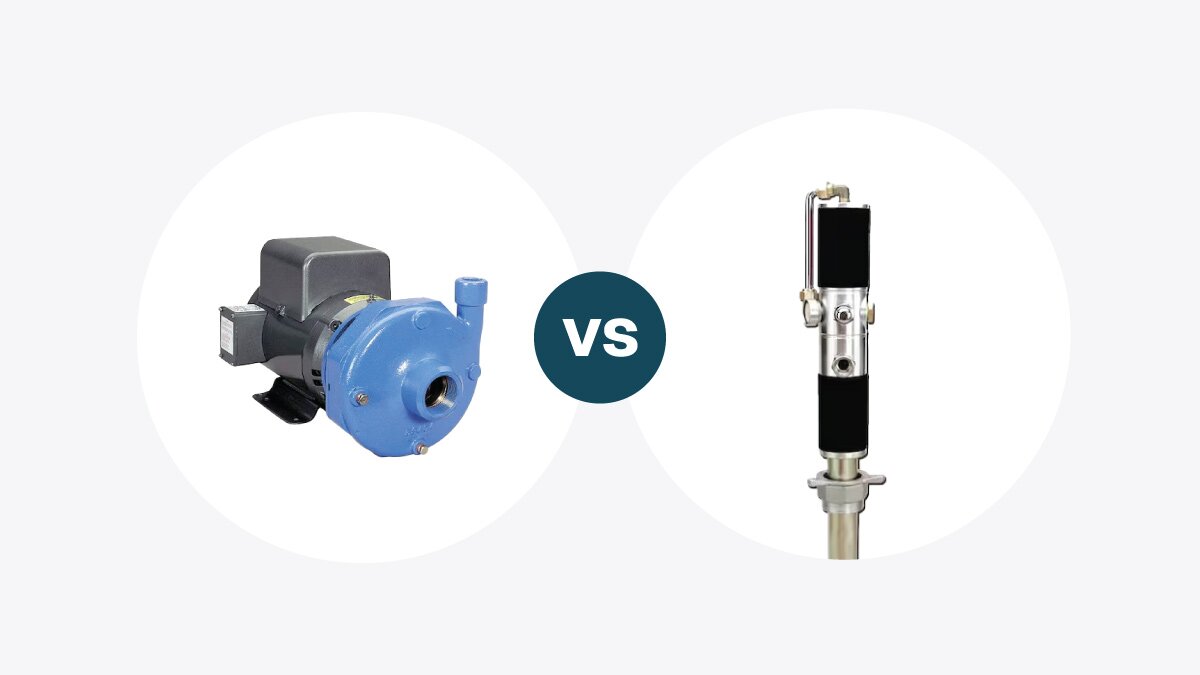
Advantages of Centrifugal vs. Reciprocating Pumps
Running a small business means making equipment choices that balance cost, reliability, and performance—and pumps are no exception. Whether you’re moving water through a cooling system, circulating chemicals, or handling thicker fluids like oils and coatings, the right pump can save time, reduce maintenance headaches, and keep your operations running smoothly. Two of the most common options are centrifugal pumps and reciprocating pumps. Understanding the strengths of each will help you choose the pump that fits your business’s day-to-day needs.
Quick Summary
- Centrifugal pumps: steady flow, fewer moving parts, easier maintenance, and lower upfront cost. Great for moving large volumes of liquid.
- Reciprocating pumps: pulsed flow, high pressure, precise dosing, and able to handle thick fluids. Ideal for specialized or demanding jobs.
The pump that works best for your business depends on your flow needs, maintenance capacity, and the types of fluids you’re working with.
Centrifugal vs. Reciprocating Pump: What Matters Most for Owners
When comparing reciprocating and centrifugal compressor and pump setups, the real question is: what does your business need most?
| Centrifugal Pumps | Reciprocating Pumps | |
| How it works | Uses a spinning impeller to move liquid continuously | Uses a piston or plunger to push liquid in pulses |
| Flow style | Smooth, steady, nonstop flow | Pulsed, high-pressure delivery |
| Ease of upkeep | Fewer moving parts → less downtime and easier maintenance | More moving parts → requires routine checks and servicing |
| Volume handling | Moves large amounts of low-viscosity liquid quickly | Handles smaller volumes with high accuracy |
| Pressure control | Not designed for very high pressure | Excellent for high-pressure applications |
| Fluid type | Best for thin, low-viscosity liquids (like water or chemicals) | Works well with thick or variable fluids (like oils and coatings) |
| Cost | Usually lower upfront cost; cost-effective for general use | Higher upfront cost but strong long-term value in specialized jobs |
| Best for small businesses that… | Need reliable, low-maintenance liquid transfer for general operations | Need precision, pressure, or specialty fluid handling |
Choosing What Works for Your Business
Here’s the bottom line: no pump is “better” across the board. The right choice depends on what you’re running day to day.
- If you’re focused on efficiency and simple maintenance, a centrifugal pump may serve your business well.
- If you’re in a line of work that requires pressure, precision, or handling thicker liquids, a reciprocating pump could be worth the investment.
The key is matching the pump to the demands of your operation, not the other way around.
Final Takeaway
Both centrifugal pumps and reciprocating pumps have clear advantages. Centrifugal pumps shine in simplicity and steady flow, while reciprocating pumps stand out for high-pressure precision. For small business owners, the choice comes down to your specific applications and the role the pump will play in your operations.
FAQs
What’s the biggest difference between a centrifugal pump and a reciprocating pump?
Centrifugal pumps keep liquid flowing smoothly and continuously. Reciprocating pumps push liquid in pulses, but with more pressure and control.
When should my business use a centrifugal pump?
When you need simple, steady flow for activities like moving water, transferring chemicals, or keeping equipment cooled.
When does a reciprocating pump make more sense?
When precision matters. If you’re working with oils, coatings, or need high-pressure dosing, a reciprocating pump is a strong choice.
What’s the difference between a reciprocating vs. centrifugal compressor?
Reciprocating compressors are best for high pressure at lower volumes. Centrifugal compressors are better for moving larger volumes continuously.
Which pump is easier to maintain for a small business?
Centrifugal pumps are usually easier since they have fewer parts. Reciprocating pumps take more routine care but can handle tough jobs.
Which option is more cost-effective?
Centrifugal pumps usually cost less upfront and work well for general needs. Reciprocating pumps may cost more initially but pay off in specialized jobs where precision is worth it.
Product Compliance and Suitability
The statements contained in this guide are intended for general informational purposes only. Such statements do not constitute a product recommendation or representation as to the appropriateness, accuracy, completeness, correctness, or currentness of the information provided. Information provided in this guide does not replace the use by you of any manufacturer instructions, technical product manual, or other professional resource or adviser available to you. Always read, understand, and follow all manufacturer instructions. Portions of this article were generated in part by ChatGPT, and edited by a member of the Zoro team.
