Choosing the Right Casters for Your Business
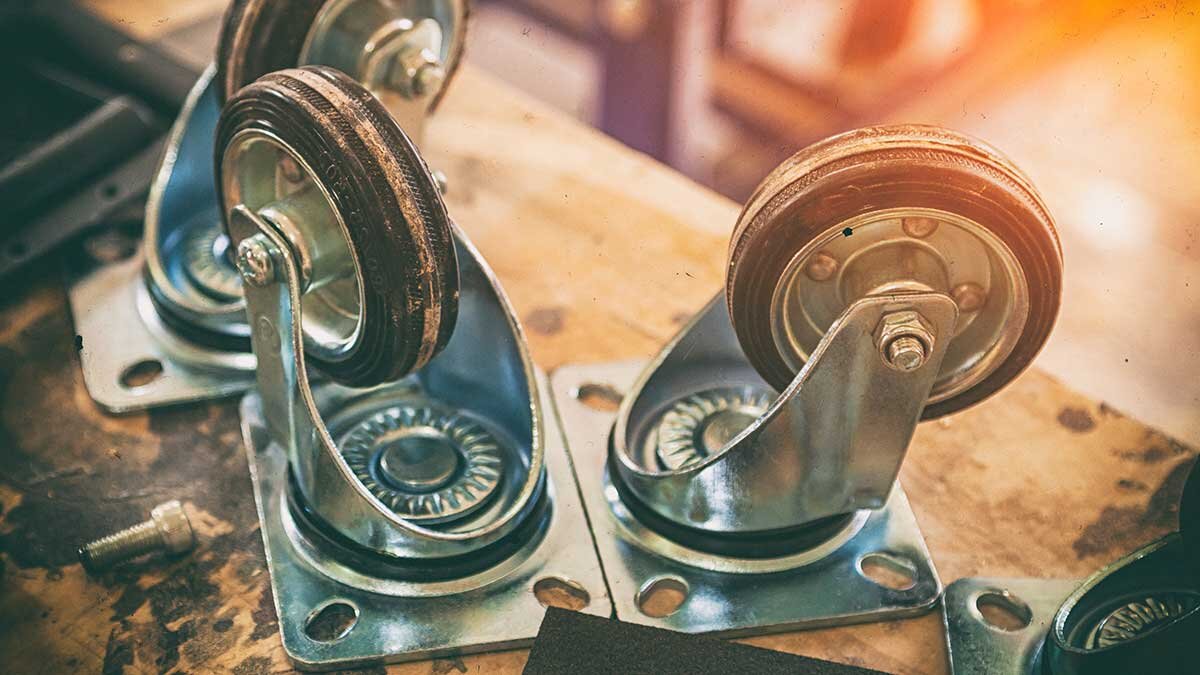
Table of Contents
Casters, which combine a wheel with an assembly to make it easier to move equipment around your facility, provide an excellent opportunity to boost the efficiency and safety of your small business operations. Whether you run a retail store, a warehouse, or an office, selecting the right mobility solutions ensures smooth, hassle-free movement and improves overall productivity.
But with so many casters (and replacement casters) available to choose from, it can be difficult to know which one is right for your business and application. In this guide, we'll help you narrow it down to make the right choice for your business.
What Are Casters?
While the word caster might seem synonymous with any wheel, a caster actually combines a wheel with an assembly to be placed on the bottom side of equipment, dollies, and trucks. Typically used in sets of 4, casters are used to move everything from light-duty hampers and carts to furniture and even heavy-duty commercial and industrial equipment.
When shopping for casters, you'll want to consider the needs of your workplace, including:
- The weight of your equipment and its load capacity, which will affect the size of the caster needed
- The flooring type used (e.g., hardwood or concrete)
- The work environment and materials that the casters may be exposed to (e.g., chemicals or oils)
- Maneuverability and whether you'll need brakes to secure the equipment in place
Caster Wheel Types
There are a few types of casters that are frequently used in different workplaces. Here are some of the most common casters you'll encounter when shopping for your business.
| Type of Caster | Description | Applications |
Swivel Casters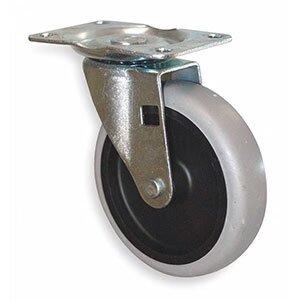 | Swivel casters, which can include a kingpin or be kingpinless, involve several components that allow the caster to swivel 360°. If there is a kingpin, it attaches the caster to the top plate so that any impacts absorbed by the caster will be transmitted through the kingpin. This type of caster is best for light-stress applications, such as light loads transported over smooth surfaces at a walking pace, but the swiveling action allows for easier maneuvering in tight spaces. | Often used in warehouses and medical facilities to move equipment where maneuverability is important. |
Rigid Casters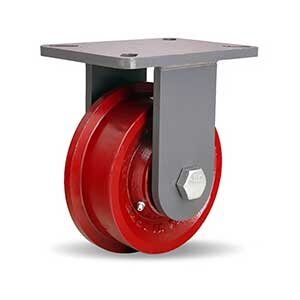 | Rigid casters do not swivel and are intended for industrial applications which require straight-line travel (i.e., forward or backward only). These are typically heavy-duty casters that attach directly to the bottom of the cart. Some applications may call for a combination of two rigid casters and two swivel casters. | Used to move very heavy loads in warehouses, factories, and other facilities. |
Kingpinless Casters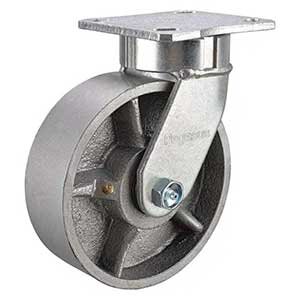 | Kingpinless casters mount directly to the item they transport (typically utility carts, towlines, dollies, platform trucks, etc.) with four screws rather than with a traditional bolt/kingpin assembly. This is generally a heavy-duty caster with thick, shock-absorbent wheels for bumpy floor surfaces. | Used to move large, heavy-duty equipment in uneven areas for a wide range of industries, from automotive manufacturing to healthcare, construction, and aerospace. |
Stem Casters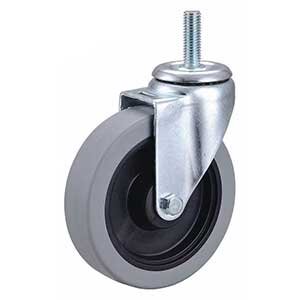
| Stem casters are typically used to solve space issues. When there is limited mounting space on the bottom of the object to be transported, the elongated stem of the stem caster design eliminates or minimizes the need for a mounting plate, thereby accommodating the limited attachment area. These are generally used for light- to medium-duty applications. | Often used in homes and businesses where space is more limited, such as restaurants. |
Ladder Casters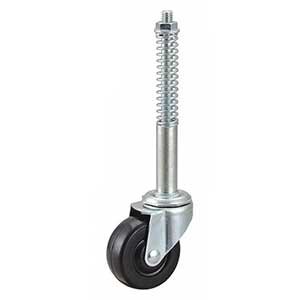 | Ladder casters are typically used on large ladders and moveable platforms, but sometimes also on large, lightweight doors or gates. Some include springs that compress to offset uneven surfaces. Mounting options for ladder casters vary. | Used anywhere ladders are used and moved regularly, including warehouses, libraries, and retail stores with high shelves. |
Caster Wheel Materials
When it comes to choosing a caster for your business, the material of the wheel (which is just one part of the caster) may be the most important choice you make. Here are some of the different caster wheel materials and the environments they're suited for.
Cast iron is a weather-resistant and durable material with a high load capacity, making it one of the longer-lasting materials for demanding workplaces and environments.
Ductile iron is used in severe environments and is prized for its durability and resistance to breaks and cracks.
Forged steel is a very strong, very durable material that is considered almost indestructible, but may be damaging to more delicate floors and environments.
Glass-filled nylon can resist certain chemicals (e.g., oil and fuel) and temperatures, making it ideal for environments where heat and chemical substances are a major concern.
Iron wheels will maximize the weight your casters can bear and are best for very large equipment, but they can also damage certain floors.
Monoprene is a rubber-like material that can help shed debris and has some of the advantages of a pneumatic tire.
Neoprene is a material similar to monoprene with greater resistance to oils, chemicals, and vibrations.
Nylon can resist some chemicals (much like glass-filled nylon) and is easier on floors than harder materials.
Phenolic wheels are ideal for rolling on concrete and have the ability to resist oils and acids while protecting floors and surfaces.
Polyolefin is a durable material that is typically used in wet or corrosive environments when there are sanitary concerns.
Polypropylene is great for resisting chemicals, acids, and solvents.
Polyurethane is a very common wheel material that can support heavy equipment without damaging floors.
Rubber is easier on floors with its ability to bend and become elastic, while still being able to support fairly heavy equipment and loads.
Stainless steel is a very durable, chemical-resistant material that can be used in restaurants, medical facilities, and other environments where hygiene is a concern.
Steel is prized for its strength and durability in more challenging workplace environments.
* * *
Whether you’re looking to replace your existing casters or purchase new casters for your heavy equipment, this guide is designed to help you make the right choices for your business, working environment, and use cases. By investing in high-quality casters now, you can ensure that you have the right solution to boost mobility in your workplace for years to come.
Shopping for casters and accessories for your business? Find everything you need at Zoro.com!
Product Compliance and Suitability
The statements contained in this guide are intended for general informational purposes only. Such statements do not constitute a product recommendation or representation as to the appropriateness, accuracy, completeness, correctness, or currentness of the information provided. Information provided in this guide does not replace the use by you of any manufacturer instructions, technical product manual, or other professional resource or adviser available to you. Always read, understand, and follow all manufacturer instructions.