
Copper Pipe Size Chart
Copper pipe size chart: Type K and L OD, ID, wall thickness.
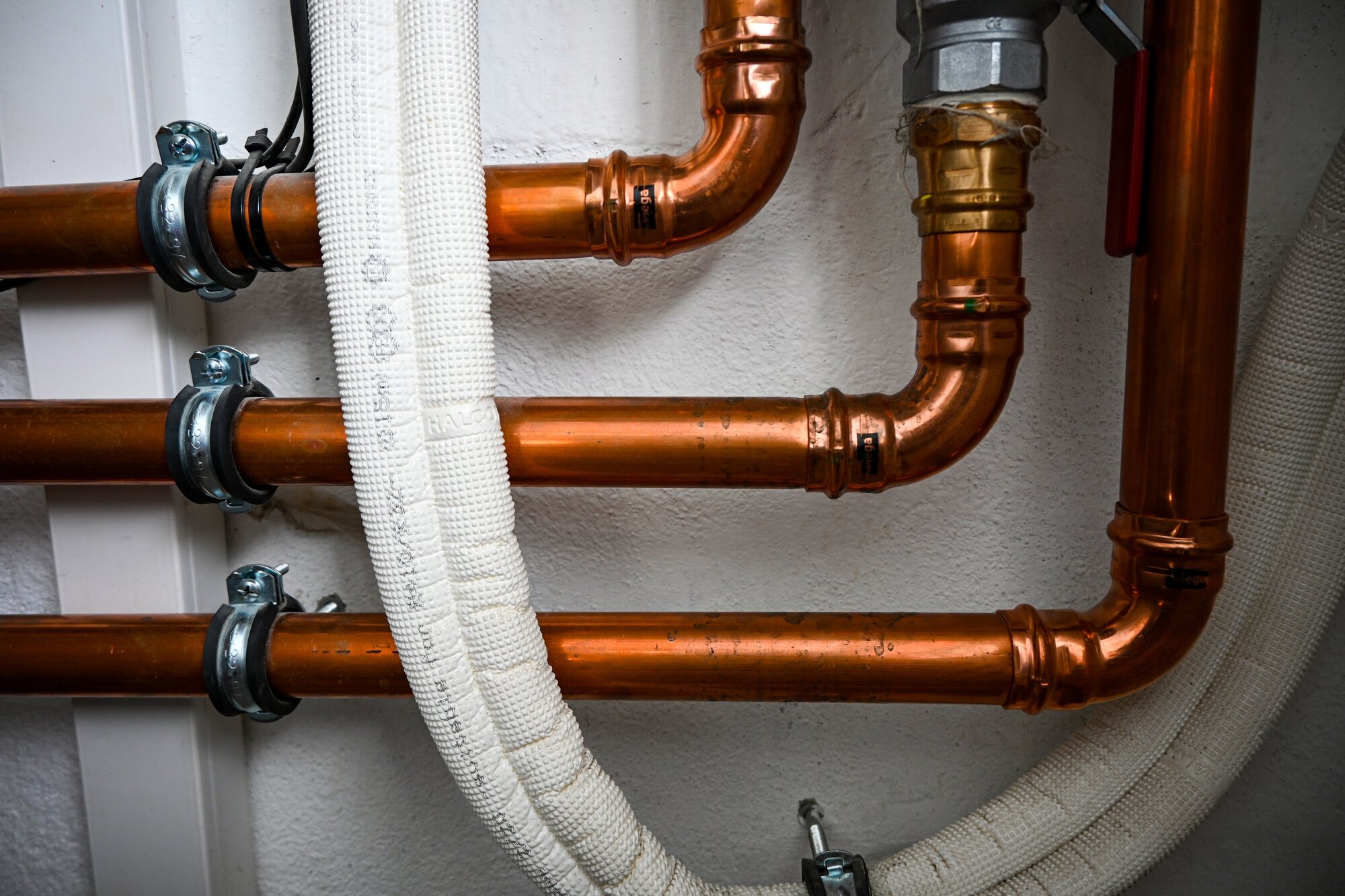
Copper Pipe Size Chart
Like PVC, copper pipe nominal sizes do not match actual dimensions — a 1" copper pipe has a 1.125" OD. The type designation (K, L, M) determines wall thickness for a given nominal size, which drives pressure rating and cost. This copper pipe size chart covers Type K and Type L dimensions from 1/4" through 4" so you can specify the right pipe for any application.
Copper Pipe Size Chart - Type K and L Dimensions
OD is identical for all types of the same nominal size — fittings are interchangeable between types. Only the wall thickness (and therefore ID and pressure rating) varies.
| Nom. Size | Actual OD | Type K (ID) | Type L (ID) | Type M (ID) |
|---|---|---|---|---|
| 1/4" | 0.375" | 0.305" | 0.315" | — |
| 3/8" | 0.500" | 0.402" | 0.430" | 0.450" |
| 1/2" | 0.625" | 0.527" | 0.545" | 0.569" |
| 3/4" | 0.875" | 0.745" | 0.785" | 0.811" |
| 1" | 1.125" | 0.995" | 1.025" | 1.055" |
| 1-1/4" | 1.375" | 1.245" | 1.265" | 1.291" |
| 1-1/2" | 1.625" | 1.481" | 1.505" | 1.527" |
| 2" | 2.125" | 1.959" | 1.985" | 2.009" |
| 2-1/2" | 2.625" | 2.435" | 2.465" | 2.495" |
| 3" | 3.125" | 2.907" | 2.945" | 2.981" |
Nominal vs. Actual: The "Plus 1/8 Inch" Rule
Copper tubing is sized by its Nominal ID, which is roughly the inside diameter. However, the Outside Diameter (OD) is always exactly 1/8" larger than the nominal size.
- Example: A 1/2" nominal pipe always has a 0.625" (5/8") OD.
- Example: A 1" nominal pipe always has a 1.125" (1 1/8") OD.
This is crucial because copper fittings (elbows, tees, couplings) are sized to fit the OD. If you are measuring a pipe to buy a replacement fitting, always subtract 1/8" from your OD measurement to find the "Nominal" size you need to ask for at the supplier.
Type K vs. Type L vs. Type M Copper
Type K: Thickest wall. Highest pressure rating. Required for underground service lines and direct burial applications. Color-coded green.
Type L: Medium wall. The standard for commercial plumbing, HVAC, and most industrial water supply. Suitable for interior and exterior above-grade applications. Color-coded blue.
Type M: Thinnest wall. Lower pressure rating. Used in residential water supply in most jurisdictions — check local plumbing code, as some codes do not permit Type M for certain applications. Color-coded red.
Type DWV: Very thin wall, for drain-waste-vent applications only. Not rated for pressure service.
Visual Identification: The Color Code System
Copper pipe is regulated to have a continuous colored stripe along its length. This is the fastest way to identify the pipe type without using calipers.
- Green (Type K): The "Heavy Duty" choice. You will see this on underground water mains or high-pressure medical gas lines.
- Blue (Type L): The "Standard" choice. This is what you will find in most commercial buildings and high-end residential plumbing.
- Red (Type M): The "Light Duty" choice. Common in residential branch lines to save on material costs.
- Yellow (DWV): Used only for Drain, Waste, and Vent. It is never used for pressurized water.
Hard vs. Soft Copper Tubing
Hard-drawn (rigid) copper: Straight lengths (typically 10–20 ft). Used for all above-grade plumbing where a rigid run is required. Must be cut and joined at direction changes.
Soft (annealed) copper: Available in coils. Can be bent around obstacles without fittings, reducing joints. Standard for refrigeration lines, underground service, and HVAC applications where flexibility and long continuous runs are needed.
Why Wall Thickness Matters: Velocity and Erosion
A hidden factor in choosing between Type K, L, and M is Erosion Corrosion. Copper has a maximum recommended flow velocity (usually 5–8 feet per second for cold water, and 4–5 fps for hot water). Because Type K has a thicker wall, its Internal Diameter (ID) is smaller. This means the water moves faster through Type K than it does through Type M at the same GPM (gallons per minute).
When designing a system, engineers must balance the higher pressure rating of Type K against the increased risk of internal erosion caused by higher velocities.
Copper Pipe Fittings and Joining Methods
- Solder (sweat): The traditional method. Flux and lead-free solder are applied at the socket fitting-to-pipe joint and heated with a torch. Reliable and code-approved for water supply.
- Press fittings: No heat required. A press tool crimps the fitting onto the pipe in seconds. Increasingly standard in commercial work for speed and fire safety.
- Push-to-connect (SharkBite type): Tool-free, instant connection. Removable and reusable. Best for repairs and temporary connections — some codes limit use in concealed locations.
- Flare fittings: Used in refrigeration and gas lines (soft copper). A flaring tool creates a cone-shaped end that seats in the fitting — no solder required.
Copper Pipe Applications
Copper is approved for potable water, medical gas, natural gas (in many codes), refrigerant lines, hydronic heating, and steam. It is not suitable for certain industrial chemicals — verify compatibility for acidic water (pH below 6.5) and concentrated alkalis, which can corrode copper.
Sources:
- Copper Development Association (CDA): The Copper Tube Handbook — This is the absolute primary source for all copper piping data.
- ASTM B88: The official standard specification for seamless copper water tube.
Product Compliance and Suitability
The statements contained in this guide are intended for general informational purposes only. Such statements do not constitute a product recommendation or representation as to the appropriateness, accuracy, completeness, correctness, or currentness of the information provided. Information provided in this guide does not replace the use by you of any manufacturer instructions, technical product manual, or other professional resource or adviser available to you. Always read, understand, and follow all manufacturer instructions. Portions of this article were generated in part by ChatGPT.
