


Different Types of Plumbing Parts and Pipe Fitting Systems
When you manage a business, keeping your plumbing system running smoothly means less downtime and fewer costly surprises. Understanding the different types of plumbing parts and pipe fitting systems can help you select the plumbing maintenance parts your operation needs, without guesswork.
What Are Pipe Fittings?
Pipe fittings are essential components that connect, redirect, or adjust the flow within plumbing systems. From replacing a worn connector to expanding a line, these fittings keep commercial plumbing systems working efficiently across construction, manufacturing, and maintenance environments.
Common Pipe Fitting Types
Here’s a breakdown of the most common types of pipe fittings professionals encounter.
Adaptor Fittings | |
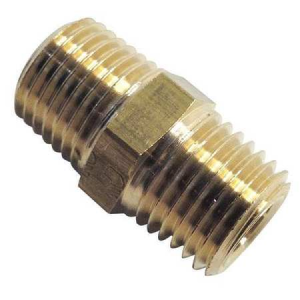 | Adaptor fittings are used to join two or more pipes of different sizes together. They come in multiple configurations including cross and T-shaped. |
Hose Barb Fittings | |
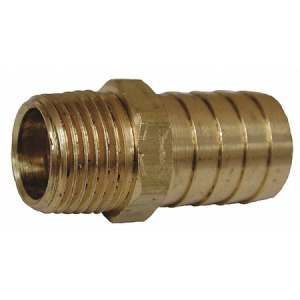 | Used frequently with soft-side tubing, hose barb fittings are designed with ridges to catch a tube’s interior diameter for a tight seal. |
Couplings | |
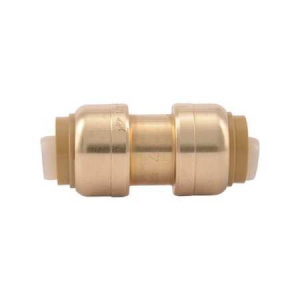 | Designed to extend or end a pipe run, pipe couplings are fittings that have either a socket or female threading at one end or both. They allow pipes of any size to be joined together. |
Cross Fittings | |
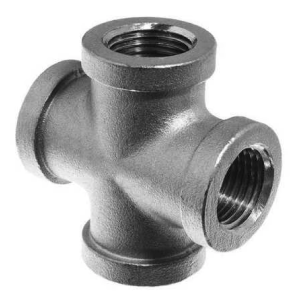 | These four-way fittings have one inlet and four outlets, usually equipped with female-threaded ends. The threading creates a strong grip for male pipe fittings. |
Double-Tapped Bushing Fittings | |
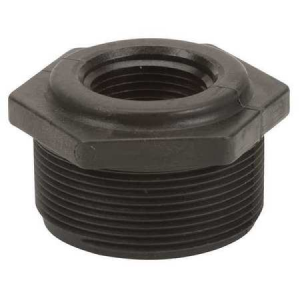 | The double-tapped bushing is a flat, round fitting with a threaded insulator on the outside. The interior is threaded in two directions and the top and bottom of the bushing are often dielectric to isolate the fittings when in use. |
Elbow Fittings | |
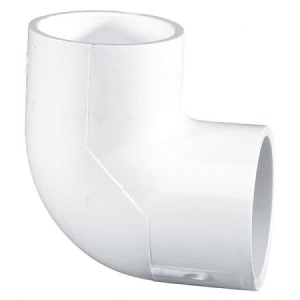 | Elbow fittings are used to change the direction of flow between two pipes. They are available in varying degree bends including 90° and 45°. |
Nipple Fittings | |
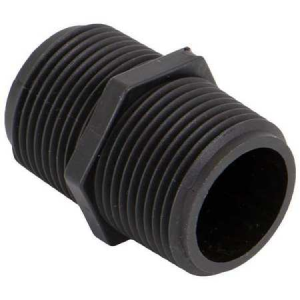 | A nipple is a short piece of pipe, often with male threading on each end, for connecting to female-threaded fittings or pipes. |
Reducer Fittings | |
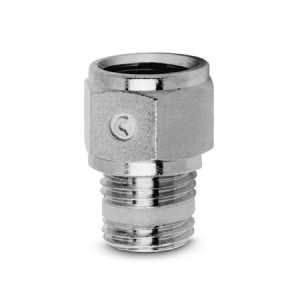 | A reducer is used when pipe size changes from a larger to a smaller size and new flow requirements need to be met. |
Tee Fittings | |
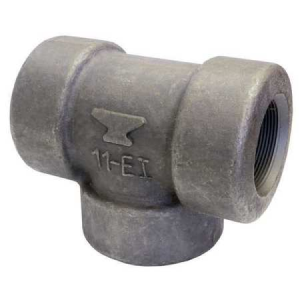 | These T-shaped fittings are used to connect three pieces of pipe and have a 90° connection to the main line. They are used to either split or combine flows. |
Union Fittings | |
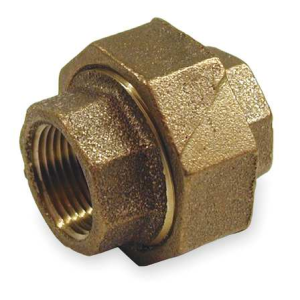 | Unions connect two similar pipes via a nut or threaded ring at the fitting’s center that can be tightened (to join the pipes) or loosened (to release them). This feature allows the pipes to stay intact when they’re disassembled (as opposed to if they were irreparably cut). |
Valve Fittings | |
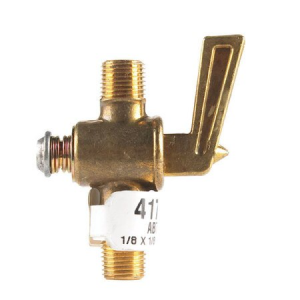 | Pipe valves are fittings that regulate the flow of liquid or gas within a pipe. |
Wye Fittings | |
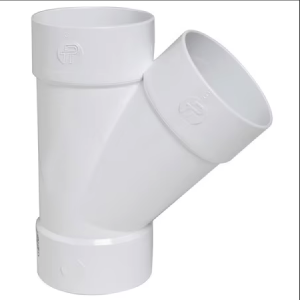 | Made for drainage applications, these “Y”-shaped fittings have two inlets and a single outlet. Wye fittings are often used in sewage applications. |
Different Kinds of Pipe Fittings by Material
Material choice matters. The right fitting material ensures reliability, code compliance, and performance under different conditions.
- PVC (Polyvinyl Chloride)—Lightweight, corrosion-resistant, and widely used for drainage, water supply, and venting.
- ABS (Acrylonitrile Butadiene Styrene)—Strong, impact-resistant, and ideal for underground or cold-climate installations.
- PEX (Cross-Linked Polyethylene)—Flexible, easy to install, and suitable for hot and cold water lines.
When reviewing different kinds of pipe fittings, consider how temperature, pressure, and material compatibility affect long-term performance.
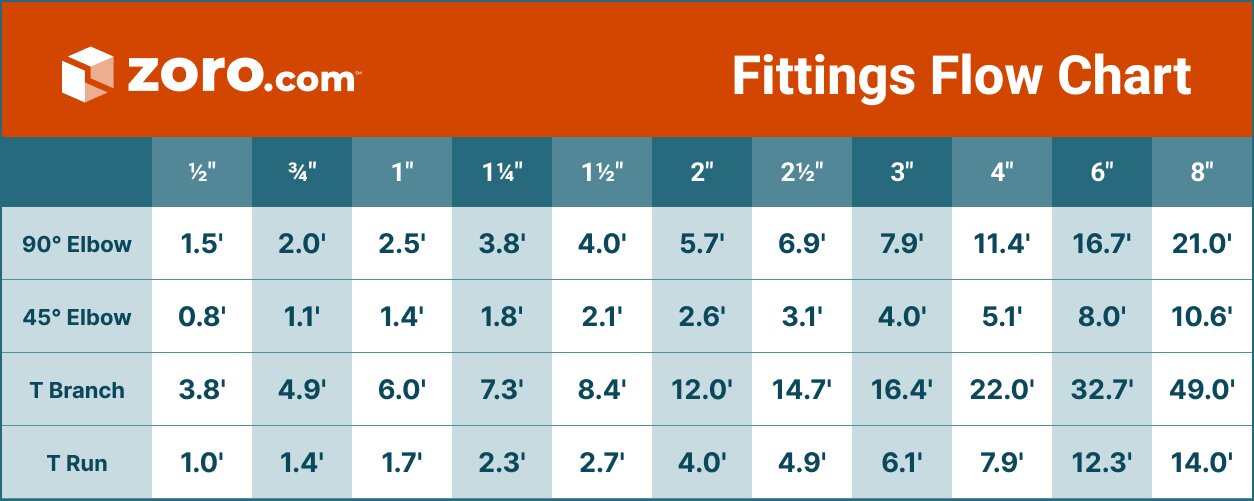
Pipe Fittings Cause Friction
Pipe fittings play an important role in any plumbing system. Each fitting changes the flow of water, which naturally adds a bit of friction as it moves through the line. The more fittings a system has, the more resistance water encounters. The chart below shows how common fittings compare in terms of friction loss and the equivalent length of pipe they represent. For instance, a ½" tee branch creates about the same resistance as 3.8' of straight pipe.
Learn More About Pipe Threading and Threading Abbreviations
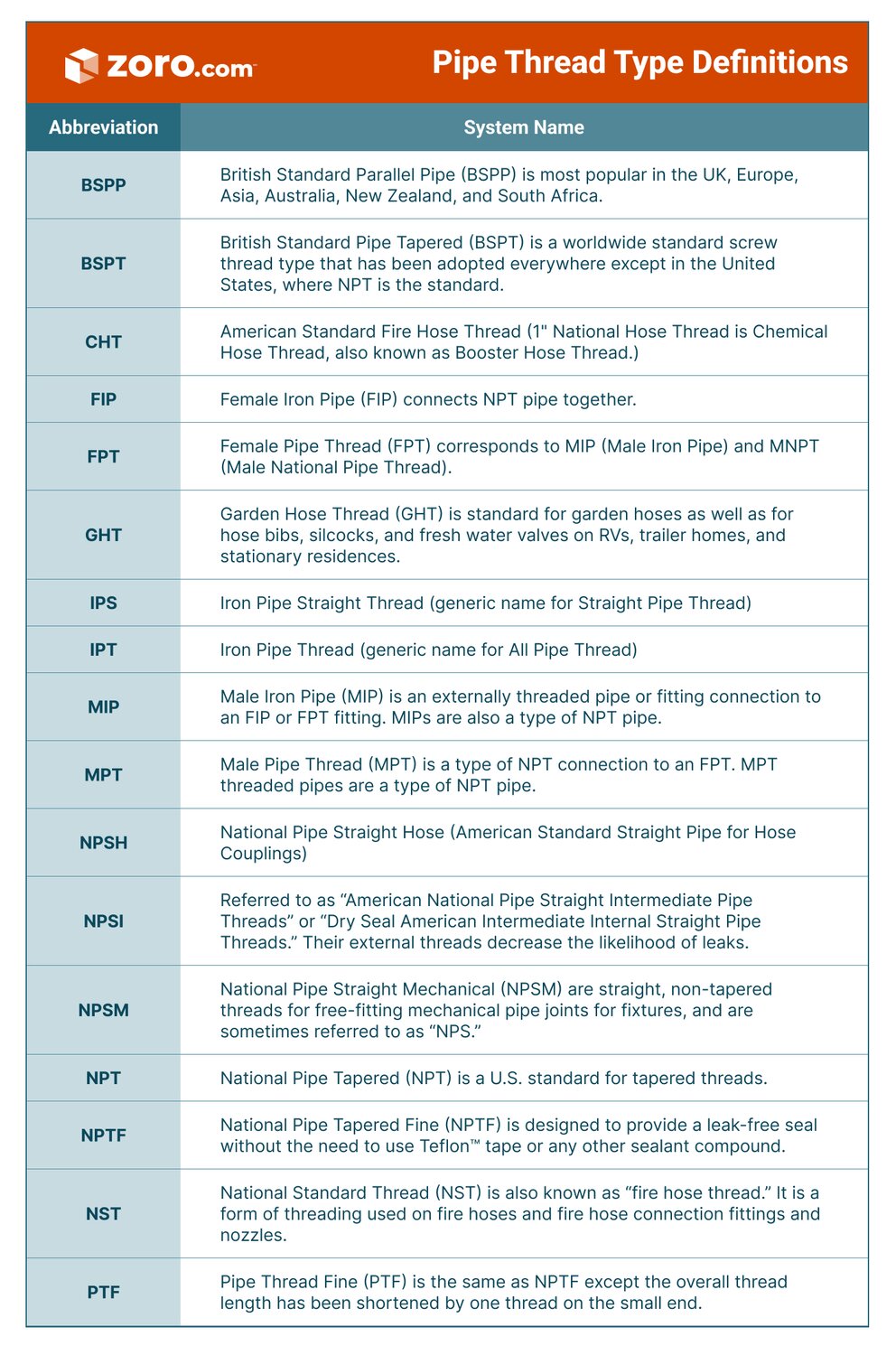
Pipes and fittings come in several thread types, each designed to create a secure connection between parts. Threads are the ridges you’ll find on the inside or outside of a pipe, allowing fittings to join tightly and prevent leaks. If you want to learn more about how pipe threading works or what those abbreviations mean, check out our article on pipe threading and abbreviations—it’s a helpful resource for anyone looking to brush up on the basics.
Below are the definitions of commonly used pipe thread abbreviations.
Additional Supplies for Your Plumbing Job
Pipes and pipe fittings connect in several different ways, depending on the types you’re working with. At Zoro, we carry all the supplies you need to configure a plumbing system and put it all together. Below are some of the additional supplies you may need to connect, measure, and build your plumbing system.
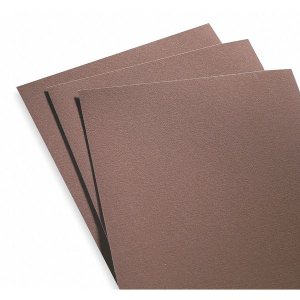
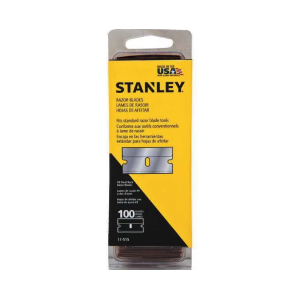
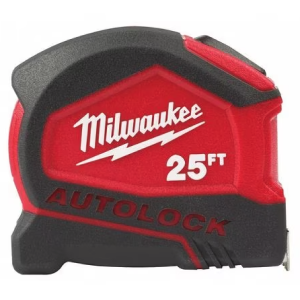
| Sanding Abrasives | Pipe Sealants | Utility Knife Blades | Tape Measures |
| Sandpaper can be used for deoxidizing copper pipes and preparing pipes for soldering and brazing. | Seal gaps between pipe threads with pipe sealants. | An essential in every plumber's tool bag. | The indispensable tool for measuring pipes, fittings, and everything else. |
 |
 |
 |
 |
Staying Organized with Your Plumbing Supplies
Efficient operations depend on preparation. Keeping a detailed list of your system’s fitting types and sizes can save valuable time during repairs. Reference your plumbing fittings chart regularly to confirm compatibility before placing orders.
And when it’s time to restock, Zoro’s broad selection of commercial plumbing supplies makes it easy to find the parts you need all in one place.
Product Compliance and Suitability
The statements contained in this guide are intended for general informational purposes only. Such statements do not constitute a product recommendation or representation as to the appropriateness, accuracy, completeness, correctness, or currentness of the information provided. Information provided in this guide does not replace the use by you of any manufacturer instructions, technical product manual, or other professional resource or adviser available to you. Always read, understand, and follow all manufacturer instructions. Portions of this article were generated in part by ChatGPT, and edited by a member of the Zoro team.
