


Drop Ceiling vs. Drywall: Which Commercial Ceiling Option Fits Your Facility?
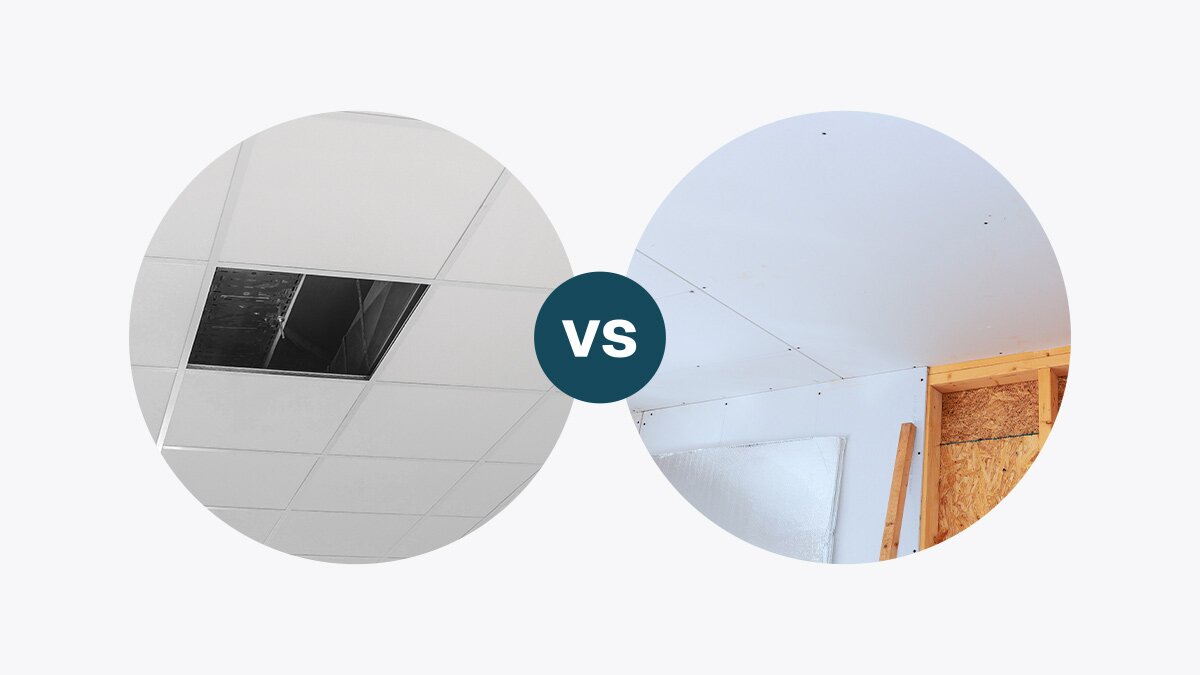
If you manage a construction, manufacturing, or maintenance facility, the ceiling overhead does more than complete the look; it can affect your building’s comfort, efficiency, and long-term maintenance. Choosing between drop ceilings and drywall ceilings often comes down to function, flexibility, and cost. Here’s how each system performs and how to decide which fits your facility best.
What Is a Drop Ceiling?
A drop ceiling, also called a suspended ceiling, hangs below the structural framework using a metal grid system. Lightweight panels or tiles rest within the grid, allowing easy access to the space above where ductwork, pipes, and wiring are often located.
What Is a Drywall Ceiling?
A drywall (also known as gypsum board or sheetrock) ceiling uses rigid panels attached directly to framing. Once taped, sanded, and painted, it creates a smooth, finished surface ideal for customer-facing or front-office spaces.
Drop Ceiling vs. Drywall: A Quick Comparison
When to Replace a Drop Ceiling with Drywall
If you’re renovating customer areas or office spaces, switching from a drop ceiling to drywall can create a modern, polished look. Consider these factors before replacing.
Access Needs—Will you need to reach overhead utilities later?
Weight & Support—Drywall may require additional framing.
Moisture Exposure—Ensure proper ventilation for humid environments.
Maintenance—Repairs take longer than replacing tiles.
Why Industrial Spaces Often Choose Drop Ceilings
In manufacturing and industrial settings, time is money. Drop ceilings make it easier to:
Service wiring, HVAC, or sprinkler systems
Modify lighting layouts or equipment setups
Replace damaged panels without halting operations
They’re a practical choice when flexibility and quick access are top priorities.
Final Thoughts
Efficiency isn’t just about production—it’s about making choices that keep your facility running smoothly. Whether you choose drop ceiling installation or drywall finishing, understanding how each affects energy use, access, and acoustics helps you invest wisely in your building’s future.
Product Compliance and Suitability
The statements contained in this guide are intended for general informational purposes only. Such statements do not constitute a product recommendation or representation as to the appropriateness, accuracy, completeness, correctness, or currentness of the information provided. Information provided in this guide does not replace the use by you of any manufacturer instructions, technical product manual, or other professional resource or adviser available to you. Always read, understand, and follow all manufacturer instructions. Portions of this article were generated in part by ChatGPT, and edited by a member of the Zoro team.
