
Electric Pallet Jack Buying Guide
Find the ideal electric pallet jack for efficient warehouse material movement.
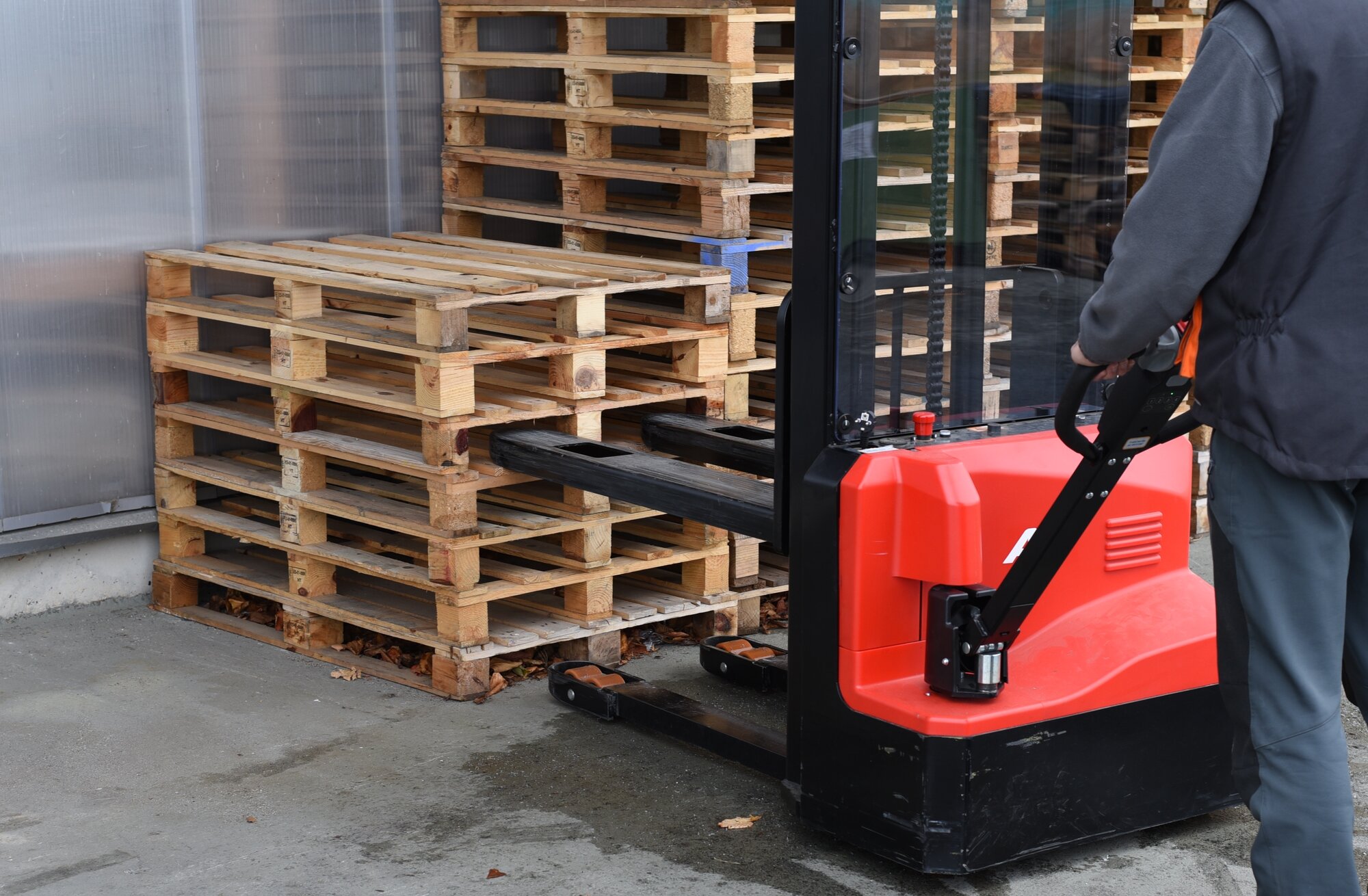
Electric Pallet Jack Buying Guide
Moving palletized materials through a warehouse, distribution center, manufacturing facility, or stockroom can require repeated lifting and transporting. An electric pallet jack uses powered movement to help operators transport compatible pallet loads with less manual propulsion than a traditional manual pallet truck.
Choosing the right model requires more than comparing load capacity. Pallet dimensions, travel distance, aisle width, floor conditions, battery runtime, charging access, and operator training all influence equipment selection.
This guide explains the main electric pallet jack configurations and the factors to evaluate before choosing equipment for your material-handling operation.
What Is an Electric Pallet Jack?
An electric pallet jack is a powered material-handling truck designed to lift palletized loads a limited distance above the floor and move them from one location to another. Depending on the model, electric power may be used for travel, lifting, or both.
Electric pallet jacks are commonly used for horizontal material movement in warehouses, shipping and receiving areas, retail stockrooms, and manufacturing facilities. They are generally intended for moving compatible pallet loads rather than stacking loads at the heights associated with many forklifts or reach trucks.
Equipment configurations vary. Review each model's rated capacity, lift height, operating arrangement, and intended use before selecting a unit.
Electric Pallet Jack vs. Manual Pallet Jack
Both electric and manual pallet jacks can move compatible palletized loads, but they operate differently.
| Consideration | Manual Pallet Jack | Electric Pallet Jack |
|---|---|---|
| Movement | Operator supplies the force to move the truck. | Powered travel assists or performs movement, depending on the model. |
| Lifting | Typically uses a manually operated hydraulic mechanism. | May provide powered lifting, depending on the configuration. |
| Operating effort | Requires manual effort to propel and maneuver the load. | Can reduce manual propulsion effort, but still requires trained operation. |
| Charging | No battery charging is required. | Battery charging and battery maintenance may be required. |
| Purchase considerations | Capacity, fork dimensions, wheels, and hydraulic operation. | Capacity, dimensions, battery, controls, runtime, and charging requirements. |
The best choice depends on the workload, travel distance, floor conditions, available budget, and operating requirements. An electric model may be useful for recurring powered movement, while a manual model may suit simpler applications.
Types of Electric Pallet Jacks
Electric pallet jacks are available in different configurations. Product names and feature sets vary by manufacturer, so confirm the design and intended application of each model.
Walkie Electric Pallet Jacks
Walkie models are operated by a person walking behind or alongside the truck using its controls. They are commonly considered for material movement in areas where a ride-on truck is not necessary.
When comparing walkie models, review load capacity, turning requirements, control design, travel speed, battery runtime, and the conditions in which the equipment will be used.
Ride-On Electric Pallet Jacks
Ride-on models provide an operator platform or another ride-on arrangement, depending on the design. They may be considered for operations involving longer travel distances or recurring movement between designated locations.
Evaluate the operating space, travel route, operator training requirements, load characteristics, and the manufacturer's intended-use guidance. A ride-on model may require different clearances and operating procedures from a walkie truck.
Compact and Specialized Models
Some electric pallet jacks are designed for particular space constraints, pallet formats, or handling requirements. Their dimensions and capabilities vary.
Check the fork dimensions, overall width, turning requirements, ground clearance, and approved load types. Do not assume that a compact model can accommodate every pallet or load configuration.
7 Factors to Consider When Choosing an Electric Pallet Jack
1. Load Capacity
Load capacity is the maximum load a truck is rated to handle under the manufacturer's specified conditions. Determine the weight of the loads you expect to move, including common and peak loads.
Check the equipment's rated capacity and any restrictions associated with the load configuration. The load must also be stable and suitable for the pallet and forks.
Do not exceed the rated capacity. If loads vary significantly in weight, establish a clear process for verifying load weights before transport.
2. Fork Dimensions and Pallet Compatibility
Fork length, width, spacing, and overall truck dimensions influence pallet compatibility. Pallets vary in size and construction, and not every truck is suitable for every pallet type.
Measure the pallets used in your facility and compare their dimensions with the truck's specifications. Consider how loads are positioned on the pallet and whether the fork arrangement provides suitable support.
Also evaluate the overall truck width and turning requirements against your normal travel routes.
3. Aisle Width and Maneuverability
The truck must be able to maneuver safely through the facility's aisles, intersections, doorways, and loading areas. The required space depends on the model, load dimensions, turning characteristics, and operating conditions.
Measure the narrowest parts of the intended route, not just the average aisle width. Consider racks, staging areas, pedestrian routes, door openings, and other equipment that may reduce available space.
Use the manufacturer's turning and operating specifications when assessing fit. A truck that physically enters an aisle may not have enough room to turn or maneuver the load safely.
4. Battery Runtime and Charging
Battery performance can influence how effectively an electric pallet jack fits into the workday. Runtime depends on the battery, load, travel distance, operating frequency, floor conditions, and other factors.
Estimate how often the truck will be used during a typical shift and compare that workload with the manufacturer's battery and runtime information. Consider whether the facility has convenient charging access and whether the operating schedule allows time for charging.
Review the battery type, charging procedure, required charger, and any manufacturer-specified battery maintenance. Do not assume that all electric pallet jacks use the same charging system.
5. Floor Conditions and Travel Routes
Floor conditions affect how a pallet jack moves and handles loads. Inspect the intended routes for slopes, uneven surfaces, floor joints, debris, thresholds, and other obstacles.
Check the manufacturer's guidance for permitted operating surfaces and slope limitations. Wheel material and configuration may also affect suitability for different floors.
Do not operate equipment on slopes or surfaces beyond its approved limits. If your facility has challenging floor conditions, verify that the selected truck is suitable before purchase.
6. Controls, Visibility, and Operator Requirements
Operators need to understand the truck's controls, steering behavior, braking, load handling, and emergency procedures. Evaluate the control layout and visibility in the actual operating environment.
Consider how the operator will travel around corners, work near pedestrian routes, and position loads at pickup and delivery points. The truck should fit the operation's traffic-management procedures and designated travel routes.
Establish appropriate training, inspection, and operating practices based on the equipment and applicable workplace requirements. Powered pallet jacks should not be treated as risk-free simply because they operate at relatively low lift heights.
7. Maintenance, Durability, and Total Cost
Compare the purchase price alongside the expected operating and maintenance requirements. Depending on the model, ownership costs may include battery service, wheels, controls, hydraulic components, inspections, and replacement parts.
Review the manufacturer's maintenance schedule and determine how the equipment will be inspected and serviced. Check service availability and replacement-part access before committing to a model.
Also consider the cost of charging, downtime, operator training, and any infrastructure changes needed to support the truck.
Electric Pallet Jack Selection Table
| Requirement | What to Evaluate | Why It Matters |
|---|---|---|
| Load weight | Rated capacity and actual load weights | Helps confirm the truck is suitable for the intended loads. |
| Pallet size | Fork length, width, spacing, and load positioning | Supports pallet compatibility and load stability. |
| Travel route | Aisle width, turning space, doorways, and intersections | Helps determine whether the truck can maneuver in the facility. |
| Operating schedule | Expected usage, runtime, and charging opportunities | Helps align battery capability with operational demand. |
| Floor conditions | Surface type, slopes, joints, and transitions | Helps confirm the truck is suitable for the travel environment. |
| Operator requirements | Controls, visibility, training, and traffic procedures | Supports proper use within the facility's operating procedures. |
| Maintenance | Service intervals, battery care, parts, and support | Helps estimate ongoing ownership requirements. |
Electric Pallet Jack Safety Considerations
Powered pallet jacks can create crush, collision, and foot-injury hazards if they are operated incorrectly or in unsuitable conditions. Safe operation depends on the equipment, load, environment, and operator training.
- Follow the manufacturer's operating and inspection instructions.
- Verify that the load is stable and within the truck's rated capacity.
- Keep feet, hands, and other body parts clear of the wheels, forks, and load.
- Maintain visibility and follow designated travel routes.
- Use appropriate procedures around pedestrians, intersections, and doorways.
- Observe the manufacturer's restrictions for slopes and floor conditions.
- Inspect the truck before use and report damage or abnormal operation.
- Charge and maintain the battery according to the manufacturer's instructions.
Confirm applicable operator training and workplace requirements before putting the equipment into service.
Electric Pallet Jack Buying Checklist
- Capacity: Does the rated load capacity cover the loads the facility moves?
- Pallet compatibility: Are the forks suitable for the pallet sizes and configurations?
- Maneuverability: Can the truck navigate the narrowest aisles and travel routes?
- Configuration: Is a walkie or ride-on design more appropriate for the application?
- Runtime: Does the battery support the expected operating schedule?
- Charging: Are compatible chargers and suitable charging arrangements available?
- Floor conditions: Is the truck rated for the intended surfaces and slopes?
- Training: Are the operator training and inspection requirements understood?
- Service: Are maintenance support and replacement parts available?
- Total cost: Have purchase, charging, maintenance, and downtime costs been considered?
Frequently Asked Questions
What is an electric pallet jack used for?
An electric pallet jack is used to move compatible palletized loads horizontally through areas such as warehouses, distribution centers, shipping departments, and manufacturing facilities. The truck's rated capacity and intended use determine which loads it can handle.
How much weight can an electric pallet jack lift?
Capacity varies by model. Check the manufacturer's rated capacity and any applicable restrictions for the load configuration. Do not select a truck based on a general capacity assumption or exceed the rating of the equipment.
How long does an electric pallet jack battery last?
Runtime varies by battery type, model, load, travel distance, operating frequency, and conditions. Review the manufacturer's specifications and compare them with your expected workload and charging schedule.
Should I choose a walkie or ride-on electric pallet jack?
A walkie model is operated by a person walking with the truck, while a ride-on model provides a ride-on operating arrangement. The choice depends on travel distance, facility layout, operating frequency, load requirements, and the manufacturer's intended-use guidance.
Can an electric pallet jack be used on ramps?
Only when the specific model is approved for the conditions and the operator follows the manufacturer's instructions. Slope limits and operating procedures vary, so verify the specifications before using a pallet jack on a ramp.
Choose an Electric Pallet Jack for Your Material-Handling Needs
The right electric pallet jack should match your load weights, pallet dimensions, travel routes, operating schedule, and facility conditions. Battery performance, truck configuration, controls, maintenance, and operator requirements are also important parts of the decision.
Before purchasing, document the loads and routes the truck must handle and compare those requirements with the manufacturer's specifications. Confirm that the equipment fits the workplace and that operators can be trained to use it properly.
Explore suitable electric pallet jacks and related material-handling equipment based on your warehouse or facility requirements.
Product Compliance and Suitability
The statements contained in this guide are intended for general informational purposes only. Such statements do not constitute a product recommendation or representation as to the appropriateness, accuracy, completeness, correctness, or currentness of the information provided. Information provided in this guide does not replace the use by you of any manufacturer instructions, technical product manual, or other professional resource or adviser available to you. Always read, understand, and follow all manufacturer instructions. Portions of this article were generated in part by ChatGPT.
