


Electric vs. Gas Water Heater Comparison for Commercial Facilities
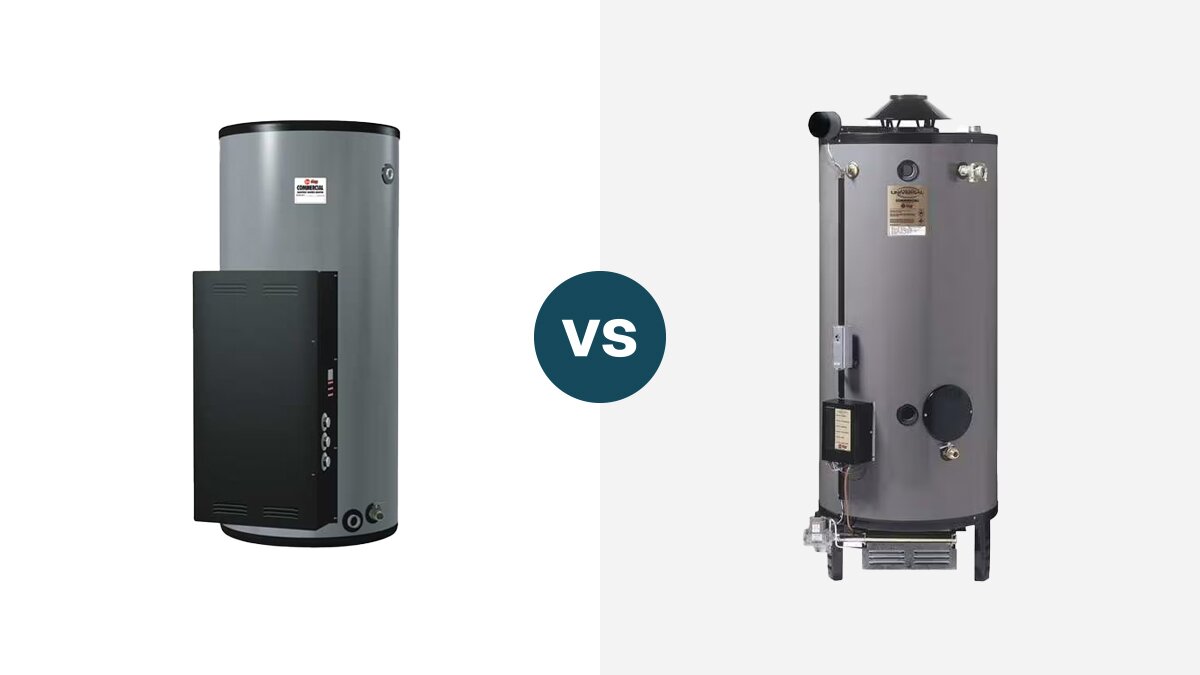
Reliable hot water keeps your operation moving, whether you’re running a workshop, commercial kitchen, manufacturing floor, or multi-use facility. If you’re choosing between gas and electric water heaters or considering a gas-to-electric conversion, this guide gives you clear, practical information to support your next steps.
How Gas Water Heaters Work
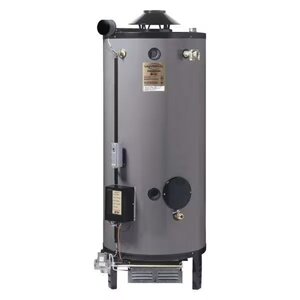
Gas commercial water heaters use natural gas or propane burners beneath the tank. Heat transfers through the tank to warm stored water, and exhaust must be vented.
Why Businesses Choose Gas
- Fast recovery times that support industrial kitchens, service bays, and manufacturing wash stations
- Better performance under heavy peak demand
- Straightforward installation in buildings already equipped with gas lines and venting
Considerations for Facility Managers
- Higher upfront installation cost due to venting and combustion-air requirements
- Regular inspections of burners, venting, gas lines, and safety systems
- Operating cost depends on your regional gas rates
- May continue operating during power outages if gas supply remains available
How Electric Water Heaters Work
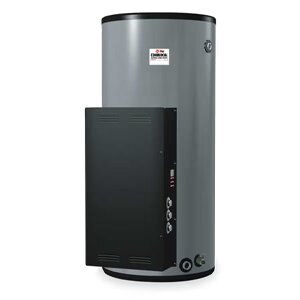
Electric models use internal resistance heating elements to warm water. Since no combustion occurs, venting isn’t required.
Why Businesses Choose Electric
- Lower upfront installation cost
- No venting requirements, offering more flexibility in placement
- High conversion efficiency, often up to 98%
- Simpler maintenance with no burner or fuel system to service
Considerations for Facility Managers
- Slower recovery times than many gas models
- Higher electrical demand, which may require panel upgrades
- Operation stops during power outages unless backup power is available
- Operating cost depends on electricity pricing
Electric vs. Gas Water Heater Comparison Table
| Gas | Electric | |
 |  | |
| Utility Infrastructure | Requires gas line and venting | Requires adequate electrical capacity |
| Installation Complexity | Higher due to venting and fuel piping | Simpler, but electrical upgrades may be needed |
| Recovery Rate / Speed | Generally faster; useful for high-demand operations | Slower in many cases; require larger tank or multiple units |
| Maintenance | More fuel‐related checks (venting, burner, gas lines) | Fewer fuel/vent issues, but check heating elements and electrical connections |
| Efficiency vs. Operating Cost | Slightly lower conversion efficiency; cost advantage depends on gas rate | Very high conversion efficiency; cost advantage depends on electricity rate |
| Outage Resilience | May continue (if gas is available) | Needs electricity; may go out during power failure unless backed up |
Planning a Gas-to-Electric Water Heater Conversion
If your facility is moving away from natural gas or upgrading equipment, a gas-to-electric water heater conversion can streamline operations. Here’s what businesses typically evaluate.
Electrical Panel Capacity
Ensure the panel can support the amperage required for one or multiple electric units. Upgrades may be needed.
Safe Decommissioning of Gas Lines
Gas lines must be professionally capped or removed. Venting may also need to be closed or repurposed.
Placement Options
Without venting requirements, electric units can be positioned to improve workflow or create additional usable space.
Utility Cost Shifts
Higher electrical costs may offset the energy efficiency advantage, depending on your rate structure.
Hot-Water Demand
Facilities with continuous or heavy usage may need larger tanks or multiple units.
When It’s Time to Replace a Gas Water Heater
Replacement often comes down to age, changing usage patterns, or planned facility updates. For example, consider replacement if:
- The existing unit is nearing expected end-of-life (many gas tanks last ~8-12 years in heavy use).
- The business is changing its utility infrastructure (for example, eliminating gas connections or upgrading to all-electric).
- Hot-water demand has increased and requires higher capacity or faster recovery.
- Maintenance cost is increasing, and it’s more cost-effective to install a new unit than keep repairing.
When planning replacement, review current usage (peak demand), utility rate structure, existing infrastructure, and future facility goals. Then decide whether to stay with gas or switch to electric (or hybrid) based on that.
Water Heater Installation Guide for Commercial Settings
Whether you're installing a gas or electric system, most facilities follow similar steps.
1. Utility Check
Confirm available gas or electrical capacity, plus venting requirements for gas units.
2. Proper Sizing
Calculate peak demand, number of fixtures, and required recovery rate.
3. Location and Clearance
Gas units need venting and combustion-air provisions; electric models simply require access and electrical proximity.
4. Safety and Compliance
Follow local codes for venting, pressure relief valves, anchoring, and permitting.
5. Maintenance Planning
A dependable commercial system requires:
- Sediment flushing
- Anode rod inspections
- Burner and vent checks (gas)
- Heating element and wiring checks (electric)
Final Thoughts for Business Owners
The best water heating system for your facility depends on your infrastructure, demand, and long-term plans. Whether you’re upgrading a unit, preparing for a gas-to-electric water heater conversion, or setting up a maintenance routine, you can move forward with clarity and confidence.
Product Compliance and Suitability
The statements contained in this guide are intended for general informational purposes only. Such statements do not constitute a product recommendation or representation as to the appropriateness, accuracy, completeness, correctness, or currentness of the information provided. Information provided in this guide does not replace the use by you of any manufacturer instructions, technical product manual, or other professional resource or adviser available to you. Always read, understand, and follow all manufacturer instructions. Portions of this article were generated in part by ChatGPT, and edited by a member of the Zoro team.
