


Exhaust Fan Selection Guide
With the right information, you’ll feel cool and confident about choosing the correct fan!
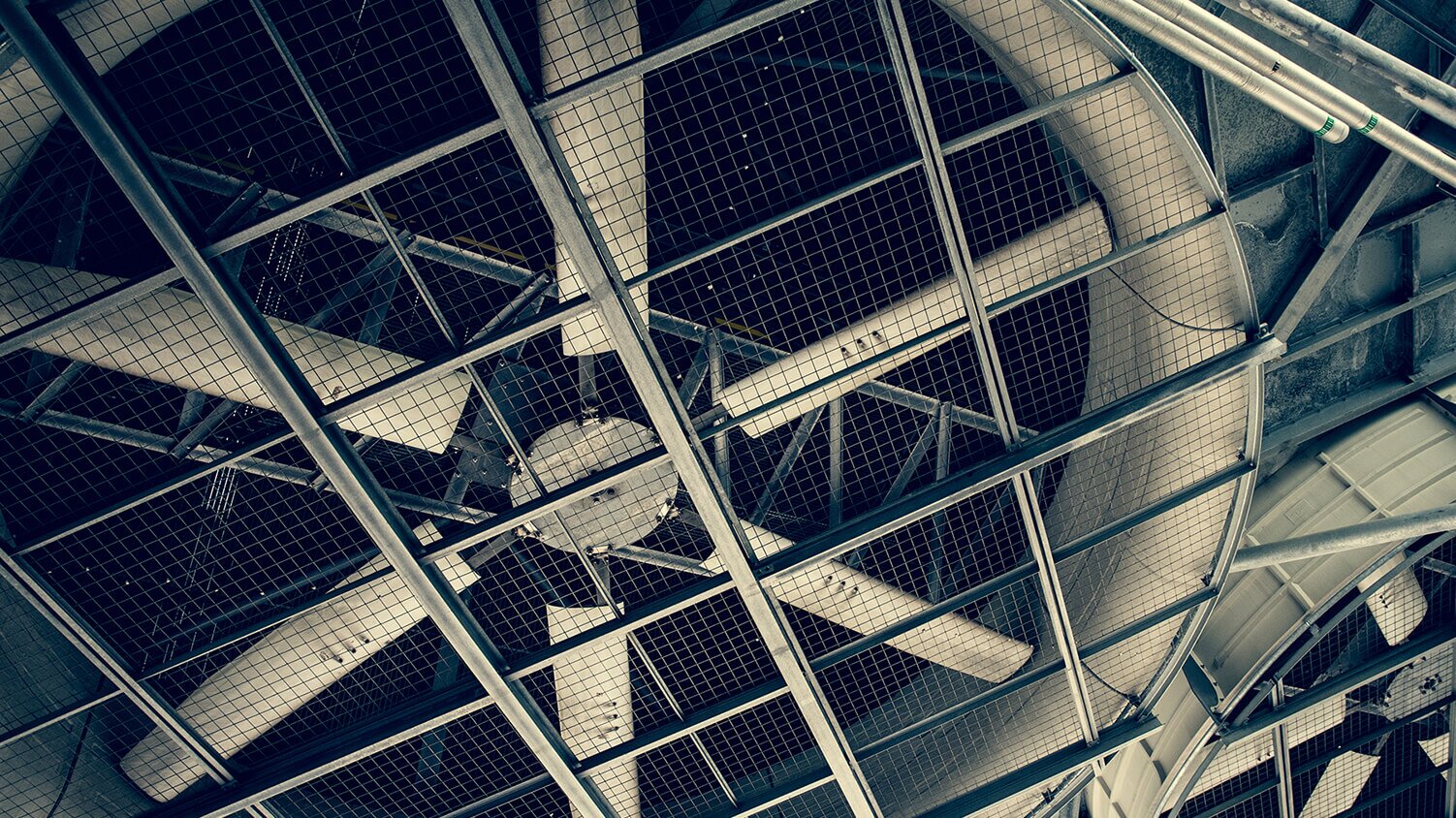
Designed to circulate in fresh air while removing stagnant, fume-laden or stale air within a confined space, exhaust fans are available in a variety of types and sizes. While there are a lot of important factors to consider when selecting the appropriate exhaust fan for a particular application, it doesn’t need to be too complicated.
Determining exactly what type of fan your application requires is a good place to start. Shutter mount, industrial belt-drive, and corrosion-resistant and hazardous location fans are among the most commonly used fans for a variety of applications. This information offers some insight into the uses and capabilities of those fans.
Types of Fans
Shutter Mount Fan:
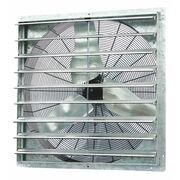
An exhaust fan designed to remove stale air from rooms, barns, garages, or other enclosed work areas. These fans mount from the inside of the wall and feature totally enclosed, direct-drive motors. Common options include single- or two-speed fans, with fan blade diameters ranging from 7" to 36" in diameter.
Industrial Belt-Drive Fan:
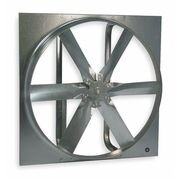
Built with galvanized steel blades for durability, industrial belt-drive fans are designed to move large volumes of air at low static pressures. Available in a vertical roof and horizontal mount configuration, they feature variable pitch blades and adjustable pulleys for optimized performance. Industrial belt-drive fans are frequently used in factories, greenhouses, auto repair shops, warehouses, and HVAC equipment ventilation.
Corrosion-Resistant and Hazardous Location Fans:
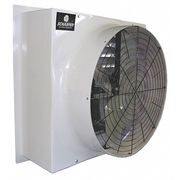
These are specialty fans designed for specific applications where the fans may be exposed to corrosive environments leading to degradation and breakdown of fan components. Also available are fans designed for hazardous locations where sealed, explosion-proof motors are used to mitigate the risk of a spark causing an explosion leading to potentially dangerous or harmful outcomes.
|
|
|
|
Fan Sizes
When it comes to choosing the correct fan, there are a couple of key factors to keep in mind. Regardless of the fan type needed, the key consideration is the volume of air you want to move (CFM=Cubic Feet per Minute), based on the size of the space and the recommended number of air changes per hour. The Air Change Method derives the ventilation rate from the volume of the space to be ventilated.
Example:
For an auditorium, the suggested change rate is 4 to 15 air changes per hour. The auditorium is 80' x 90' with 20' ceilings, for a total of 144,000 cubic feet. Using 10 air changes per hour, the calculation would be: 144,000 cu. ft. x 10 air changes per hour divided by 60. In this example, the amount of air that the ventilation fans need to move to complete 10 air changes in one hour is 24,000 CFM.
Recommended Minimum Air Changes per Hour for Common Spaces
|
Type of Room or Space |
Minimum Air Changes Per Hour |
|---|---|
| Attic Spaces | 12-15 |
|
Factory Buildings |
2-4 |
| Paint Shop | 15-20 |
| Repair Garage | 20-30 |
| Storage Garage | 4-6 |
| Medical / Dental Office | 8-12 |
| Warehouse | 6-15 |
NOTE: for situations involving hazardous locations or corrosive environments, be sure the fan is rated for such use.
Product Compliance and Suitability
The product statements contained in this guide are intended for general informational purposes only. Such product statements do not constitute a product recommendation or representation as to the appropriateness, accuracy, completeness, correctness or currentness of the information provided. Information provided in this guide does not replace the use by you of any manufacturer instructions, technical product manual, or other professional resource or adviser available to you. Always read, understand and follow all manufacturer instructions.
