
Hose Clamp Size Chart
Hose Clamp Size Chart: Professional SAE & Metric Dimensions Guide
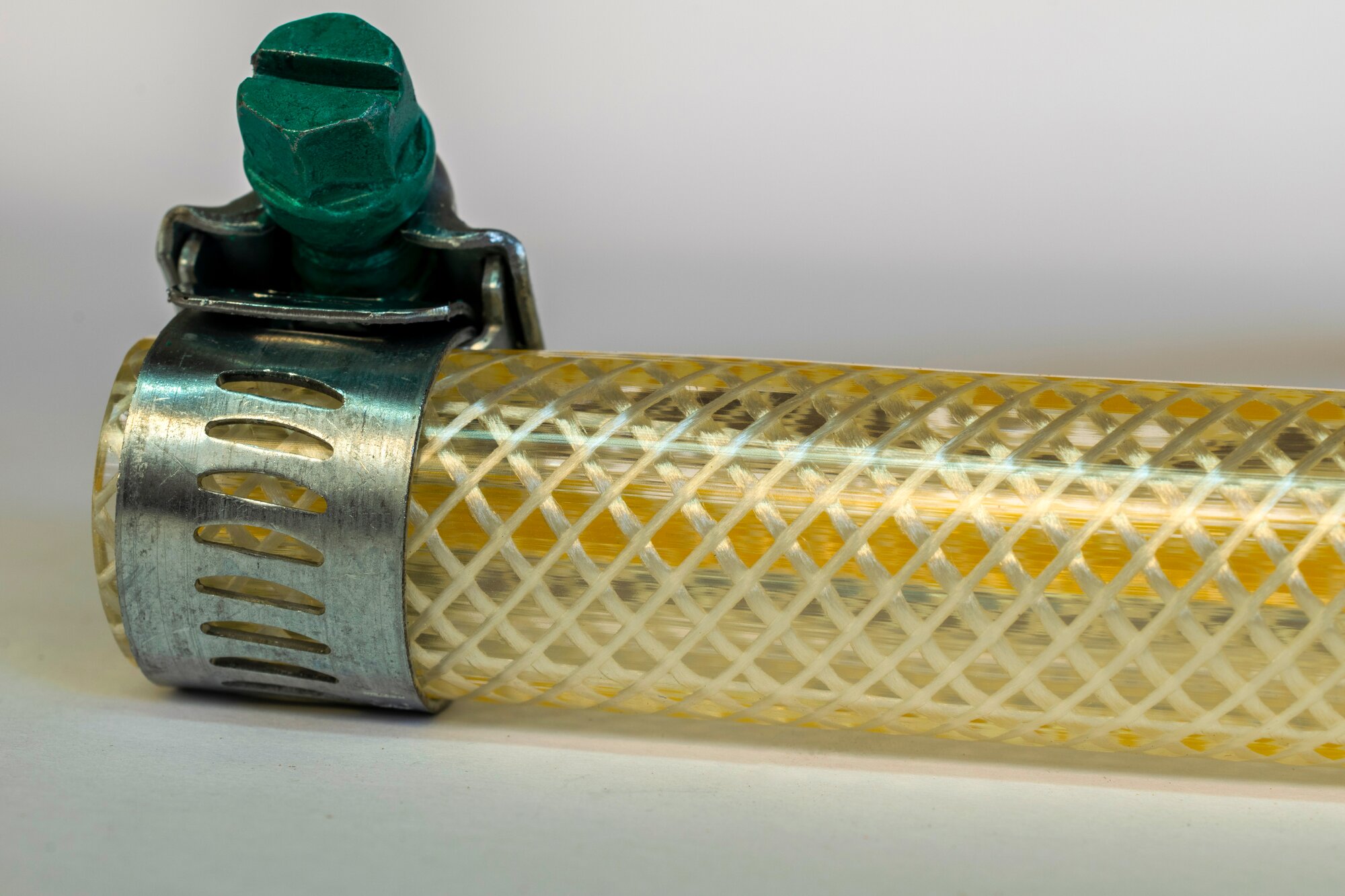
Hose Clamp Size Chart
Finding the right hose clamp is more than just "making it fit"; it is about ensuring a 360-degree uniform seal that can withstand pressure, vibration, and thermal expansion. Using a clamp that is too large leaves a dangerous "tail" and uneven pressure, while one that is too small risks slipping off the hose entirely. In the industrial and automotive worlds, hose clamps are categorized by SAE Size Numbers, which act as a universal shorthand for their diameter range.
This guide provides a comprehensive hose clamp size chart, decodes the SAE numbering system, and outlines which clamp types—from standard worm-gear to high-pressure T-bolts—are best suited for your specific application.
Types of Hose Clamps
| Clamp Type | Max Pressure | Reusable | Best For |
|---|---|---|---|
| Worm-Drive (Screw) | Moderate | Yes | General automotive, industrial, plumbing |
| T-Bolt Clamp | High | Yes | High-pressure intercooler, turbo, racing |
| Spring Clamp | Low-Moderate | Yes | OEM automotive, constant pressure |
| Ear Clamp (Stepless) | Moderate | No | Single-use, OEM, clean install |
| Wire Clamp | Low | Yes | Light-duty, low-pressure hose work |
| Constant Tension | High | Yes | High-vibration, temperature extremes |
Standard Hose Clamp Size Chart
The following table covers the most common SAE sizes found in industrial and automotive applications.
| SAE Size | Minimum Diameter (Inches) | Maximum Diameter (Inches) | Minimum Diameter (mm) | Maximum Diameter (mm) |
|---|---|---|---|---|
| 4 | 7/32" | 5/8" | 5.6 mm | 16 mm |
| 6 | 3/8" | 7/8" | 9.5 mm | 22 mm |
| 8 | 7/16" | 1" | 11 mm | 25 mm |
| 10 | 1/2" | 1-1/8" | 13 mm | 28 mm |
| 12 | 1/2" | 1-1/4" | 13 mm | 32 mm |
| 16 | 3/4" | 1-1/2" | 19 mm | 38 mm |
| 20 | 3/4" | 1-3/4" | 19 mm | 44 mm |
| 24 | 1" | 2" | 25 mm | 51 mm |
| 28 | 1-1/4" | 2-1/4" | 32 mm | 57 mm |
| 32 | 1-1/2" | 2-1/2" | 38 mm | 63 mm |
| 36 | 1-3/4" | 2-3/4" | 44 mm | 70 mm |
| 40 | 2" | 3" | 51 mm | 76 mm |
| 44 | 2-1/4" | 3-1/4" | 57 mm | 82 mm |
| 48 | 2-1/2" | 3-1/2" | 63 mm | 89 mm |
| 52 | 2-3/4" | 3-3/4" | 70 mm | 95 mm |
| 56 | 3" | 4" | 76 mm | 101 mm |
| 60 | 3-1/4" | 4-1/4" | 82 mm | 108 mm |
| 64 | 2-1/2" | 4-1/2" | 63 mm | 114 mm |
Understanding the SAE Sizing System
Most standard worm gear clamps, the kind you likely keep in your bins, use SAE (Society of Automotive Engineers) size numbers. These numbers aren't arbitrary, but they aren't direct inch measurements either. They represent specific diameter ranges.
When you're ordering inventory, you'll usually see these size numbers. The trick is to ensure your hose’s Outside Diameter (OD) sits comfortably within the clamp’s range. If you pick a clamp where your hose OD is at the very maximum of the range, you’ll fight to get the clamp over the hose barb. If it’s at the very minimum, you might run out of thread before the connection is tight.
How to Measure for a Hose Clamp
Measure the outer diameter of the hose you're clamping, not the inner diameter. Use a flexible tape or calipers to get an accurate measurement in inches or millimeters. Then select a hose clamp size whose minimum clamping range is at or below your hose diameter, and whose maximum range is above it. For example, a hose measuring 1-1/4" outer diameter fits perfectly in a size 12 clamp (11/16" to 1-1/2" range). Always measure before ordering to prevent incorrect sizing and assembly failures.
The Critical Difference: ID vs. OD
One of the most frequent calls we get from professionals involves the difference between a hose's Inside Diameter (ID) and its Outside Diameter (OD).
Hoses are almost always sold by their ID. For example, a "half-inch heater hose" has an internal opening of 0.5 inches. However, the clamp has to go around the outside of the hose. To find the correct clamp size, you must account for the wall thickness of the hose.
If you don't have a pair of calipers handy, a good rule of thumb is that the OD will usually be 1/4" to 3/8" larger than the ID for standard reinforced rubber hoses.
Hose Clamp Material Guide
- Stainless Steel 18-8: Excellent corrosion resistance, ideal for marine and outdoor use, moderate cost premium.
- Stainless 316: Superior corrosion resistance for extreme saltwater exposure, highest cost.
- Zinc-Plated Carbon Steel: Standard for automotive and general applications, good corrosion resistance at moderate cost.
- Galvanized: Heavy coating for severe outdoor exposure, heavier and stiffer than zinc-plated.
- Aluminum: Lightweight, used in aerospace where weight is critical. Select material based on operating environment and expected service life.
If you are clamping soft silicone hoses (common in high-performance automotive or food-grade applications), a standard worm-gear clamp can be destructive.
- Standard Clamps: Have "slots" cut all the way through the band. Under tension, the soft hose material extrudes through these slots, causing "cheese-grater" damage to the hose.
- Lined (Silicone-Safe) Clamps: Feature an inner protective liner that covers the slots. This provides 360-degree protection and prevents the hose from being cut.
- When to upgrade: Always use lined clamps for Silicone or Soft Rubber hoses to prevent leaks caused by band-bite.
Marine-Grade Clamp Selection: 304 vs. 316 Stainless
When specifying clamps for corrosive environments—particularly marine, offshore, or chemical processing—the "stainless" label isn't enough. Most standard automotive hose clamps use 300-series (usually 301 or 304) stainless steel, which will eventually tea-stain and pit when exposed to salt spray.
- 304 Stainless Steel: The standard for fresh water and general outdoor use. It contains Chromium and Nickel for good corrosion resistance but will succumb to "crevice corrosion" in saltwater environments over time.
- 316 Stainless Steel (The Marine Standard): Contains an addition of Molybdenum. This specific element makes the steel resistant to chlorides (salts). If a clamp is going below the waterline or into an engine bay that sees salt air, 316 is mandatory to prevent catastrophic failure.
Look for the "316" stamp on the band. If the screw is a different color than the band, it is likely zinc-plated carbon steel, which will rust almost immediately in a marine environment. High-quality marine clamps are "All-316," meaning the band, housing, and screw are all made of the same corrosion-resistant alloy.
Precision Torque Specifications
While many technicians tighten hose clamps "by feel," using a torque screwdriver is the only way to ensure a leak-free seal without damaging the hose. Over-tightening can lead to "cold flow," where the hose material is permanently squeezed out from under the band, eventually causing a leak.
Standard Installation Torque (SAE Type F / 1/2" Band)
For standard 300-series stainless steel worm-gear clamps, follow these industrial torque guidelines:
- Maximum Durability Torque: 60 in-lbs (The point at which the clamp may fail).
- Recommended Installation Torque: 30–45 in-lbs (50% to 75% of max durability).
- Re-Torque Value: After the initial thermal cycle (heating and cooling of the engine), check the clamp. If it has loosened, re-torque to 30 in-lbs.
Miniature Installation Torque (SAE Type M / 5/16" Band)
Because miniature clamps have smaller screws and narrower bands, they require significantly less force:
- Maximum Durability Torque: 16–20 in-lbs.
- Recommended Installation Torque: 10–12 in-lbs.
Miniature vs. Standard: Which One Do You Have?
The most common mistake when using a hose clamp size chart is confusing Miniature (Micro) clamps with Standard gear clamps. Even if they have the same SAE Size Number, their clamping ranges and band widths differ.
- Standard (Type F): Feature a 1/2" (12.7mm) wide band and a 5/16" hex head screw. Use these for radiators, heavy-duty intake boots, and industrial process lines.
- Miniature (Type M): Feature a 5/16" (7.9mm) wide band and a 1/4" hex head screw. These are designed for tight spaces like small fuel lines, vacuum hoses, and instrument tubing.
Common Hose Clamp Mistakes
- Installing clamp with screw on the bottom (hose facing down)—wrong direction causes clamp to slip
- Using wrong size clamp—too large won't hold, too small slips off the hose
- Over-tightening until you hear/feel the screw strip or the band deform
- Ignoring hose expansion due to temperature and pressure changes
- Mixing clamp types on the same hose assembly—use matching types for consistency
- Failing to deburr hose ends before installing clamp—sharp edges cut through the band
Industrial Hose Clamp Applications
- Automotive: Engine coolant, heater, fuel return, intake manifold hoses
- Marine: Saltwater intake, fuel transfer, through-hull fittings (use stainless 316)
- HVAC: Ductwork sealing, dehumidifier connections, ventilation ductboard
- Industrial Process: Hydraulic hoses, chemical transfer, high-pressure applications
- Plumbing: Water heater inlet/outlet, boiler connections, flexible water lines
- Medical/Laboratory: Peristaltic pump tubing, gas delivery systems
Sources & Technical References
- SAE J1508: The primary engineering standard for Hose Clamp design and testing.
- ANSI/SAE J1670: Standard for Type F plumbing clamps.
- AFT Fasteners: Hose Clamp Size & Torque Resource.
Product Compliance and Suitability
The statements contained in this guide are intended for general informational purposes only. Such statements do not constitute a product recommendation or representation as to the appropriateness, accuracy, completeness, correctness, or currentness of the information provided. Information provided in this guide does not replace the use by you of any manufacturer instructions, technical product manual, or other professional resource or adviser available to you. Always read, understand, and follow all manufacturer instructions. Portions of this article were generated in part by ChatGPT.
