


How Do Air Compressors Work?
Knowing the basics of how an air compressor works will ensure you select the right one for the job and will be able to easily maintain it.
Whether it's a DIYer with an air compressor in the garage, or a seasoned professional utilizing a top-of-the-line model on the jobsite, most know what an air compressor is. But, do you really understand how it works? This guide is intended to provide a look at the inner—and outer—workings of the air compressors we've become familiar with.
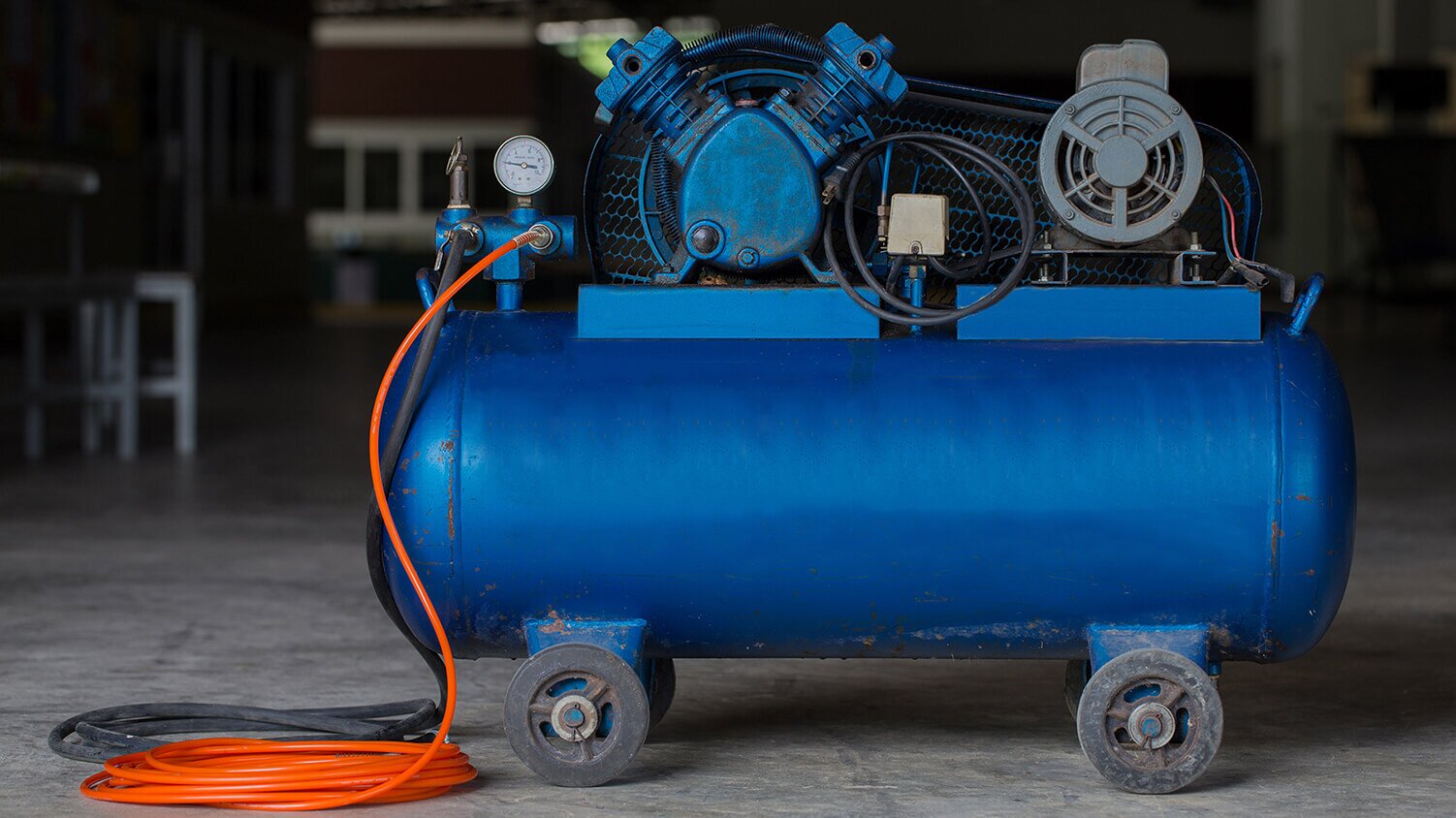
It's likely you've seen an air compressor in use, but just how it works can sometimes be a mystery. At its most basic, an air compressor consists of three primary components: the drive, the pump, and the storage tank.
The drive, typically either an electric motor or gas engine, is what provides the power to propel the compressor pump. The pump then utilizes the energy generated by the drive to draw in air from the surrounding atmosphere and compress it to an elevated pressure. Once compressed, the air is then sent through a discharge tube to a storage tank for later use. The storage tank stores the compressed air and features a one-way valve called a check valve which prevents the compressed air from applying pressure back on the pump. Because the air storage tank acts as an air flow buffer, the air compressor doesn't need to run continuously, decreasing wear on the pump and potential motor damage from overheating.
- Positive Displacement: In the most common method for air compressors, air is drawn into a chamber which opens and closes. Internal working parts then reduce the volume of the chamber, compressing the air. After this cycle is finished, the air is forced through the chamber, stored in the tank, and is ready for use.
- Dynamic (nonpositive) Displacement: With this type of displacement, rotating blades on an impeller located at the front end of the chamber pull air into the chamber. The energy created by the rotation of the blades builds air pressure and can quickly create large volumes of compressed air. Compressors incorporating dynamic displacement most often are used in commercial and industrial applications where constant pressure and large volume flow-rates are required.
With either method, after the maximum pressure is achieved inside the compressor tank and the duty cycle is completed, the compressor will shut off and will remain off until the air pressure in the tank drops below a set level.
If you're considering purchasing an air compressor, you'll also want to consider the drive type, lubrication, CFM, and PSI. Taking a closer look, here's some information to keep in mind.
- Direct Drive or Belt Drive: With direct drive, the motor is attached directly to the compressor's crankshaft. A direct drive features increased efficiency as less power is lost during the transfer of power to the crankshaft. Compressors with direct drive require less maintenance. For belt drive compressors, as the motor turns, it turns the belt which activates the pump in the system. Economical and most widely used in air compressors, the belts are adjustable to change with differing air demands.
- Lubrication: To continue to run effectively and efficiently, air compressors require lubrication. Piston compressors, both single-stage and two-stage, need oil to reduce wear and tear on moving parts, and it's applied in a couple of different ways. Splash lubrication features a dipper that dips into a trough filled with oil. Lubricating oil is then splashed on the piston and cylinder during operation. With pressure lubrication, oil is pumped through passages drilled inside the compressor, oiling the internal compressor parts. A more expensive system, pressure lubrication also provides longer operating life than splash lubrication. Oil-less or oil-free compressors are popular choices and are non-lubricated systems featuring internal components often coated in chemicals, such as Teflon, that resist friction. Although permanently lubricated, oil-less compressors aren't recommended for long, continuous-use operation as they heat up very fast.
- PSI and CFM: Pounds-force per square inch (PSI) is the measurement used to determine the force applied to compressed air. The higher the PSI is, the greater the amount of force that will be exerted on the air within a compressor. CFM, or cubic feet per minute, measures the volume of air within an air compressor and is the rate at which a compressor can deliver a volume of air. The higher the CFM value is, the greater the volume of air the compressor creates. Both measurements are critical to determine whether the compressor used can properly execute the job as well as work with the necessary tools to do the job.
Although from the outside an air compressor most often looks simply like a tank, a handle, wheels, and a motor you hook a coiled air hose to, internally there's a lot going on to provide the pneumatic power you need on demand.
When you need to be sure your compressor is functioning properly, you can count on Zoro for compressor oil as well as a variety of air compressor parts to keep you up and running.
Product Compliance and Suitability
The product statements contained in this guide are intended for general informational purposes only. Such product statements do not constitute a product recommendation or representation as to the appropriateness, accuracy, completeness, correctness or currentness of the information provided. Information provided in this guide does not replace the use by you of any manufacturer instructions, technical product manual, or other professional resource or adviser available to you. Always read, understand and follow all manufacturer instructions.
