


How Do Portable Generators Work?
A portable generator provides a consistent power source for a variety of situations, whether keeping the lights on during a blackout or delivering electricity to a jobsite, campsite, or sporting event.
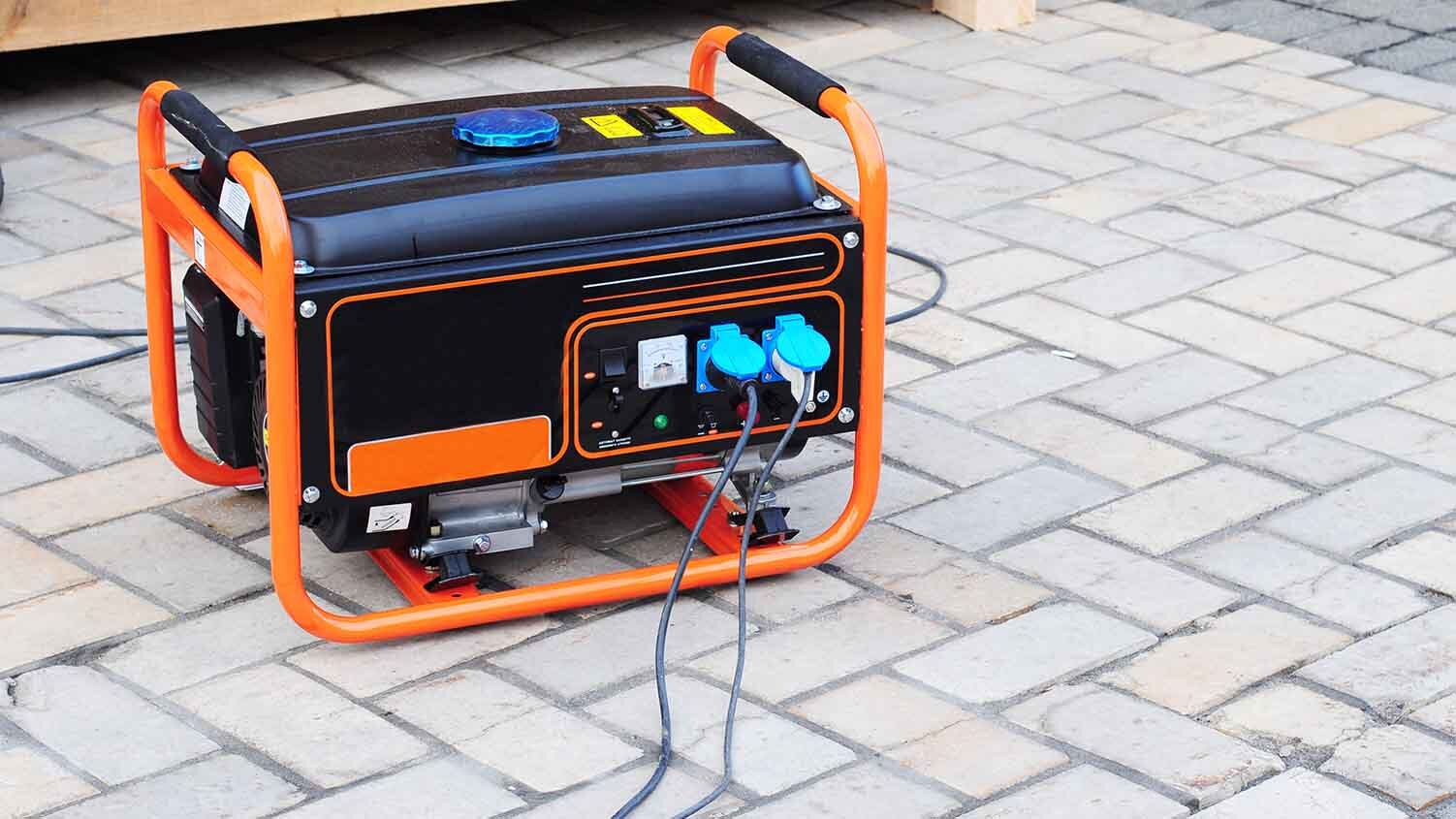
A portable generator provides a consistent power source for a variety of situations, whether keeping the lights on during a blackout or delivering electricity to a jobsite, campsite, or sporting event. They produce electricity using a gas engine that turns an on-board alternator to generate power and are easily movable, making portable generators more versatile than permanently installed standby generator systems. Portable generator units must be manually started, either by electrical switch or by pulling a recoil rope.
Equipped with a series of outlets, you can use a portable generator to power everything from extension cords to power tools to appliances. More powerful models generally feature more outlet combinations. Depending on power requirements and how often you plan to use your unit, accessories such as generator covers, cords, cables, and adaptors can provide ways to expand the use of your generator, as well as protect your investment. For example, a manual transfer switch—combined with an exterior outlet receptacle (known as an inlet box) and a heavy-duty cable—can be used to connect your generator to select circuit breakers to provide safe and dependable home power backup.
Portable Generator Ratings
Ratings on portable generators indicate the amount of power, measured by watts. The more watts, the more items you can power up. There are two different types of watts:
- Running watts are the continuous watts produced to keep the power running.
- Starting watts are the extra power required to start larger motor-driven appliances and equipment, or power multiple items at one time.
When purchasing a portable generator, it’s best to estimate the amount of energy you’ll need to power essential equipment. Insufficient voltage could produce something similar to a utility “brown out” or even damage the items you are trying to power up. Check the owner’s manual of your appliances or devices to locate voltage requirements.
Beyond power, some models are more lightweight than others and certain units feature technology to reduce the noise often associated with portable generators.
Main Generator Components
Portable generators feature these main components, which are contained within a metal framework on wheels that can be moved wherever power is needed.
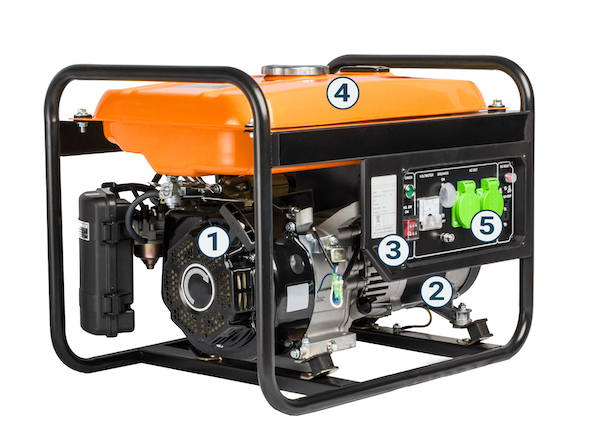 |
1. Internal Combustion Engine 2. Alternator 3. Starter 4. Fuel Tank 5. Outlets |
How They Work
At their most basic, portable generators convert chemical energy into mechanical energy and then into electrical energy by burning gas to rotate the alternator, which induces an electrical current. The resulting AC current can then be used to supply power through the generator’s exterior outlets.
Generator Safety Risk
Remember that portable generators, like all small-engine machines, produce dangerous carbon monoxide fumes. Never operate a generator in an enclosed space like a garage or shed and keep your distance when the unit is on. Even if a door or window is left open, odorless carbon monoxide can build up and pose a safety risk. Always point the fumes from a portable generator away from homes or offices, and keep away from doors and windows.
As an added safety measure, some models include built-in carbon monoxide detectors that automatically shut down the generator before levels become deadly. While this feature could add some cost to the unit, it is certainly worth considering. Of course, if you or someone else is experiencing dizziness or other symptoms, move immediately to fresh air before getting medical assistance.
Never refuel a hot generator—always let the machine cool down first. Also, don’t refill the unit near a heater or other hot equipment such as portable lights. And be mindful that the muffler on a generator gets extremely hot. Don’t touch it and don’t place anything plastic on the generator unless you know it has cooled off.
Storage and Maintenance For Portable Generators
Because portable generators are often needed for emergency back-up power, proper storage and maintenance are essential. Store your generator in a dry place that’s easily accessible, like a designated area in a garage or shed.
When storing for longer than a few weeks, you can keep the tank empty or, if you want to have the generator ready for use, keep the tank full but be sure to add a fuel stabilizer. This solution, typically made from petroleum products, offers a protective layer for the fuel in a gas tank and discourages gunk from forming and clogging the fuel system. Run the generator for a few minutes after adding stabilizer to allow it to circulate through the carburetor. Adding a stabilizer can help keep fuel fresh for up to 36 months.
Your generator will also need enough oil in it to lubricate the engine and keep the whole unit operating smoothly and reliably. Check the oil levels whenever refueling by using the dipstick and fill to the full marker. Choose an oil that’s designed for your specific generator and engine, as well as the temperature where you will be operating your unit.
To keep your generator in good shape, inspect generator parts for wear and tear often and replace as needed—especially the carburetor, air filter, and spark plug. For more specifics, follow the recommended storage and maintenance guidelines provided in your owner’s manual.
Assess your power needs, follow safety procedures when operating, maintain your portable generator as recommended, and you can enjoy peace of mind knowing that you have reliable power at the ready whenever you need it.
Product Compliance and Suitability
The product statements contained in this guide are intended for general informational purposes only. Such product statements do not constitute a product recommendation or representation as to the appropriateness, accuracy, completeness, correctness or currentness of the information provided. Information provided in this guide does not replace the use by you of any manufacturer instructions, technical product manual, or other professional resource or adviser available to you. Always read, understand and follow all manufacturer instructions.
