


How to Break Apart Concrete
12/29/20 - Zoro Staff
Concrete sidewalks, patios, or steps can crack and crumble over time, making them not only unattractive but also a dangerous hazard to your family and anyone who visits your home. If you’ve decided your old and broken concrete has to go, you don’t necessarily have to pay a contractor to do the job. If you plan ahead and follow proper safety guidelines, this is a task you can handle yourself.
But, first things first: Before picking up the right tool to smash through that old concrete, you’re going to want to pick up some heavy-duty work gloves to avoid tearing up your hands, and safety goggles to keep your eyes protected from the concrete and sand shards that will inevitably fly around over the course of the project.
When it comes to choosing your demolition tool, it really comes down to just how physical you want to get. Whatever you choose, make no mistake, breaking apart concrete is hard work. Always consider your physical condition before making the commitment. And once you get started, stay hydrated, especially if working on a hot day. And unless you’re on the clock and doing this for your job, take it easy and work at your own pace. Slow and steady wins the race.
Here are three common methods for breaking apart concrete:
Sledgehammer method
If the slab of concrete is 3" or less, a good old-fashioned sledgehammer should do the trick. But there are a few steps you can take to make this tough job a little easier.
First, dig underneath the concrete to loosen it up. Use a shovel or pickaxe to burrow a foot or so underground, breaking up the rock and roots. Then, get a friend to help out by lifting a corner of the slab with a pry bar while you whack away at the corners and move toward the center. Pull out large chunks while you keep moving around and breaking up the slab. This helps take away the concrete’s support structure and makes it easier to crack away. You can also consider shoving a piece of wood under the slab to hold it up while you hammer away at it.
When wielding a sledgehammer, you’ll want to hold the hammer with your dominant hand close to the blunt end and the other hand at the far end of the handle. Raise it upward, making sure not to hold it directly over your head (you don’t want to risk it falling on you), and then slide your dominant hand down the handle as you strike. Even though this is the most hands-on way to demolish concrete on your own, remember to let the sledgehammer do its thing. You don’t need to swing very hard because the momentum of the tool’s head will do the heavy lifting.
Jackhammer method
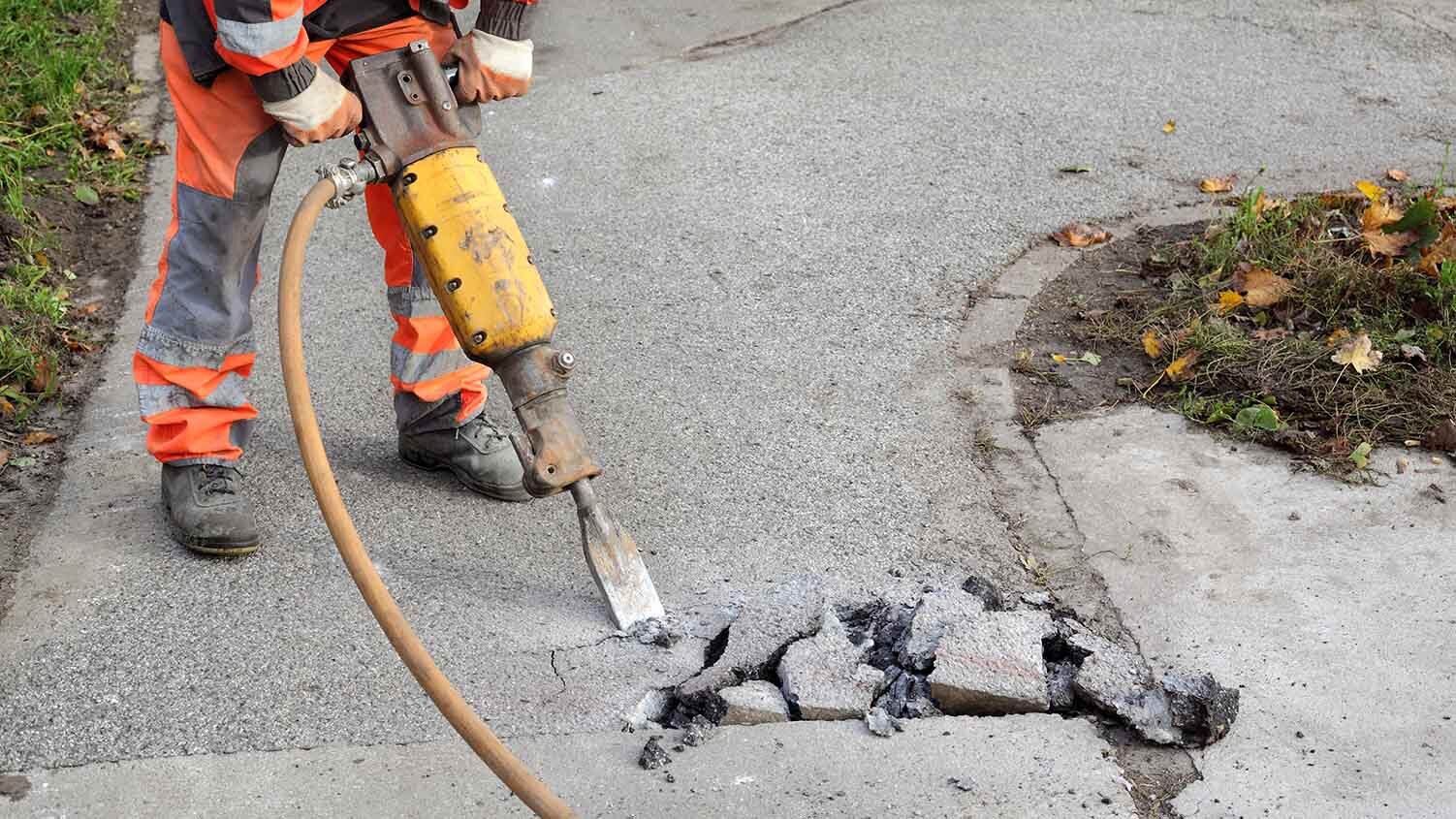
An electric or pneumatic jackhammer is the best choice to remove concrete that’s thicker than 3". Both types of jackhammers do the same thing: a pointed chisel moves up and down at a high speed to break up the concrete. More than anything, this method is a good choice for those who want to spare their body the physical strain required to effectively use a sledgehammer.
Keep in mind, while you don’t have to be a musclehead to operate a jackhammer, it is a powerful machine that does require a certain amount of strength and physical dexterity. And while pneumatic tools are more powerful than their electric counterparts, they are also heavier and therefore more difficult to operate.
Jackhammers can be rented from most Big Box retailers, but the costs can add up—especially if your project takes more than a day or so.
Chipping hammer method
If you’re dealing with a project that isn’t a traditional flat slab but rather a rounded or lopsided piece of concrete, a chipping hammer could be the best choice. These tools are light and handheld, giving the operator more control to chip away at concrete in hard-to-reach spaces like corners or around edges. Pneumatic versions have an air-operated piston that powers a blunt chisel to bash away at concrete.
Getting Rid of Old Concrete
Old concrete won’t get picked up by most residential garbage services, so you need to make arrangements to remove it yourself. Many people order a work dumpster through a private trash contractor—make sure you tell them that it will be used for concrete or you may not get a container heavy-duty enough for heavy blocks of concrete. Others use a truck or trailer to bring excess concrete to waste facilities.
Some people use a hand cart to transport old pieces of concrete to other areas of their home to use as everything from retaining walls for backyard water features, as edging for gardens or landscaping, or even to form the outline of a fire pit.
You may need to further break up large concrete chunks, depending on what you choose to do with this excess material. But no matter what, breaking apart concrete on your own will provide a solid workout and a good sense of accomplishment while removing a potentially dangerous eyesore from your property.
Product Compliance and Suitability
The product statements contained in this guide are intended for general informational purposes only. Such product statements do not constitute a product recommendation or representation as to the appropriateness, accuracy, completeness, correctness or currentness of the information provided. Information provided in this guide does not replace the use by you of any manufacturer instructions, technical product manual, or other professional resource or adviser available to you. Always read, understand and follow all manufacturer instructions.
