


How to Choose an Axe for Your Business Needs

The right tools can greatly impact job efficiency and safety—including axes. Whether managing a facility, overseeing jobsites, handling emergency response, or maintaining outdoor spaces, selecting the appropriate axe for your needs ensures durability, safety, and optimal performance.
This guide breaks down different types of axes, their primary uses, and key factors to consider when purchasing one for your business or team.
Types of Axes and Their Uses
Splitting Axe
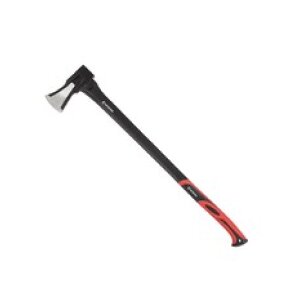
What It Does: Splitting axes are built to split logs along the grain rather than cutting across. The wedge-shaped blade helps drive wood apart with less effort, making tough jobs easier and more efficient.
Who Uses It: Landscapers, facilities maintenance teams
Hatchet
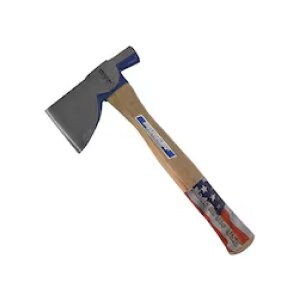
What It Does: Compact and versatile, hatchets are ideal for light chopping, trimming, and kindling prep. Their smaller size makes them easy to carry, store, and use for quick-cutting tasks.
Who Uses It: Outdoor professionals, maintenance crews, and facility managers.
Pick Axe
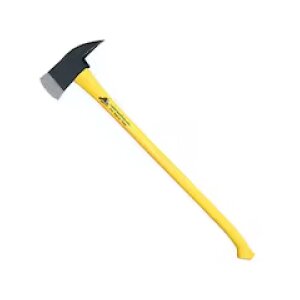
What It Does: Designed for breaking tough ground and rock, a pick axe features a pointed tip for chipping and a flat blade for prying and digging—perfect for excavation and demolition.
Who Uses It: Contractors, landscapers, construction crews, and utility workers.
Key Considerations When Selecting an Axe
Handle Material
- Wood (Hickory, Ash): Traditional feel, absorbs shock well
- Fiberglass: Lightweight and resistant to wear
- Steel: Highly durable, but can transfer more vibration
Head Weight & Balance
- Lighter heads (1.5 – 3 lbs): Ideal for precision tasks
- Heavier heads (4 – 8 lbs): Provides more force for demanding applications
Ergonomics & Safety
- Non-slip grips improve control
- Shock-absorbing handles help reduce strain
- Blade covers and storage solutions improve workplace safety
Workplace Safety Tips for Axe Use
- Always wear proper personal protective equipment (PPE), including gloves, safety glasses, and steel-toe boots.
- Inspect the axe before each use for signs of wear, such as a loose handle or chipped blade.
- Use the appropriate axe for the job—Different axes are built for different jobs, and using one outside its intended purpose can affect performance and safety.
- Store axes securely when not in use to prevent accidents and maintain tool longevity.
The right axe isn’t just a tool—it’s an investment in efficiency, safety, and durability on the job. Whether you’re clearing sites, cutting materials, or handling tough demolition work, having the right axe for the jobsite keeps your crew working smarter and safer. Explore Zoro’s professional-grade selection and get the tools you need to power through any task.
Product Compliance and Suitability
The statements contained in this guide are intended for general informational purposes only. Such statements do not constitute a product recommendation or representation as to the appropriateness, accuracy, completeness, correctness, or currentness of the information provided. Information provided in this guide does not replace the use by you of any manufacturer instructions, technical product manual, or other professional resource or adviser available to you. Always read, understand, and follow all manufacturer instructions. Portions of this article were generated in part by ChatGPT, and edited by a member of the Zoro team.
