


How to Choose the Right Commercial Food Sealer for Your Business

If you’re a restaurant owner, one of the biggest expenses you face is the cost of food. That’s why it’s imperative to eliminate food waste whenever possible. One of the best ways to ensure your ingredients and prepared dishes stay fresh longer is to invest in a food sealer. Choosing the right vacuum food sealer for your business’s needs can be overwhelming at first. By the time you’re done reading this article, you’ll have a clear path forward. Let’s get started!
The Benefits of Vacuum Sealers
Large Batch Cooking
Vacuum sealers allow your restaurant crew to make large batches of soup, stews, lasagnas, and casseroles and keep them fresh for longer. Cooking a dish during a slow period can help you save time when business picks back up.
Pre-Portion Ingredients
Make your kitchen line go even faster by pre-portioning out the ingredients of dishes that you make regularly. The added bonus is that your ingredients will stay fresher for longer!
Manage Bulk Ingredients
As a restaurant owner, you know that buying ingredients in bulk can help your bottom line—especially when it comes to expensive ingredients like meats and cheeses. Use a vacuum sealer to keep your ingredients fresh until you need them. In some cases, you can double their shelf life.
Reduce Food Waste
Vacuum sealers remove oxygen from the packages, limiting the production of the microorganisms that cause food to spoil. Vacuum-sealed frozen foods can last 2-3 years (only 6-12 months when stored conventionally). Refrigerated vacuum-sealed foods can last 1-2 weeks (1-3 days when stored conventionally). Vacuum sealing can drastically extend the life of your ingredients and provide a great deal of savings for your business.
What to Consider Before Purchasing a Commercial Vacuum Sealer
How frequently will your restaurant use the vacuum seal?
If you’re vacuum sealing more than 30 times a day, choose an in-chamber machine.
What is the size of the food items you’ll be sealing?
The size of your package will determine how large (or small) of a machine you’ll need.
Will you be sealing liquid?
If the answer is ‘yes,’ make sure to choose a chamber sealer (external vacuum sealers cannot seal liquid unless it’s frozen first).
Types of Vacuum Sealers
Let’s look at some additional pros and cons of in-chamber vacuum sealers and external vacuum sealers.
| Chamber Vacuum Sealers | External Vacuum Sealers |
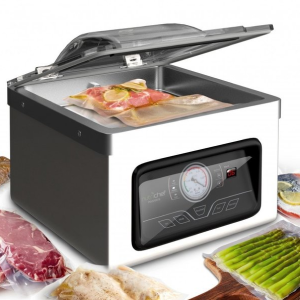 | 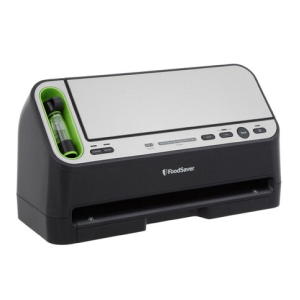 |
|
|
Are you ready to take control of your restaurant’s food costs? Take a look at our vacuum food sealers today! Don’t forget to shop for everything else your restaurant needs at everyday low prices at Zoro.
Product Compliance and Suitability
The product statements contained in this guide are intended for general informational purposes only. Such product statements do not constitute a product recommendation or representation as to the appropriateness, accuracy, completeness, correctness, or currentness of the information provided. Information provided in this guide does not replace the use by you of any manufacturer instructions, technical product manual, or other professional resource or adviser available to you. Always read, understand, and follow all manufacturer instructions.
