


How to Choose the Right Welding Helmet for Your Business
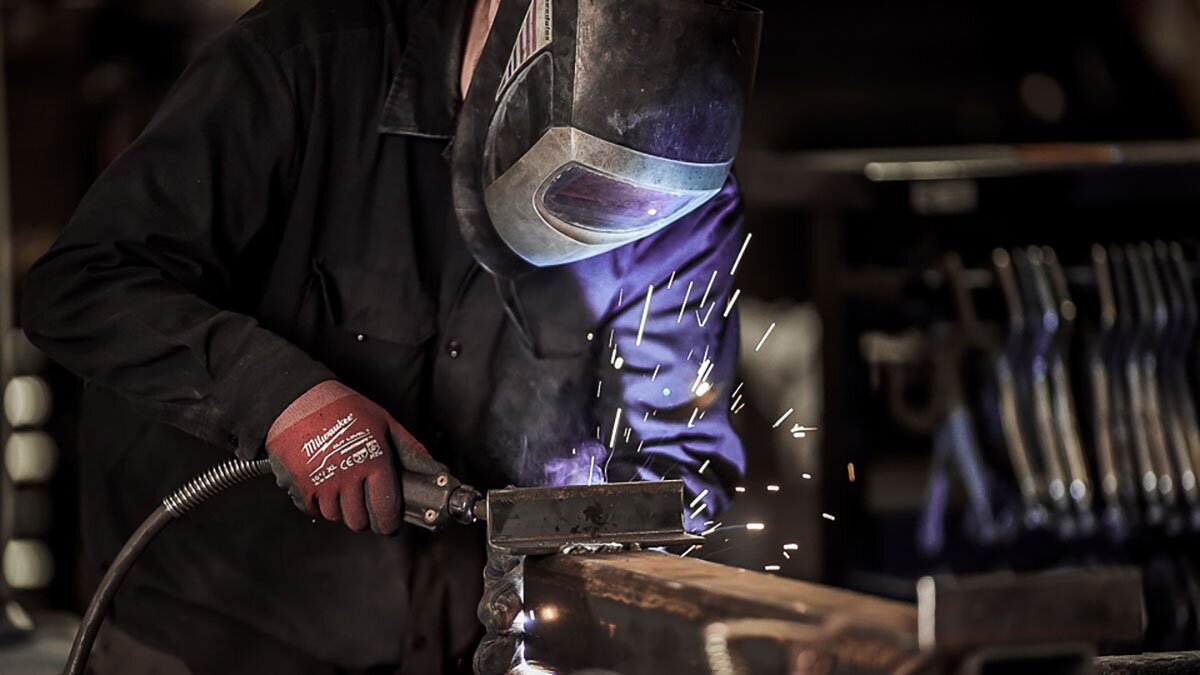
Table of Contents
Whether you’re selecting welding helmets for yourself or your team of welders, making the right selection for the type of work you do is critical. The right helmet will protect your eyes from harmful welding light and shield your face, head, ears, and neck from dangerous sparks and debris.
In general, there are two types of welding helmets: passive-lens helmets and auto-darkening lens helmets. This article discusses the pros and cons of both and provides some additional thoughts on safety, lens selection, proper fit, and more. Let’s get into it!
What’s the Difference Between a Passive-Lens and Auto-Darkening Lens Welding Helmet?
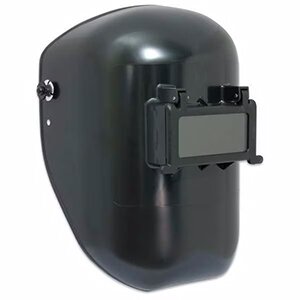
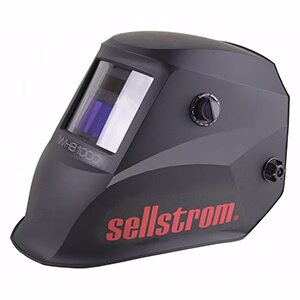
Check out the chart to learn the main differences between these two welding helmets.
| Passive-Lens Welding Helmet | Auto-Darkening Welding Helmet |
 |
 |
|
|
What Are the ANSI Safety Standards for Welding Helmets?
ANSI Z87.1 – 2003 articulates the most recent safety standards on welding helmets released by the American National Standards Institute. This standard requires welding helmet manufacturers to conduct lab testing to prove helmet capabilities, including switching speeds and shade settings.
It’s important to note that not all helmets on the market meet ANSI standards. Check the packaging to ensure it is marked with ANSI Z87.1 – 2003 or Z87+. These claims prove that they have the latest approval from ANSI and the Society of Safety Engineers. Keep in mind that simply “ANSI-Approved” is not a guarantee that the helmet passed the 2003 standard.
OSHA’s Guidance on Selecting the Right Lens Shade
OSHA has clear guidance on how dark your helmet’s lens must be to provide the minimum protection needed for a variety of welding tasks. Find OSHA’s charts here.
You’ll also see that ANSI and AWS (American Welding Society) have recommended numbers that are higher than OSHA’s minimum protective shade. When selecting a helmet, make sure you do not go below the shade number recommended by OSHA.
If someone is providing you with a welding helmet, make sure the shade of the helmet provides the eye protection needed for the task at hand.
How Many Sensors Do Auto-Darkening Helmets Have?
Welding helmets for DIYers are commonly outfitted with two light sensors, while industrial-grade welding helmets feature four sensors. The more sensors the welding helmet has, the greater the coverage, especially for out-of-position tasks where sensors may be obstructed. Four sensors work well for most fabrication jobs.
The sensitivity of your welding helmet’s sensors refers to the amount of light it needs to be exposed to before darkening the lens. Most auto-darkening helmets allow the wearer to select the sensitivity of the helmet.
The Helmet’s Viewing Area
The wider the viewing area, the greater visibility you’ll have to your workpiece. A smaller lens provides a more focused view. Keep in mind that a larger viewing area may contribute to the overall weight of the helmet.
Comfort and Fit Matter
No matter how high-tech your welding helmet is, it can’t provide optimum protection if it doesn’t fit properly. Your welding helmet should fit easily and snugly around your head and stay in place throughout your entire shift. Many welders prefer more lightweight helmets, especially if they’re wearing the helmet for the majority of the day. Here are some additional tips to ensure you achieve the perfect fit.
- Make sure to wear your welding bandana when trying on a helmet. Welding bandanas are flame retardant and protect your head and ears on the job. Make sure the helmet fits snugly but is not too tight.
- Ensure the helmet can be tightened securely around the circumference of the helmet and does not put added pressure on the top of your head.
- Lean your head back and forth to ensure the helmet moves with you. If the helmet wobbles, it’s too big.
- There should be plenty of space between your face and the front of the helmet. If your face is too close to the lens, moisture can build up in the helmet.
- Choose a lightweight helmet that meets all of your specifications to avoid neck strain.
Now that you know what to look for in a welding helmet, take a look at some great options from Zoro. We have everything you need, from welding protection accessories to PPE to fabrication equipment.
Product Compliance and Suitability
The product statements contained in this guide are intended for general informational purposes only. Such product statements do not constitute a product recommendation or representation as to the appropriateness, accuracy, completeness, correctness, or currentness of the information provided. Information provided in this guide does not replace the use by you of any manufacturer instructions, technical product manual, or other professional resource or adviser available to you. Always read, understand, and follow all manufacturer instructions.
