


How to Dispose of Fluorescent Light Bulbs and Tubes
Going green: Learn how to safely and responsibly dispose of fluorescent light bulbs and tubes for a cleaner environment.

3/9/20 - Zoro Staff
According to the Environmental Protection Agency, fluorescent light bulbs are four to six times more efficient than their incandescent counterparts. A typical incandescent bulb may last up to 750 to 1,000 hours before burning out. A fluorescent light bulb, however, will likely last 10 to 15 times longer and only consume 1/4 to 1/3 of the energy required by an incandescent bulb.
While they're extremely efficient, compact fluorescent light bulbs (CFLs) and fluorescent tubes will eventually burn out. When they do, extra care and caution must be taken when disposing of them compared to their incandescent cousins. The extra care is needed because what makes the bulbs and tubes so highly efficient—mercury vapor—also makes them an environmental hazard if not disposed of properly.
While it's a small amount of mercury (on average about 4mg of mercury is sealed within the glass tubing), the bulbs must be discarded with care once they're no longer usable. Unlike incandescent bulbs that typically don't contain toxic chemicals and can be thrown away with the regular trash, CFLs and fluorescent tubes should be properly recycled and not carelessly thrown in the trash. Recycling allows the reuse of the glass, metals, and other materials that make up these lights, and virtually all of their components can be recycled. Fortunately, there are a variety of ways of recycling.
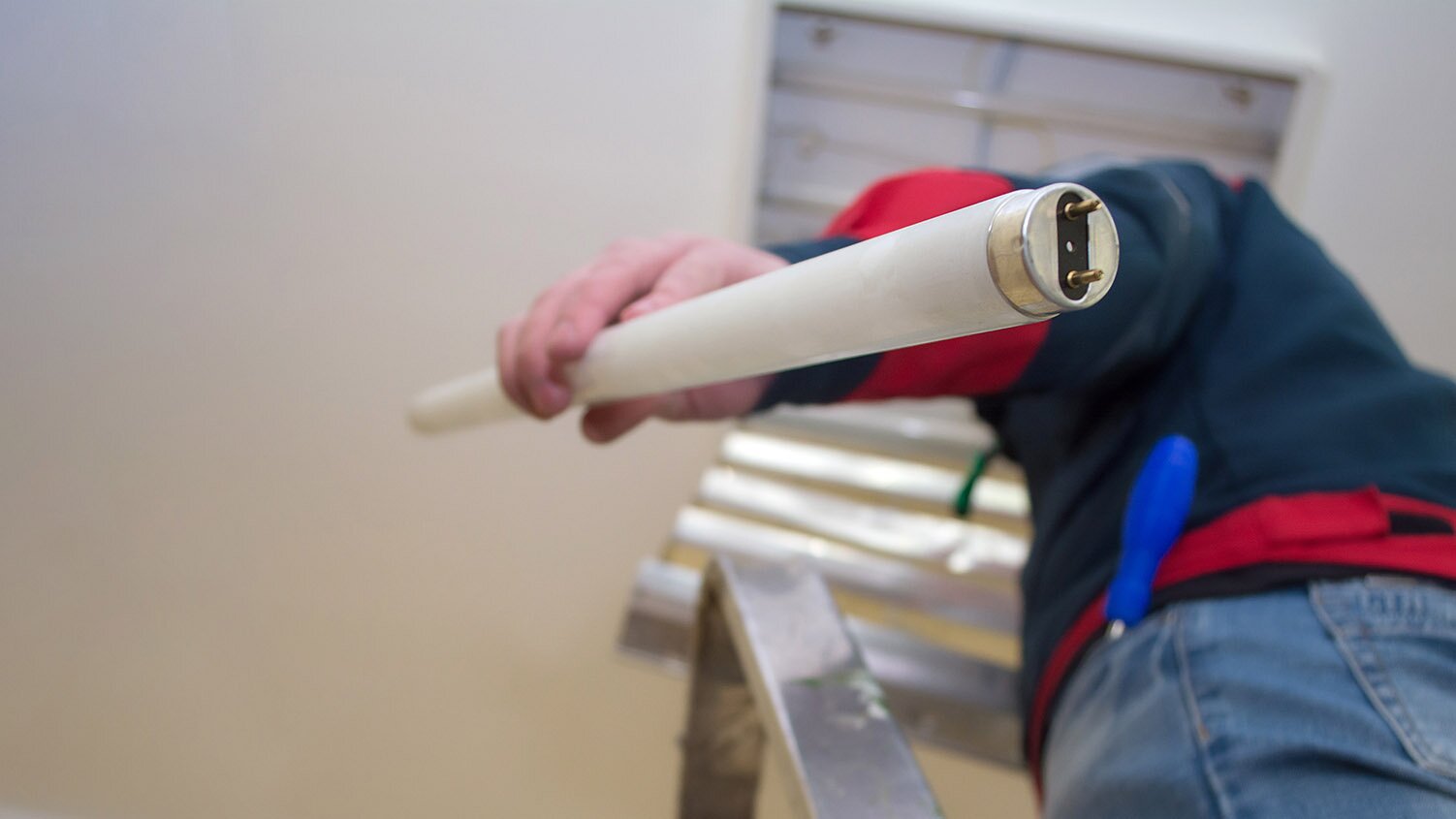
Whether you need to recycle fluorescent tubes or CFLs, which are basically fluorescent tubes smaller in diameter and twisted or folded into a shape somewhat similar to an incandescent light bulb, the process is simple. Start by carefully removing the burned out tube or CFL, being sure not to drop it to prevent it from breaking and releasing the mercury vapor. Once removed, wrap the tube or CFL in a towel, paper, bubble wrap, or some other protective covering.
When you have the recyclables ready, you can contact your local waste collection agency to learn the proper procedures to follow for recycling. An easy way to find one in your area is through the Earth911 website. With this service, you'll be able to find collection schedules in your area or drop-off locations. Local agencies often provide services for free, though some may charge a small fee.
You also may find collection is only scheduled once or twice a year, so you may have to hold on to recyclables until the collection happens. You can learn the schedules once you've contacted your local agency.
Some big-box home improvement stores also provide recycling. Again, Earth911 can provide you information on stores near you that may participate in a recycling program. It's a good idea, however, to check directly with the store before you go and try to recycle anything. Not all stores in regional or national chains may participate in recycling programs. Others, meanwhile, may recycle only certain types of bulbs such as CFLs but not 4' fluorescent tubes.
There are mail-back options for recycling as well. Some bulb manufacturers and other organizations (such as Waste Management) sell pre-labeled recycling kits so you can simply mail used bulbs directly to a recycling center. As bulbs burn out, all you do is add them to the package until it's full. When it is, just seal it and take it to the post office for mailing. The kit cost includes pre-paid shipping charges to a recycling center.
If you can't recycle, and if your local or state environmental regulatory agency permits it, you may have an option. Place the burned out or broken tube or CFL in your regular household trash for normal weekly pickup. However, be sure to seal the bulb in a plastic bag for an additional measure of safety.
Product Compliance and Suitability
The product statements contained in this guide are intended for general informational purposes only. Such product statements do not constitute a product recommendation or representation as to the appropriateness, accuracy, completeness, correctness or currentness of the information provided. Information provided in this guide does not replace the use by you of any manufacturer instructions, technical product manual, or other professional resource or adviser available to you. Always read, understand and follow all manufacturer instructions.
