


How to Dispose of Light Bulbs
Shedding light on safe and eco-friendly disposal: a guide to properly disposing of light bulbs.
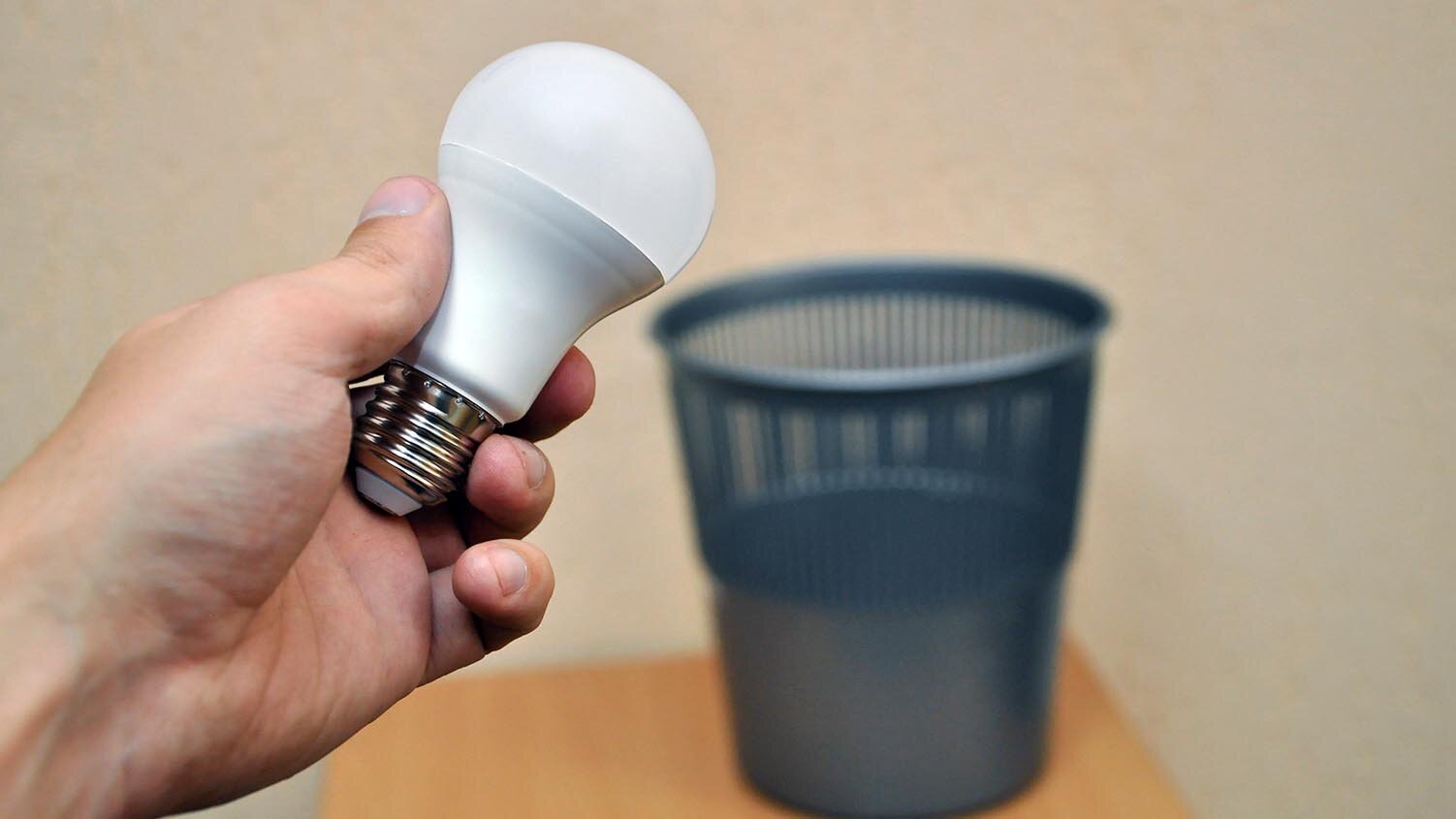
With so many different types of light bulbs on the market—from incandescent to fluorescent to LED—it can be unclear how to dispose of specific bulbs once they burn out. If you’re throwing all of your bulbs straight into the trash, you could be unknowingly contributing to environmental issues.
The fact is, some bulbs contain hazardous materials, which pollute water and soil in landfills and could cause lasting damage. In some states and local municipalities there are even laws that regulate how certain bulbs must be disposed of.
Luckily, there are entire industries that exist to help the public properly recycle harmful bulbs. All it takes is a little research to know which ones go into the trash, which can or cannot be recycled curbside, and which must be taken to a local drop-off station or facility for processing.
Here is a handy guide, along with additional information on how to dispose of each type of bulb.
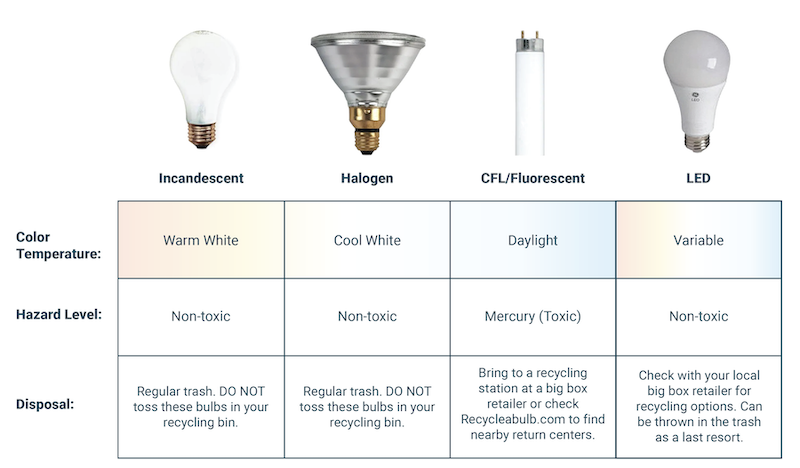
Incandescent/Halogen
Because they are free of toxic chemicals, and the energy required to recycle them can exceed the energy saved, standard incandescent and halogen bulbs can be thrown directly into the regular trash. However, you might want to consider wrapping them in paper or other packing material to avoid tearing your trash bags.
In the past, some big box retailers did accept old incandescent and halogen bulbs, but many have stopped their recycling programs. With discussions of phasing out incandescent bulbs taking place in many countries on national and local levels over the past several years, it is not expected that these recycling programs will resume.
A common mistake many people make is assuming that incandescent and halogen bulbs can be placed in the recycling bin alongside other glass items. This is not recommended, as the metal wiring and other components of these bulbs are tough to remove. They could even potentially slow down the sorting activities at recycling facilities, doing more harm than good.
CFL/Fluorescent
CFL (compact fluorescent light) bulbs contain a very small amount (roughly 4 milligrams) of the toxic metal mercury. But this is enough to cause environmental damage if the mercury seeps into the ground at landfills or enters the water supply. Typically, CFL bulbs are accepted by many major retail chains—keep an eye out for recycling bins in the front of stores. You can also consult websites like Recycleabulb.com to find nearby return centers.
Those long-tube fluorescent bulbs often found in offices also contain mercury—they should be recycled in the same way as CFLs. Before removing an old bulb, carefully wrap it in packing material to avoid breakage.
According to the EPA, if you do break a fluorescent bulb, there are specific protocols you should follow. First off, DO NOT vacuum up the glass unless you have removed all of the mercury from the area. Vacuuming can further spread mercury powder or vapor into the air.
Instead, instruct people and pets to leave the immediate area and air out the room for a good 5 to 10 minutes. Shut off the heating or A/C if it is running. Then, collect all broken material by scooping the glass with stiff paper or cardboard and using sticky tape, like duct tape, to pick up all remaining fragments. Put the used tape in a glass jar or plastic bag and put all materials into a sealable container. Finally, you can bring all of the broken and unbroken material to a nearby recycling center or consumer electronics recycler.
LED
LED (light-emitting diode) bulbs are roughly 90% more efficient than standard incandescent bulbs. They light up using an electrical current that passes through a microchip and illuminates many tiny semiconductor segments, called diodes.
LEDs are free from any harmful chemicals and can be put in the garbage can as a last resort. However, unlike old-school incandescents, there are several components within LED bulbs that are easily recyclable. Again, check a big box retailer and ask if they recycle LEDs. There are even companies that specialize in recycling LED bulbs. One example is HolidayLEDs, which will gladly accept your old holiday lights, and even let you ship them directly to their facilities.
Here’s a list of resources to help you dispose of all of your bulbs in the safest and most environmentally friendly way.
Earth 911 Recycling Search
This detailed recycling database features information on where to recycle everything from CFL bulbs to old cell phones, computers, and more.
Recycle Nation
A recycling database along with eco-friendly articles and news.
https://recyclenation.com/find/
EPA CFL Cleanup Protocols
https://www.epa.gov/cfl/cleaning-broken-cfl#instructions
EPA CFL Recycling Information
https://www.epa.gov/cfl/recycling-and-disposal-cfls-and-other-bulbs-contain-mercury
Product Compliance and Suitability
The product statements contained in this guide are intended for general informational purposes only. Such product statements do not constitute a product recommendation or representation as to the appropriateness, accuracy, completeness, correctness or currentness of the information provided. Information provided in this guide does not replace the use by you of any manufacturer instructions, technical product manual, or other professional resource or adviser available to you. Always read, understand and follow all manufacturer instructions.
