


How to Read a Box Maker's Certificate: A Guide for Small Businesses
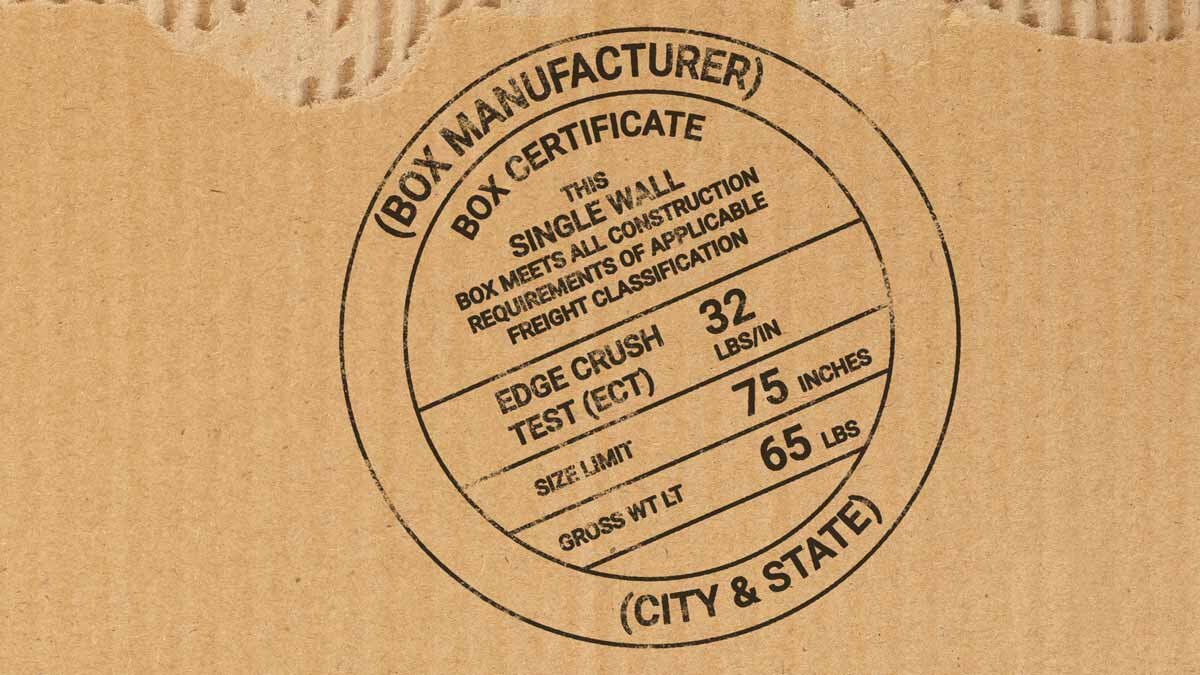
When you’re choosing packaging for your business, it’s not just about size and cost. The strength, durability, and compliance of the box matter just as much, and that’s where the Box Maker's Certificate (BMC) comes in. This certificate stamp, printed on most corrugated boxes, tells you exactly what that box can handle.
If you’ve ever wondered what all those numbers and acronyms mean, you’re not alone. Let’s break it down so you can confidently choose the packaging that keeps your products safe and compliant, whether you're shipping a box, stocking shelves, or sending returns.
What Is a Box Maker's Certificate?
Sometimes called a box cert, cert stamp, or box certificate stamp, a BMC is a printed label that appears on the bottom or flap of a corrugated shipping box. This official box stamp ensures the container meets strength and safety standards set by the International Safe Transit Association (ISTA) and regulated by the Fibre Box Association (FBA).
The box certification stamp typically includes:
The box manufacturer's name
Location where the box was manufactured
Box style or construction type
ECT box or burst strength rating
Maximum weight limit for one stamp
Size limit for perimeter dimensions
These components help businesses verify whether a box is suitable for their shipping, warehousing, or stocking needs.
ECT Box Meaning: What Does It Tell You?
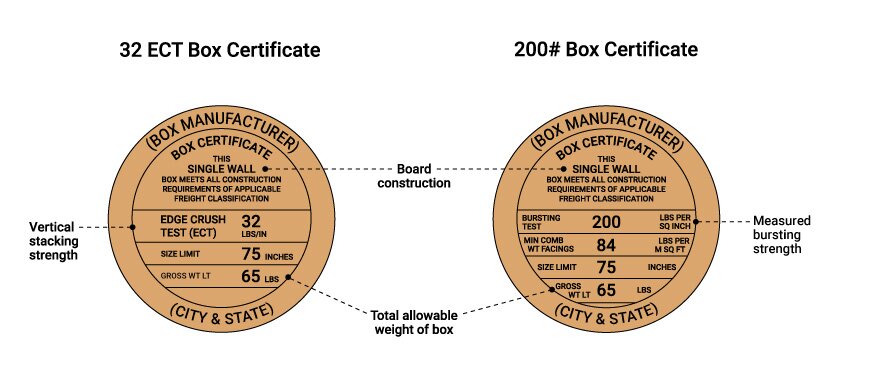
One of the most common terms on a Box Maker's Certificate is “ECT,” short for Edge Crush Test. This test measures how much force the box walls can withstand when stacked vertically.
Common Box Ratings
32 ECT: Ideal for lightweight shipments and standard ecommerce packaging.
44 ECT: A stronger option for medium-weight or denser loads.
48+ ECT: Designed for heavy-duty, industrial, or export uses.
If you see a 32 ECT box, that means the sides of the box can resist 32 lbs. of pressure per inch of edge, making it a popular choice among small businesses looking for both durability and value.
Mullen Test
The Mullen Test, or burst strength test, measures how much pressure a corrugated box can handle before it bursts. During testing, hydraulic pressure is applied until the box wall breaks, and the result—shown in pounds per square inch (psi)—indicates how durable the box is against punctures or pressure during handling and shipping. This rating appears on the Box Manufacturer’s Certificate stamp, helping businesses choose packaging that protects their products in transit.
Why the Box Maker's Stamp Matters for Small Businesses
As a small business owner, you might wear multiple hats—handling sourcing, shipping, and inventory. Packaging that meets compliance standards is a necessity.
A BMC supports your business by:
Meeting shipping carrier and postal service standards
Matching the strength of the box to the job
Preventing shipping damage, returns, and customer complaints
Keeping costs in check
Understanding the Box Maker’s Certificate helps you make informed decisions while avoiding costly packaging errors.
Anatomy of the BMC Box Stamp
Here’s what a typical box BMC includes.
Manufacturer’s Info: Includes the name and location of the box manufacturing facility.
Construction Type: Single-wall, double-wall, or triple-wall, depending on the strength required.
Strength Rating: Displays either the ECT box or Mullen Test rating.
Weight Capacity: Lists the weight limit for one stamp, such as 65 lbs.
Size Limit: Indicates the maximum box dimensions under which the strength rating holds.
Choosing boxes with the correct box certification ensures your shipments are protected and compliant.
What to Know About Box Certifications and Compliance
Carriers like FedEx, UPS, and USPS require boxes to meet minimum packaging standards, and that’s where box certifications come into play. If your box certificate is missing or inaccurate, it can void claims for damage or loss.
Certain sectors like electronics, pharmaceuticals, and food packaging may also require industry-specific box certifications, which can act as a traceable source of compliance for high-stakes supply chains.
When to Inspect the Box Certificate Stamp
To ensure you're always in the clear, inspect the box certification details when:
Packing heavy or valuable shipments
Palletizing boxes
Accepting shipments from a new supplier
Choosing packaging materials for high-value products
Choosing properly stamped boxes is a simple but effective way to keep your logistics running smoothly.
Final Thoughts
Understanding a Box Maker's Certificate may feel technical, but it’s one of the easiest ways to protect your products, save money, and ensure customer satisfaction. Whether you’re shipping out new inventory or restocking your own supplies, a quick glance at the box stamps on the bottom of your packaging can tell you everything you need to know. Next time you see a box certification stamp, you’ll know exactly what it means and how it supports your business.
Product Compliance and Suitability
The statements contained in this guide are intended for general informational purposes only. Such statements do not constitute a product recommendation or representation as to the appropriateness, accuracy, completeness, correctness, or currentness of the information provided. Information provided in this guide does not replace the use by you of any manufacturer instructions, technical product manual, or other professional resource or adviser available to you. Always read, understand, and follow all manufacturer instructions. Portions of this article were generated in part by ChatGPT, and edited by a member of the Zoro team.
