
Hydraulic Hose Size Chart
Hydraulic Hose Size Charts: Dash Sizes, PSI, and Flow Specifications
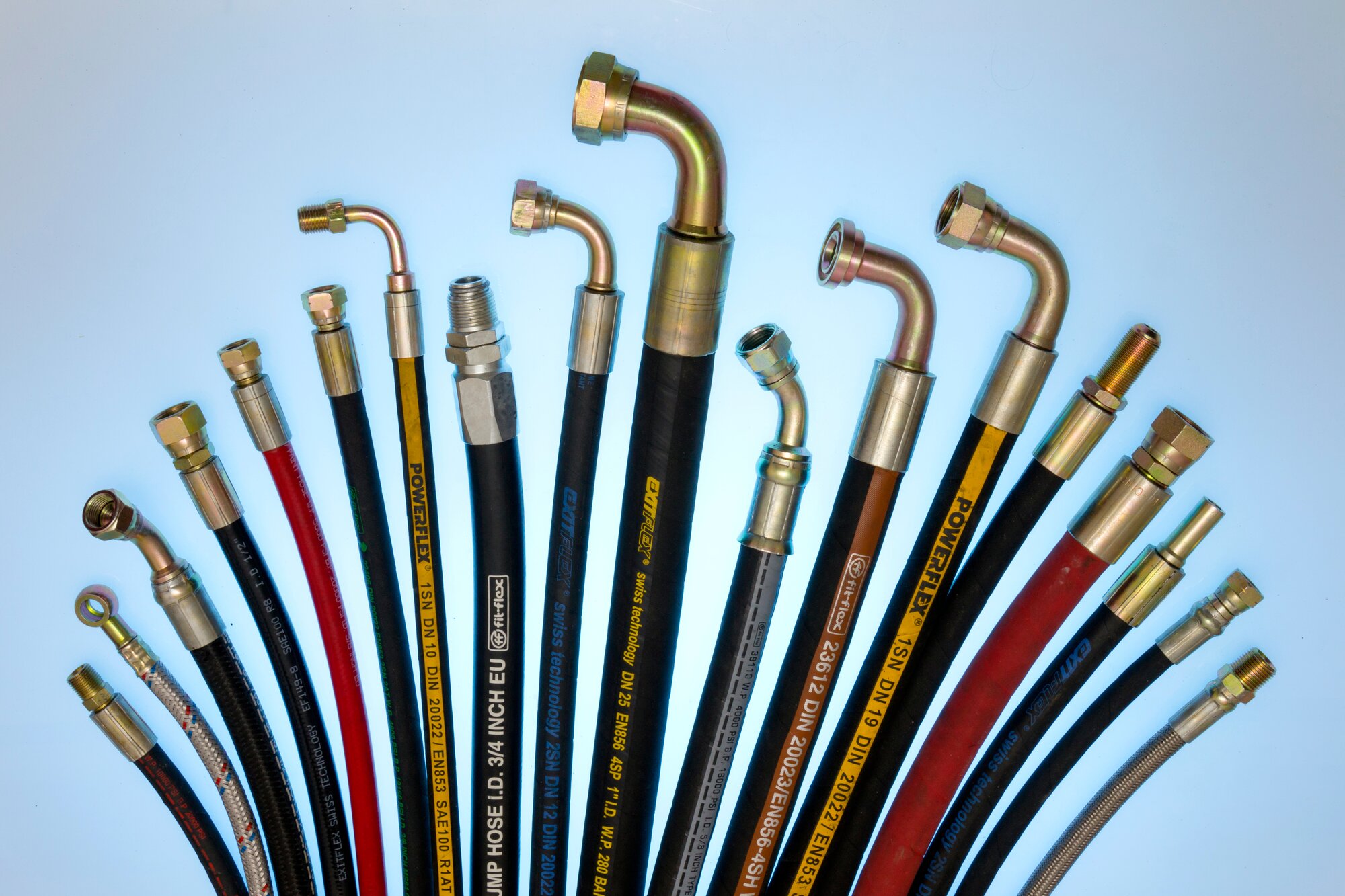
Your Essential Guide to Hydraulic Hose Size Charts
You’ve probably found yourself staring at a leaky hose, wondering, "What exactly am I looking for here?" or "How do I make sure I get the right one without a dozen trips to the supplier?" We get it. The world of hydraulic hoses can seem like a secret language, full of dash sizes, pressure ratings, and flow velocities. But it doesn’t have to be. Our goal is to equip you with the knowledge to confidently identify, select, and even troubleshoot your hydraulic hoses, saving you time, money, and a whole lot of frustration.
Hydraulic Hose Size Chart
| Dash Size | Inside Diameter (ID) (Fractional Inches) | Inside Diameter (ID) (Decimal Inches) | Inside Diameter (ID) (Millimeters) | Typical Application |
|---|---|---|---|---|
| -2 | 1/8" | 0.125" | 3.2 mm | Low-pressure lines, pilot lines |
| -3 | 3/16" | 0.188" | 4.8 mm | Control lines, small equipment |
| -4 | 1/4" | 0.250" | 6.4 mm | Common return, suction, and pressure lines |
| -5 | 5/16" | 0.312" | 7.9 mm | Small to medium equipment |
| -6 | 3/8" | 0.375" | 9.5 mm | Medium pressure lines, general hydraulics |
| -8 | 1/2" | 0.500" | 12.7 mm | Common pressure, return, and suction lines |
| -10 | 5/8" | 0.625" | 15.9 mm | Larger return lines, moderate pressure |
| -12 | 3/4" | 0.750" | 19.1 mm | High flow return, main pressure lines |
| -16 | 1" | 1.000" | 25.4 mm | Main pressure, high flow suction |
| -20 | 1 1/4" | 1.250" | 31.8 mm | Large suction, high volume return lines |
| -24 | 1 1/2" | 1.500" | 38.1 mm | Very large suction, main manifold lines |
| -32 | 2" | 2.000" | 50.8 mm | Industrial bulk flow, large machinery |
Pro Tip: Always measure the actual inside diameter of your old hose if you're unsure. A caliper is your best friend here.
Understanding "Dash" Sizes
Forget inches and millimeters for a moment – in the hydraulic world, we speak in "Dash" sizes. This system is the backbone of hydraulic hose identification and it's simpler than you might think. Each "dash" number represents the hose's Inside Diameter (ID) in sixteenths of an inch.
Why is the ID so important? Because it dictates how much fluid can pass through the hose at any given time, which directly impacts your system's efficiency and performance. Too small, and you restrict flow, generate heat, and create inefficiency. Too large, and you're overspending on material and space without gaining any real benefit.
Outside Diameter (OD) and Wall Thickness
While the ID tells you about flow, the Outside Diameter (OD) and Wall Thickness are crucial for practical considerations. The OD affects everything from fitting into tight spaces and routing the hose to selecting the correct clamps and protective sleeves. The wall thickness, often determined by the hose's construction (e.g., number of reinforcement layers), directly impacts its pressure rating and durability.
| Dash Size | Inside Diameter (ID) (Inches) | Nominal Outside Diameter (OD) (Inches) | Approximate Wall Thickness (Inches) | Notes on Construction/Reinforcement |
|---|---|---|---|---|
| -4 | 0.250" | 0.530" - 0.600" | 0.140" - 0.175" | Often 1-wire braid (SAE 100R1AT) |
| -6 | 0.375" | 0.700" - 0.750" | 0.160" - 0.188" | Often 1-wire braid (SAE 100R1AT) |
| -8 | 0.500" | 0.850" - 0.900" | 0.175" - 0.200" | Often 1-wire braid (SAE 100R1AT) |
| -10 | 0.625" | 1.000" - 1.060" | 0.188" - 0.218" | Can be 1- or 2-wire braid |
| -12 | 0.750" | 1.150" - 1.250" | 0.200" - 0.250" | Often 2-wire braid (SAE 100R2AT) |
| -16 | 1.000" | 1.450" - 1.550" | 0.225" - 0.275" | Often 2-wire braid (SAE 100R2AT) |
| -20 | 1.250" | 1.700" - 1.850" | 0.225" - 0.300" | Can be 2-wire or multi-spiral |
| -24 | 1.500" | 1.950" - 2.150" | 0.225" - 0.325" | Can be 2-wire or multi-spiral |
| -32 | 2.000" | 2.500" - 2.800" | 0.250" - 0.400" | Multi-spiral for very high pressure |
(Note: OD and wall thickness can vary slightly between manufacturers and specific hose types/SAE ratings, so always consult the manufacturer's spec sheet for critical applications.)
Pressure Ratings (PSI/Bar)
This is where safety and reliability come into sharp focus. Every hydraulic hose has a maximum Working Pressure (WP) and a Burst Pressure. The working pressure is the maximum safe operating pressure, and it's typically a quarter of the burst pressure, providing a crucial safety margin. Operating a hose above its rated working pressure is a recipe for disaster – premature failure, leaks, and potential injury.
| Dash Size | SAE 100R1AT (1-Wire Braid) Max Working Pressure (PSI) | SAE 100R2AT (2-Wire Braid) Max Working Pressure (PSI) | SAE 100R16 (Compact 2-Wire) Max Working Pressure (PSI) | SAE 100R12 (Medium Pressure Multi-Spiral) Max Working Pressure (PSI) |
|---|---|---|---|---|
| -4 | 2750 | 5800 | 5000 | N/A |
| -6 | 2250 | 5000 | 4000 | N/A |
| -8 | 2000 | 4000 | 3500 | 4000 |
| -10 | 1500 | 3250 | 3000 | 3500 |
| -12 | 1250 | 2750 | 2750 | 3000 |
| -16 | 800 | 2000 | 2000 | 2500 |
| -20 | 650 | 1500 | 1750 | 2000 |
| -24 | 500 | 1250 | 1500 | 1750 |
| -32 | 350 | 750 | 1000 | 1250 |
This chart provides typical values. Actual working pressures depend on the specific hose construction, manufacturer, and operating temperature. Always consult the hose layline or manufacturer’s specifications for precise ratings.
The Flow State: Velocity and GPM
Choosing the right hose size isn't just about pressure; it's about optimizing Flow Velocity. Think of it like traffic on a road:
- Too narrow (small ID): Traffic jams, overheating, excessive friction, and energy loss. This results in pressure drops and inefficient operation.
- Too wide (large ID): Traffic moves slowly, but you're paying for more road than you need. The hose might be unnecessarily heavy and bulky, and you're wasting money.
The goal is to find the "just right" balance, ensuring fluid moves efficiently without damaging your components or wasting energy.
Here are generally recommended fluid velocities for different parts of a hydraulic system:
| Line Type | Recommended Fluid Velocity (Feet Per Second - FPS) |
|---|---|
| Suction Lines (Pump Inlet) | 2 to 4 fps |
| Return Lines (Tank) | 10 to 15 fps |
| Pressure Lines (General) | 15 to 25 fps |
Putting It All Together: A Quick Checklist
When you're faced with a hydraulic hose replacement or a new system design, here’s your straightforward checklist:
- Identify the Dash Size (ID): Measure the old hose's inner diameter, or check the markings on the hose itself. Remember: 1 Dash = 1/16th inch ID.
- Determine the Pressure Rating: Look for "WP" or "Max Pressure" on the hose layline. Make sure your new hose meets or exceeds this.
- Consider Flow Rate (GPM) and Velocity: If you're designing a new system or upgrading, use the GPM vs. Velocity chart to ensure efficient flow and prevent issues.
- Check the Outside Diameter (OD): Ensure the new hose will fit physically and that you can use appropriate clamps or routing solutions.
Verify End Fittings: This article focuses on hose sizing, but always remember to match the thread type, size, and seal type of your fittings!
Product Compliance and Suitability
The product statements contained in this guide are intended for general informational purposes only. Such product statements do not constitute a product recommendation or representation as to the appropriateness, accuracy, completeness, correctness, or currentness of the information provided. Information provided in this guide does not replace the use by you of any manufacturer instructions, technical product manual, or other professional resource or adviser available to you. Always read, understand, and follow all manufacturer instructions.
