
Metric Bolt Size Chart
Metric bolt size chart M3 to M36 with pitch, wrench size, and strength.
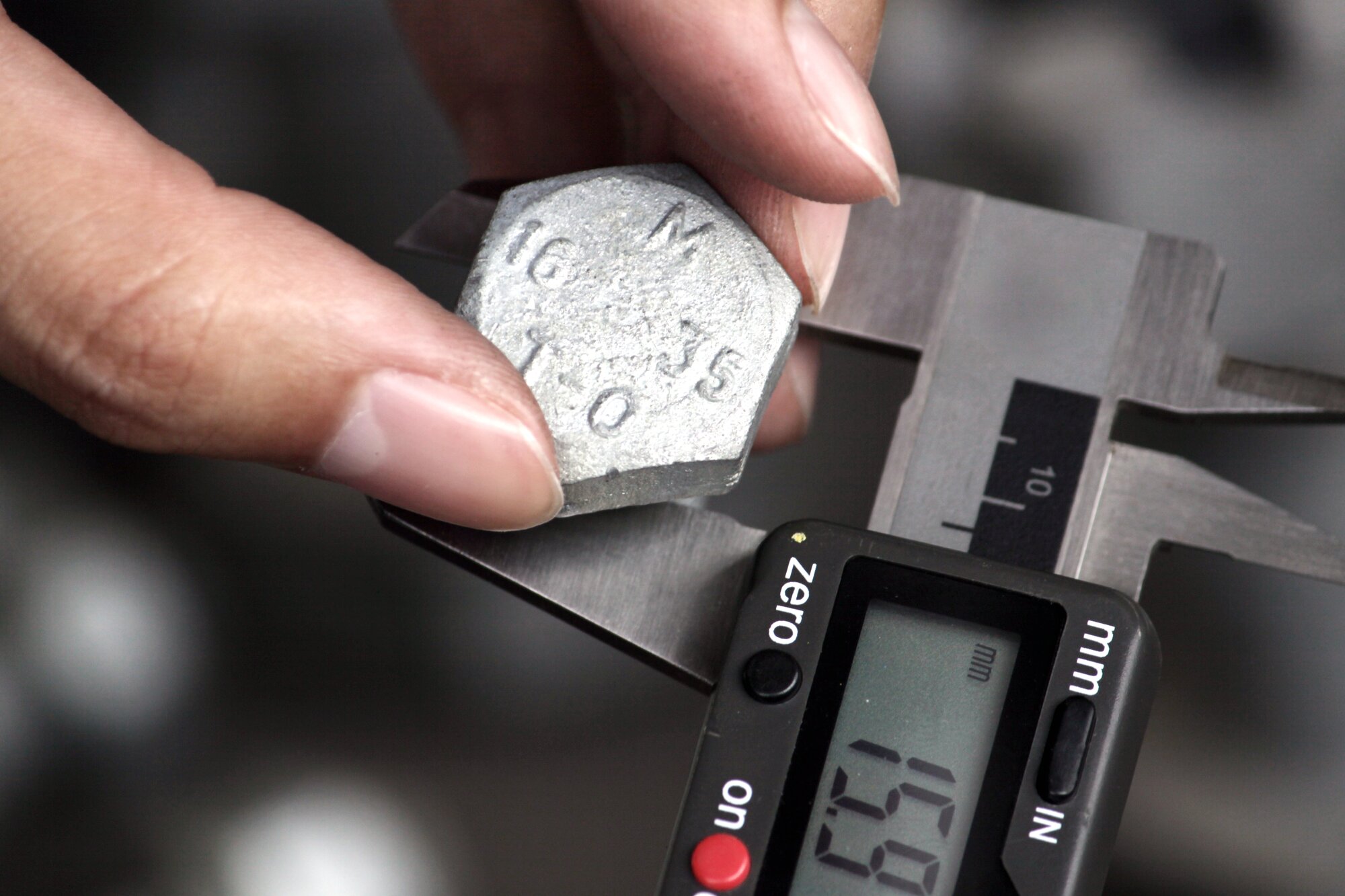
Metric Bolt Size Chart
This guide is designed to take the guesswork out of your toolbox. We’ve compiled a comprehensive Metric Bolt Size Chart to help you identify diameters, thread pitches, and wrench sizes at a glance. By understanding the "M" notation, you’ll ensure a perfect fit every time—saving you from stripped threads, wasted trips to the hardware store, and the frustration of a bolt that’s just a hair too small.
Metric Hex Bolt Size Chart
| Bolt Size | Pitch | Head Width | Wrench | SAE Close | Tensile Area |
|---|---|---|---|---|---|
| M3 x 0.5 | 0.5 mm | 5.5 mm | 5.5 mm | — | 5.03 |
| M4 x 0.7 | 0.7 mm | 7 mm | 7 mm | — | 8.78 |
| M5 x 0.8 | 0.8 mm | 8 mm | 8 mm | 5/16" | 14.2 |
| M6 x 1.0 | 1.0 mm | 10 mm | 10 mm | — | 20.1 |
| M8 x 1.25 | 1.25 mm | 13 mm | 13 mm | 1/2" | 36.6 |
| M10 x 1.5 | 1.5 mm | 17 mm | 17 mm | 11/16" | 58.0 |
| M12 x 1.75 | 1.75 mm | 19 mm | 19 mm | 3/4" | 84.3 |
| M14 x 2.0 | 2.0 mm | 22 mm | 22 mm | 7/8" | 115 |
| M16 x 2.0 | 2.0 mm | 24 mm | 24 mm | 15/16" | 157 |
| M18 x 2.5 | 2.5 mm | 27 mm | 27 mm | 1-1/16" | 192 |
| M20 x 2.5 | 2.5 mm | 30 mm | 30 mm | 1-3/16" | 245 |
| M22 x 2.5 | 2.5 mm | 32 mm | 32 mm | 1-1/4" | 303 |
| M24 x 3.0 | 3.0 mm | 36 mm | 36 mm | 1-7/16" | 353 |
| M27 x 3.0 | 3.0 mm | 41 mm | 41 mm | — | 459 |
| M30 x 3.5 | 3.5 mm | 46 mm | 46 mm | — | 561 |
| M36 x 4.0 | 4.0 mm | 55 mm | 55 mm | — | 817 |
Metric Bolt Property Classes
| Class | Material | Min Tensile | Min Yield | Marking | SAE Equiv |
|---|---|---|---|---|---|
| 4.6 | Low carbon | 400 MPa | 240 MPa | 4.6 | Grade 2 |
| 8.8 | Med carbon | 830 MPa | 660 MPa | 8.8 | Grade 5 |
| 10.9 | Alloy steel | 1040 MPa | 940 MPa | 10.9 | Grade 8 |
| 12.9 | Alloy steel | 1220 MPa | 1100 MPa | 12.9 | Above Gr8 |
| A2-70 | 304 SS | 700 MPa | 450 MPa | A2-70 | — |
| A4-80 | 316 SS | 800 MPa | 600 MPa | A4-80 | — |
Reading a Metric Bolt Designation
A metric bolt designation like "M10 x 1.5 x 30" breaks down as follows: M10 indicates a 10 mm nominal diameter; 1.5 specifies the thread pitch in millimeters (the distance between threads); 30 represents the bolt length in millimeters. Coarse pitches are most common, while fine pitches are used in applications requiring enhanced resistance to vibration loosening. Always verify pitch before ordering to ensure compatibility with existing threaded holes.
Fine vs Coarse Thread
Coarse thread pitches are standard for general-purpose fastening and are the most widely available. They offer faster assembly and greater tolerance to tolerance stack-up. Fine thread pitches provide superior holding power against vibration and are used in precision machinery, automotive suspension, and applications demanding greater clamp load. Fine threads require more careful installation and may be less forgiving of misalignment.
Metric vs SAE Fasteners
Metric and SAE fasteners are not interchangeable despite potential size similarities. Metric bolts use ISO thread specifications, while SAE bolts use Unified Thread Standard (UTS). Wrench sizes differ significantly—metric uses 7 mm, 8 mm, 10 mm, etc., while SAE uses 1/4", 5/16", 3/8", etc. Always confirm the fastener origin before substituting. Using incorrect fasteners can result in poor seating, stripping, or assembly failure.
Torque Specifications for Metric Bolts
Proper torque specifications ensure safe clamping without over-tightening. Class 8.8 steel bolt torque values: M6 = 9 Nm (6.6 ft-lb), M8 = 22 Nm (16 ft-lb), M10 = 43 Nm (32 ft-lb), M12 = 76 Nm (56 ft-lb), M16 = 188 Nm (139 ft-lb), M20 = 364 Nm (268 ft-lb). Always use a calibrated torque wrench and tighten in a star pattern for even load distribution. Dry fasteners require different torque values than lubricated fasteners.
Product Compliance and Suitability
The statements contained in this guide are intended for general informational purposes only. Such statements do not constitute a product recommendation or representation as to the appropriateness, accuracy, completeness, correctness, or currentness of the information provided. Information provided in this guide does not replace the use by you of any manufacturer instructions, technical product manual, or other professional resource or adviser available to you. Always read, understand, and follow all manufacturer instructions. Portions of this article were generated in part by ChatGPT.
