
Milling Machine vs. Mill-Drill: What's the Difference?
Compare full milling machines and mill-drills to select the best shop unit.
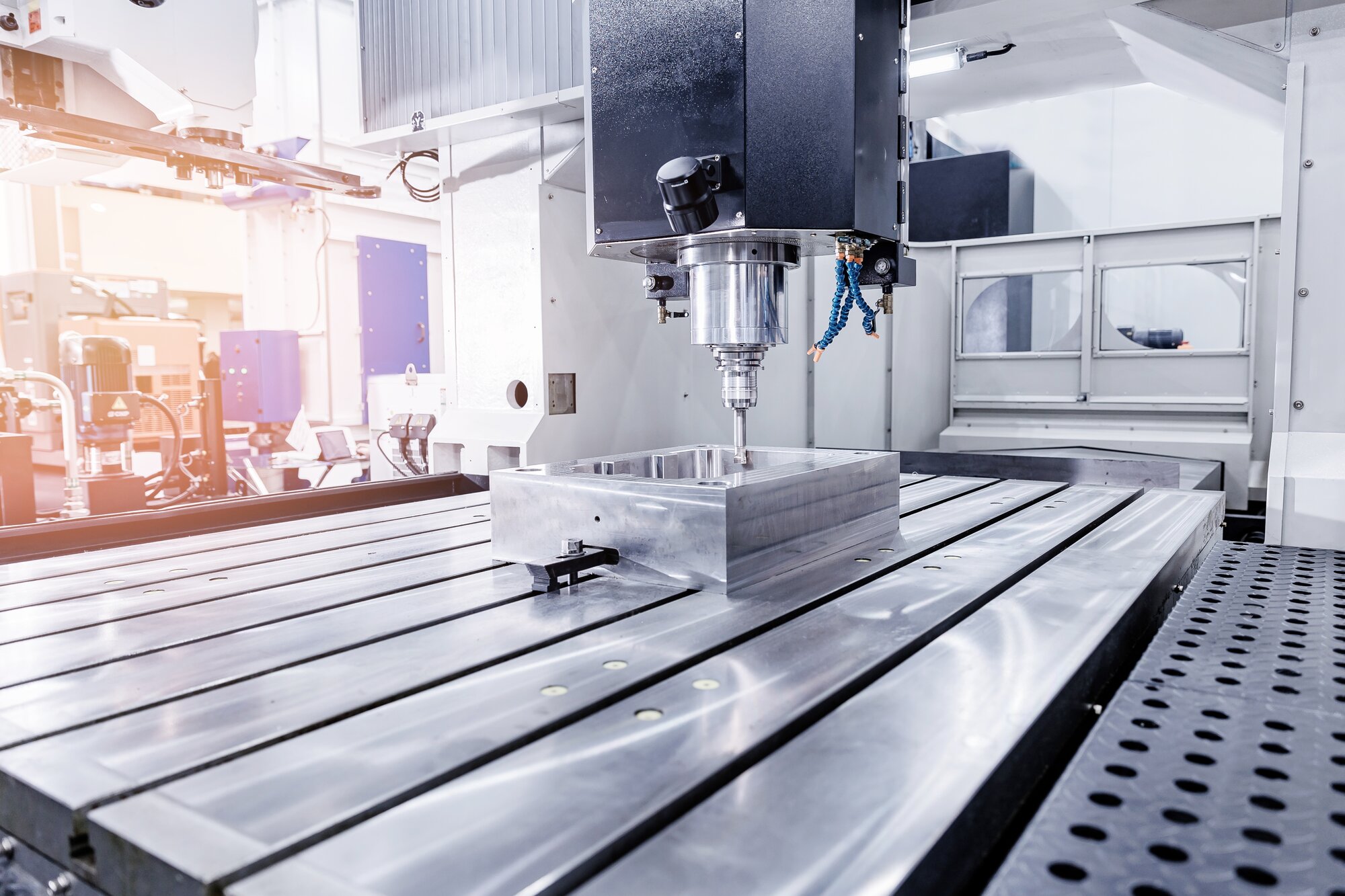
Milling Machine vs. Mill-Drill: What's the Difference?
Milling machines and mill-drills are used to remove material from a workpiece with a rotating cutting tool. Both can perform operations such as slotting, facing, drilling, and other machining tasks, depending on the machine's design and configuration. However, their construction, rigidity, capacity, and intended applications can differ significantly.
A mill-drill may be attractive to a small workshop that needs milling and drilling functions in a compact machine. A dedicated milling machine may be better suited to more demanding machining work, depending on its design, specifications, and the accuracy or production requirements involved.
The right choice depends on the materials being machined, workpiece dimensions, required tolerances, cutting operations, production volume, available floor space, and budget. This guide explains the main differences and provides a practical method for comparing machines.
What Is a Milling Machine?
A milling machine removes material from a workpiece using a rotating cutting tool. The workpiece is secured to a table or fixture, and the tool and workpiece move relative to each other to produce the desired shape or feature.
Depending on the machine's configuration and tooling, milling operations may produce:
- Flat surfaces and shoulders.
- Slots, grooves, and pockets.
- Steps and recesses.
- Profiles and shaped surfaces.
- Features that require coordinated movement along multiple axes.
- Holes or other features when the machine and tooling support the operation.
Milling machines are available in different designs and sizes. A machine intended for a small toolroom has different capabilities from a larger production machine. Buyers should evaluate the specifications of the actual model rather than assuming that every milling machine offers the same rigidity, power, travel, or accuracy.
What Is a Mill-Drill?
A mill-drill combines milling and drilling functions in a machine intended to provide those capabilities within a relatively compact footprint. Mill-drills are often considered for workshops that need flexibility without dedicating space to a larger machine.
Depending on the design, a mill-drill may support drilling, facing, slotting, light milling, and other operations within its stated capacity. Available features and limitations vary by model.
A mill-drill should not be treated as identical to a dedicated milling machine simply because both use rotating cutters. The structure, column design, spindle arrangement, table dimensions, travel, and workholding options affect what the machine can do reliably.
Milling Machine vs. Mill-Drill: Key Differences
| Comparison factor | Milling machine | Mill-drill |
|---|---|---|
| General purpose | Designed primarily around milling operations, although capabilities vary. | Combines drilling and milling functions in a compact format. |
| Rigidity | Depends on machine type, size, construction, and design. | Depends on frame, column, head, and overall construction; evaluate for the intended cuts. |
| Work envelope | Ranges from small benchtop machines to large industrial systems. | Often selected for smaller workpieces and space-constrained shops. |
| Table and travel | Varies widely by model and machine class. | Must be checked against the required workpiece size and operations. |
| Cutting demands | Can support demanding operations when designed and equipped for them. | May be suitable for light or moderate work within the machine's stated limits. |
| Footprint | Depends on machine size and configuration. | Often offers a compact alternative for smaller workshops. |
| Tooling and workholding | Depends on spindle interface, table design, and supported accessories. | Depends on spindle, table, tooling compatibility, and available fixtures. |
| Best selection method | Match machine capacity and accuracy to the required machining process. | Confirm that its combined functions and capacity cover the planned work. |
Rigidity and Machine Construction
Rigidity is the ability of a machine and its components to resist unwanted movement or deflection during cutting. It matters because movement between the cutting tool and workpiece can affect surface finish, dimensional consistency, and tool performance.
Machine rigidity depends on more than the category name. Relevant factors include the base, column, spindle support, bearings, table, ways, joints, and overall construction. Workholding, tool overhang, cutting forces, and machine condition also affect results.
Some dedicated milling machines are built for heavier cutting and more demanding operations than compact mill-drills. However, a small milling machine may have less capacity than a robust mill-drill designed for a particular application. Compare the actual specifications and intended uses of candidate models.
If the work involves frequent heavy cuts, large cutters, difficult materials, or tight dimensional requirements, pay particular attention to the manufacturer's stated capacity and the machine's construction. If the work involves smaller components and lighter operations, a compact machine may meet the need without the footprint of a larger system.
Work Envelope, Table Size, and Travel
The work envelope determines the dimensions and positions of workpieces that a machine can accommodate. Table size alone does not establish the usable machining area.
Evaluate:
- Table dimensions: Confirm that the workpiece and required fixtures fit on the table.
- Longitudinal travel: Check how far the table or workpiece can move along its main axis.
- Cross travel: Verify that the machine can reach the required positions across the workpiece.
- Vertical clearance: Consider the space between the table, spindle, tool, and workpiece.
- Spindle-to-table distance: Confirm that the workpiece and fixture can be positioned within the available range.
- Workholding space: Account for vises, clamps, rotary tables, fixtures, and other accessories.
A part may fit on the table but still be impossible to machine if the spindle cannot reach the required feature or the tooling cannot clear the fixture. Test the planned setup against the machine's usable travel and clearance dimensions before purchasing.
Spindle Speed, Power, and Tool Compatibility
The spindle holds and rotates the cutting tool. Its speed range, power, interface, and mechanical condition affect which tools and cutting operations are appropriate.
Spindle Speed
Different materials, cutter diameters, and cutting operations require different speeds. The suitable range depends on the tool manufacturer's recommendations, workpiece material, cutter geometry, and machining conditions.
Review the machine's available speed range and how speeds are selected or changed. Confirm that the machine can operate within the range required by the planned tools and materials.
Spindle Power
Spindle power affects the machine's ability to perform cutting operations under specified conditions. Higher power alone does not guarantee better results; the machine's rigidity, tooling, workholding, speed range, and cutting parameters also matter.
Compare the manufacturer's power rating and intended use with the actual machining requirements. Avoid assuming that two machines with similar motor ratings will have equivalent cutting performance.
Tooling Interface
Tooling compatibility is essential when comparing machines. Verify the spindle taper or interface, collet and chuck options, compatible tool holders, and any limitations that apply to the selected configuration.
Consider the tooling already used in the workshop. A machine that supports existing cutters and holders may reduce the need to purchase a new tooling system, provided the tooling is compatible and suitable for the application.
Accuracy and Repeatability
Accuracy and repeatability matter when a machined feature must meet a drawing or fit with another component. The machine's specifications are important, but actual results also depend on setup, tooling, workholding, temperature, operator technique, and maintenance.
When evaluating a machine, review the manufacturer's accuracy information and test methods where available. Determine whether the published figures address positioning, spindle performance, or another specific characteristic rather than treating all accuracy statements as interchangeable.
For precision work, consider the complete process: machine condition, cutter runout, tool selection, fixture stability, measurement equipment, and operator procedure. A machine purchase should support the required process capability rather than relying on a single specification.
Which Machine Is Better for Different Applications?
Small Workshop and Maintenance Work
A mill-drill may be a practical choice when the shop needs a compact machine for occasional drilling and milling tasks, small components, repair work, and general-purpose fabrication. The decision still depends on workpiece size, required accuracy, materials, and cutting demands.
Confirm that the machine can perform the intended operations without exceeding its stated limits. If the work frequently involves heavier cuts or complex setups, compare more substantial milling machines before deciding.
Toolroom and Prototype Work
Toolrooms and prototype shops may benefit from flexibility, precise workholding, adequate travel, and a spindle configuration compatible with the tools they use. Either a suitable mill-drill or a dedicated milling machine may be appropriate, depending on the job mix.
Evaluate the range of materials, feature geometries, dimensional requirements, and expected changes between jobs. A flexible machine is useful only when its capacity and accessories support the actual work.
Repeated Production Operations
Production work often places greater emphasis on repeatability, setup time, tooling compatibility, and the ability to maintain results over repeated cycles. Depending on the application, a dedicated milling machine may offer features or capacity better suited to these demands.
Compare the machine's intended duty, rigidity, controls, tooling system, and support requirements. If production volume is high, include setup efficiency, maintenance access, and operator workflow in the evaluation.
Larger Workpieces or More Demanding Cuts
When workpieces are large or cutting demands are substantial, table dimensions, travel, spindle capacity, workholding, and machine rigidity become especially important.
Do not assume that a compact mill-drill can accommodate a large workpiece simply because the table appears wide enough. Confirm the complete work envelope and the machine's capacity for the intended operation.
Footprint, Installation, and Operating Costs
A machine's purchase price is only one part of its cost. Installation, electrical requirements, tooling, workholding, measurement equipment, maintenance, and operator training may all affect the total investment.
Mill-drills are often considered when floor space is limited, but buyers should still verify the machine's footprint, required clearance, weight, installation conditions, and service access.
Larger milling machines may require more floor space, more substantial installation arrangements, and additional handling equipment. These requirements vary by model and should be checked against the facility.
Compare total ownership costs over the expected service life. Include the cost of compatible tooling, replacement parts, service, maintenance, and any productivity differences relevant to the intended application.
Common Milling Machine and Mill-Drill Buying Mistakes
- Choosing by machine name alone: Construction and capacity vary significantly between models.
- Ignoring work envelope: The part, fixture, cutter, and spindle must fit within the usable machining space.
- Overlooking rigidity: Cutting demands should match the machine's design and stated capacity.
- Assuming more power solves every problem: Rigidity, tooling, workholding, and cutting parameters also affect performance.
- Forgetting tooling compatibility: Spindle interfaces and tool holders must match the selected machine.
- Buying for the smallest job only: Consider the full range of expected work and future requirements.
- Underestimating installation needs: Verify footprint, weight, electrical requirements, and service clearance.
- Ignoring measurement needs: Precision machining requires suitable inspection equipment and consistent procedures.
Milling Machine vs. Mill-Drill Buying Checklist
- List the materials and types of parts to be machined.
- Identify the most demanding planned cutting operations.
- Measure the largest workpiece and required fixture setup.
- Verify table dimensions, longitudinal travel, cross travel, and vertical clearance.
- Compare spindle speed, power, interface, and tooling compatibility.
- Review the manufacturer's stated accuracy and capacity.
- Determine whether a compact mill-drill can handle the intended workload.
- Consider production volume, setup frequency, and operator workflow.
- Confirm floor space, machine weight, installation, and service access.
- Estimate the total cost of the machine, tooling, accessories, maintenance, and training.
- Verify technical details against the manufacturer's documentation.
Frequently Asked Questions
Is a mill-drill the same as a milling machine?
No. A mill-drill combines drilling and milling functions in a compact machine design, while milling machines encompass a broader range of machine types and capacities. Actual capabilities depend on the model.
Can a mill-drill perform milling operations?
Yes, mill-drills are designed to support milling operations within their specified capabilities. Confirm the machine's rigidity, spindle, travel, tooling compatibility, and capacity for the intended cut.
Is a dedicated milling machine more accurate?
Not automatically. Accuracy depends on the specific machine's design, condition, setup, tooling, workholding, and measurement process. Compare manufacturer specifications and application requirements rather than relying on the category name.
What should I check before buying a milling machine?
Evaluate work envelope, table travel, spindle speed and power, tooling interface, rigidity, accuracy, workholding, installation requirements, and ongoing maintenance.
Can a mill-drill replace a larger milling machine?
It may replace a larger machine for suitable jobs, but it should not be assumed to handle every operation. Compare the required workpiece dimensions, cutting forces, tolerances, and production demands with the machine's specifications.
Choose the Right Milling Equipment for Your Shop
The best choice between a milling machine and a mill-drill depends on the work you need to perform. A compact mill-drill may offer practical flexibility for smaller jobs, while a suitable dedicated milling machine may better support applications that demand greater capacity or different machining features.
Compare the actual specifications of each candidate, including rigidity, travel, spindle performance, tooling compatibility, and installation needs. Explore relevant Zoro milling machine, cutting tool, workholding, and precision-measuring equipment categories to assemble a setup suited to your machining requirements.
Product Compliance and Suitability
The statements contained in this guide are intended for general informational purposes only. Such statements do not constitute a product recommendation or representation as to the appropriateness, accuracy, completeness, correctness, or currentness of the information provided. Information provided in this guide does not replace the use by you of any manufacturer instructions, technical product manual, or other professional resource or adviser available to you. Always read, understand, and follow all manufacturer instructions. Portions of this article were generated in part by ChatGPT.
