


Putty Knife Guide: Matching Blade Sizes to the Job
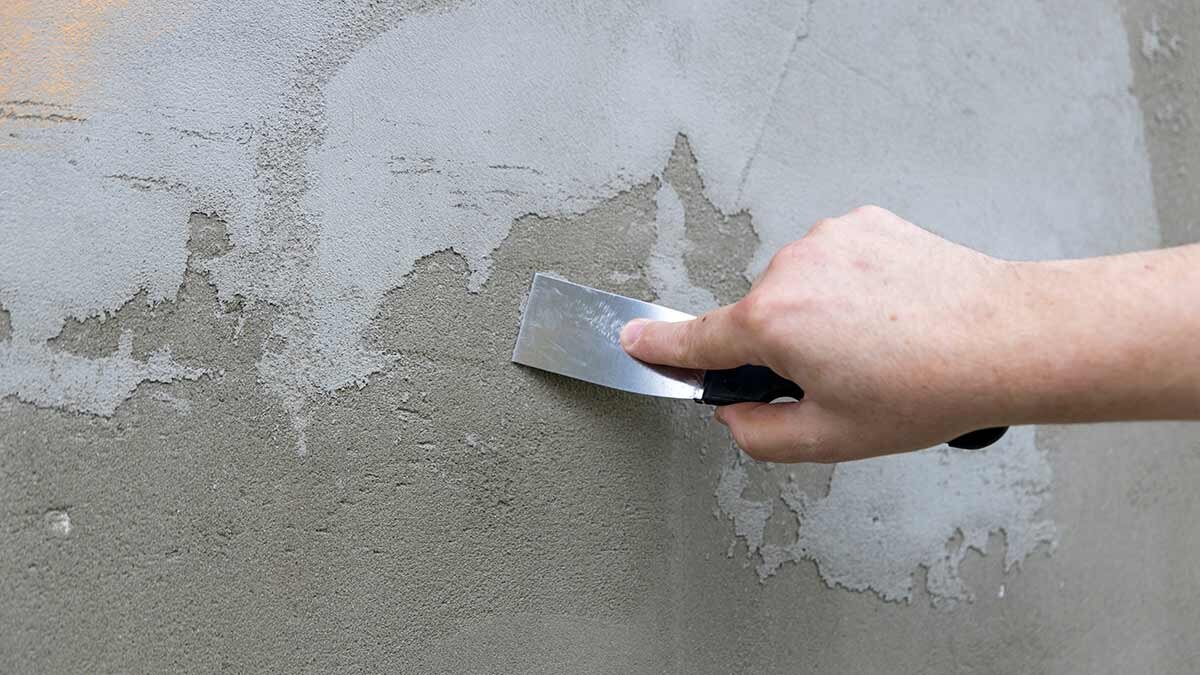
Whether you're repairing drywall in a commercial facility or prepping surfaces on a construction site, a putty knife may help contribute to smoother workflows and a more consistent finish. This guide describes the differences between various types of spreading, scraping, and smoothing tools, while providing a detailed breakdown of putty knife sizes, blade types, and practical uses.
Putty Knife vs. Other Tools: Know the Differences
| Putty Knife | Joint Knife | Taping Knife | Scraper |
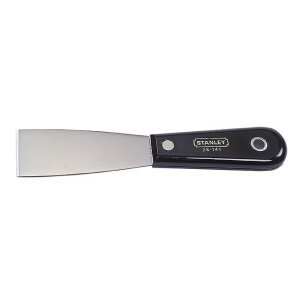 | 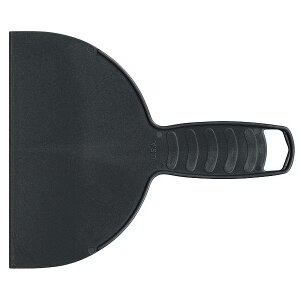 | 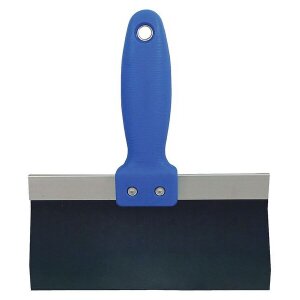 |  |
| A putty knife is a flat-bladed hand tool used for spreading, scraping, and smoothing materials like joint compound, spackle, caulk, or epoxy. While often mistaken for a scraper or taping knife, the putty knife features a thinner, more flexible blade designed for precise control. | Joint knives are typically wider (6"–12") with slightly curved or beveled edges. They’re commonly used for feathering and smoothing joint compound across drywall seams. | Taping knives (also known as finishing knives) are built for spreading compound across larger areas and feathering edges for a smooth, continuous finish. | A scraper has a stiff blade built for removing residue and coatings. |
Factors to Consider When Choosing a Putty Knife
Blade Material
Here’s a breakdown of blade materials and typical applications.
Carbon Steel: Rigid and durable, carbon steel blades are often used for scraping or heavy-duty surface prep where strength is essential.
- Stainless Steel: With corrosion-resistant properties and added flexibility, these blades are commonly used for spreading, smoothing, and finishing tasks.
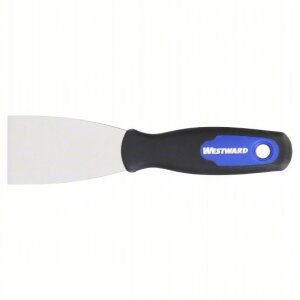

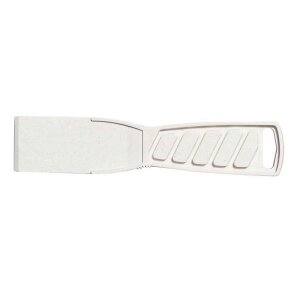
- Plastic: Lightweight and commonly used for touch-ups or single-use applications.
Blade Size and Shape
Narrow blades are often used for detail work or tight spaces, while wider blades may assist with covering broader areas. See our blade size chart below for more specific information about common uses for different blade sizes. Straight-edge blades are typically suited for flat surfaces and can provide more uniform application. Flexible blades may adapt more easily to curved or uneven surfaces. Evaluating typical jobsite needs will help identify which putty knife styles align with specific tasks.
Handle Design
Contoured or cushioned grips may help reduce strain, while textured or rubberized handles may provide improved grip in wet or fast-paced conditions.
Blade Size Guide
| Blade Width | Tool Type | Typical Uses |
| 1" – 1.5" | Putty Knife | Detail work, tight corners, paint scraping |
| 2" – 3" | Putty Knife | Patching small holes, applying wood filler |
| 4" – 6" | Putty Knife / Joint Knife | Applying spackle, light joint compound work |
| 6" – 8" | Joint Knife / Taping Knife | Feathering drywall seams, taping applications |
| 10" – 12" | Taping Knife | Smoothing large areas, final drywall finishing |
| 14" and up | Wide Taping Knife / Finishing Knife | Skim coating, high-coverage finishing |
Whether you're a contractor, facility manager, or maintenance technician, selecting an appropriate putty knife may support more efficient workflows in applicable tasks. Browse our selection of putty knives, joint knives, and scrapers to find a blade for your next project.
Product Compliance and Suitability
The statements contained in this guide are intended for general informational purposes only. Such statements do not constitute a product recommendation or representation as to the appropriateness, accuracy, completeness, correctness, or currentness of the information provided. Information provided in this guide does not replace the use by you of any manufacturer instructions, technical product manual, or other professional resource or adviser available to you. Always read, understand, and follow all manufacturer instructions. Portions of this article were generated in part by ChatGPT, and edited by a member of the Zoro team.
