


Sandpaper Grit Chart & Guide
Table of Contents
Whether you’re prepping drywall, smoothing out wood, or polishing metal, selecting the appropriate sandpaper grit can significantly impact your project’s results. This guide breaks down sandpaper grit numbers, explains how they work, and helps you pick the right type for different materials, which may help improve work efficiency and precision, depending on use and technique.
What Is Sandpaper Grit?
Sandpaper grit refers to the size of abrasive particles bonded to the paper. The grit number indicates how coarse or fine the paper is. Lower numbers (like 40 or 60) are more abrasive and ideal for rough material removal. Higher numbers (like 400 or 600) are finer and meant for delicate finishing and polishing.
Two grit standards are commonly used:
- CAMI: The U.S. standard, which uses whole numbers (e.g., 80, 120).
- FEPA: A European standard, typically noted with a "P" prefix (e.g., P80, P120).
Sandpaper Grit Chart
Here’s a breakdown of grit ranges, grades, and common applications.
| Grit Range | Grade | Typical Uses |
| 24–40 | Extra Coarse | Heavy material removal, stripping paint or varnish |
| 40–60 | Coarse | Shaping wood, removing old finishes |
| 80 | Medium | General sanding, surface prep |
| 100-120 | Fine | Final sanding before paint or stain |
| 150-220 | Very Fine | Smoothing between coats of finish |
| 320–260 | Extra Fine | Polishing surfaces, final prep |
| 400-600 | Super Fine | Metal polishing, wet sanding |
Types of Sandpaper Abrasives
Choosing the right abrasive material is just as important as the grit number. Here are the main types.
| Aluminum Oxide | Garnet | Silicon Carbide | Ceramic |
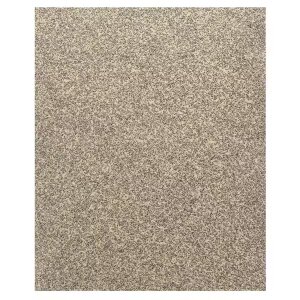 | 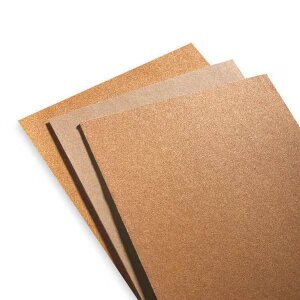 | 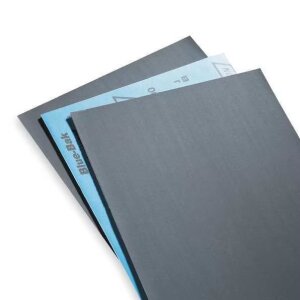 |  |
| Commonly used for both wood and metal due to its durability and versatility. | Known for breaking down faster to deliver smooth finishes; suitable for hand sanding wood. | Frequently selected for metal, plastic, and fiberglass; suitable for wet sanding. | Durable and aggressive; often chosen for use in belt sanders for rapid material removal. |
Final Thoughts
Selecting the right sandpaper grit—and using it correctly—can speed up your workflow, improve your results, and extend the life of your materials. Use the charts above as quick references, and choose your grit based on the material, finish quality, and stage of the project.
