


SEER Rating Explained: What Small Businesses Need to Know
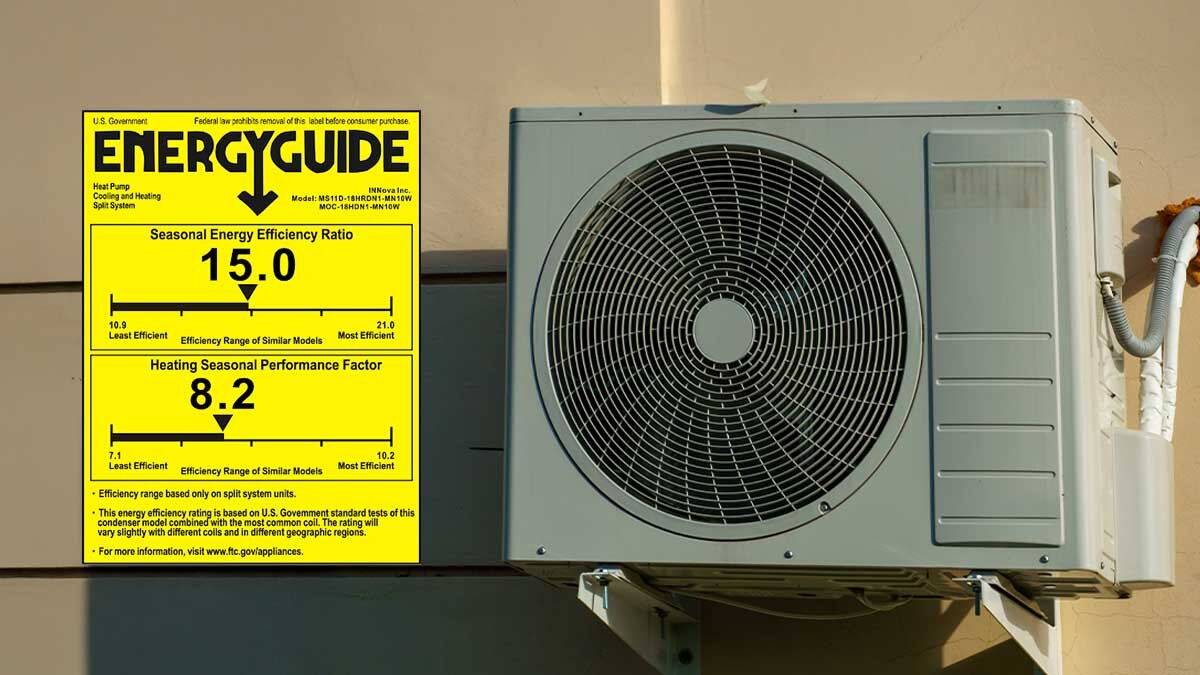
When you install or maintain HVAC systems, customers count on you to explain what makes equipment efficient. One of the first terms they’ll hear is SEER rating, short for Seasonal Energy Efficiency Ratio. Understanding how to read SEER ratings and compare systems helps you make smarter recommendations and build long-term customer trust.
What Is a SEER Rating?
SEER measures how efficiently an air conditioner or heat pump cools over a typical season. It’s calculated by dividing the cooling output (in BTUs) by the energy consumed (in watt-hours).
In simpler terms: the higher the SEER rating, the more efficiently the system operates. It’s similar to a vehicle’s miles per gallon (MPG)—a straightforward way to compare energy use across models.
What’s the Difference Between SEER and SEER2?
Since January 2023, all new HVAC systems are rated under SEER2, an updated testing standard from the U.S. Department of Energy (DOE). SEER2 accounts for more realistic conditions, such as air resistance and external static pressure.
If you’re comparing models, note that SEER and SEER2 values aren’t interchangeable. For example, a 15 SEER system might be roughly equivalent to a 14.3 SEER2 system.
Why the SEER Rating Matters
For installers, facilities managers, and business owners, SEER ratings affect multiple factors.
Energy Costs
Higher-SEER systems usually consume less electricity, which can lead to measurable savings over time, especially in warmer climates.
Comfort and Performance
Premium systems often include features like variable-speed compressors, advanced humidity control, and quieter operation.
Compliance
Meeting SEER2 regional minimums ensures your installations align with DOE energy-efficiency standards.
How to Read SEER Ratings and Compare Systems
HVAC SEER Rating Map: How Climate Affects Efficiency
SEER ratings should always be matched to local climate conditions.
Hot, humid regions (South, Southeast): Higher-SEER systems deliver the greatest savings.
Moderate climates (Midwest): Mid-range-SEER units balance upfront cost with comfort.
Cooler regions (North): Lower-SEER systems may still operate efficiently when cooling needs are occasional.
What Affects True SEER Performance
Even high-SEER equipment can underperform if installation or maintenance is poor.
Watch for:
Oversized units that short-cycle
Leaky or undersized ductwork
Dirty coils or filters
Incorrect refrigerant charge or airflow calibration
Routine maintenance protects system efficiency and reinforces your reputation as a trusted service provider.
The Bottom Line
Understanding SEER and SEER2 ratings helps small businesses choose HVAC systems that perform efficiently, meet regulations, and keep costs in check.
At Zoro, we make it easier to find the tools, equipment, and replacement parts that keep your systems running efficiently so you can focus on keeping your customers comfortable.
Product Compliance and Suitability
The statements contained in this guide are intended for general informational purposes only. Such statements do not constitute a product recommendation or representation as to the appropriateness, accuracy, completeness, correctness, or currentness of the information provided. Information provided in this guide does not replace the use by you of any manufacturer instructions, technical product manual, or other professional resource or adviser available to you. Always read, understand, and follow all manufacturer instructions. Portions of this article were generated in part by ChatGPT, and edited by a member of the Zoro team.
