


Step-by-Step Guide to Conducting a Respirator Fit Test
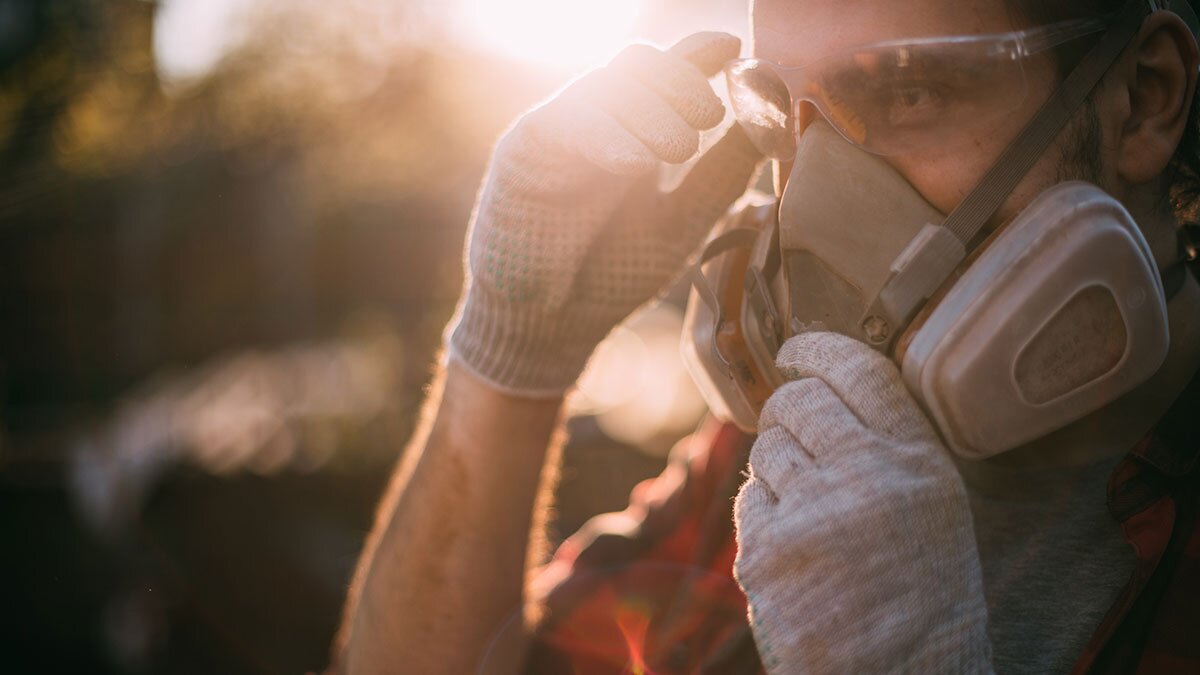
If you run a small business where employees wear respirators—whether it's in construction, manufacturing, healthcare, or maintenance—fit testing is an OSHA requirement that plays an important role in supporting workplace safety programs. OSHA standard 29 CFR 1910.134 requires employers to fit test respirators to help limit exposure to airborne hazards. That’s why we’ve broken down the process into clear, manageable steps to help support regulatory compliance and contribute to workplace safety.
Step 1: Determine Who Needs Testing
Start by identifying which team members use tight-fitting respirators. These may include:
- N95s (often used in healthcare and light industrial settings)
- Half-face or full-face elastomeric respirators
- Disposable dust masks that qualify as respirators under OSHA
Before the test, give employees a chance to try different models and sizes. Encourage them to choose the one that fits well and feels comfortable. A simple mirror can help with adjustments. Also, OSHA requires employees to wear the chosen respirator for at least five minutes before testing to ensure comfort and proper fit.
Step 2: Choose the Right Fit Test Method
OSHA allows two types of respirator fit tests. Choose the one that fits your business’s needs.
- Qualitative Fit Test (QLFT): A basic pass/fail method using taste or smell to detect leaks. Best for lower-risk environments and more affordable for smaller operations.
- Quantitative Fit Test (QNFT): Uses a machine (like a PortaCount®) to measure leakage and produce a fit factor score. This method is commonly used in work environments with elevated exposure risk, per OSHA fit testing guidelines.
Step 3: Prepare the Test Environment
- Gather your supplies: QLFT kits are generally available and designed for straightforward use. If you choose QNFT, you'll need the testing machine and accessories.
- Check medical clearance: Make sure employees are medically cleared to wear respirators.
- Remind your team:
- No eating, smoking, or gum 15–30 minutes before the test.
- Facial hair must be shaved if it affects the respirator seal.
- Include other gear: If workers wear safety glasses or other PPE, include those in the test to verify a secure fit.
Step 4: Perform the Fit Test
During the test, employees will wear their respirators and complete a series of simple movements that mimic real work conditions.
- Normal and deep breathing
- Moving the head side to side and up and down
- Talking aloud (e.g., reading a short script)
- Grimacing (for QNFT only)
- Bending over
The full process takes about 15–20 minutes per employee. Consider scheduling tests during non-peak hours or in small groups for efficiency.
Step 5: Document the Results
OSHA requires you to keep records of each fit test. Be sure to log:
- Employee’s name
- Make, model, style, and size of the respirator
- Type of test used (QLFT or QNFT)
- Date of the test
- Test results (pass/fail for QLFT, fit factor score for QNFT)
Keep these records in your safety files and update them every year or when there’s a change in equipment or an employee’s fit.
Final Thoughts
As a small business owner, you’re already wearing a lot of hats. But making sure your team is protected on the job doesn’t have to be overwhelming. With the right prep, a reliable fit test kit, and a clear plan, you can help meet compliance requirements and promote workplace safety.
Product Compliance and Suitability
The statements contained in this guide are intended for general informational purposes only. Such statements do not constitute a product recommendation or representation as to the appropriateness, accuracy, completeness, correctness, or currentness of the information provided. Information provided in this guide does not replace the use by you of any manufacturer instructions, technical product manual, or other professional resource or adviser available to you. Always read, understand, and follow all manufacturer instructions. Portions of this article were generated in part by ChatGPT, and edited by a member of the Zoro team.
