
Tap Drill Size Chart
Complete tap drill size chart for UNC, UNF, and metric threads.
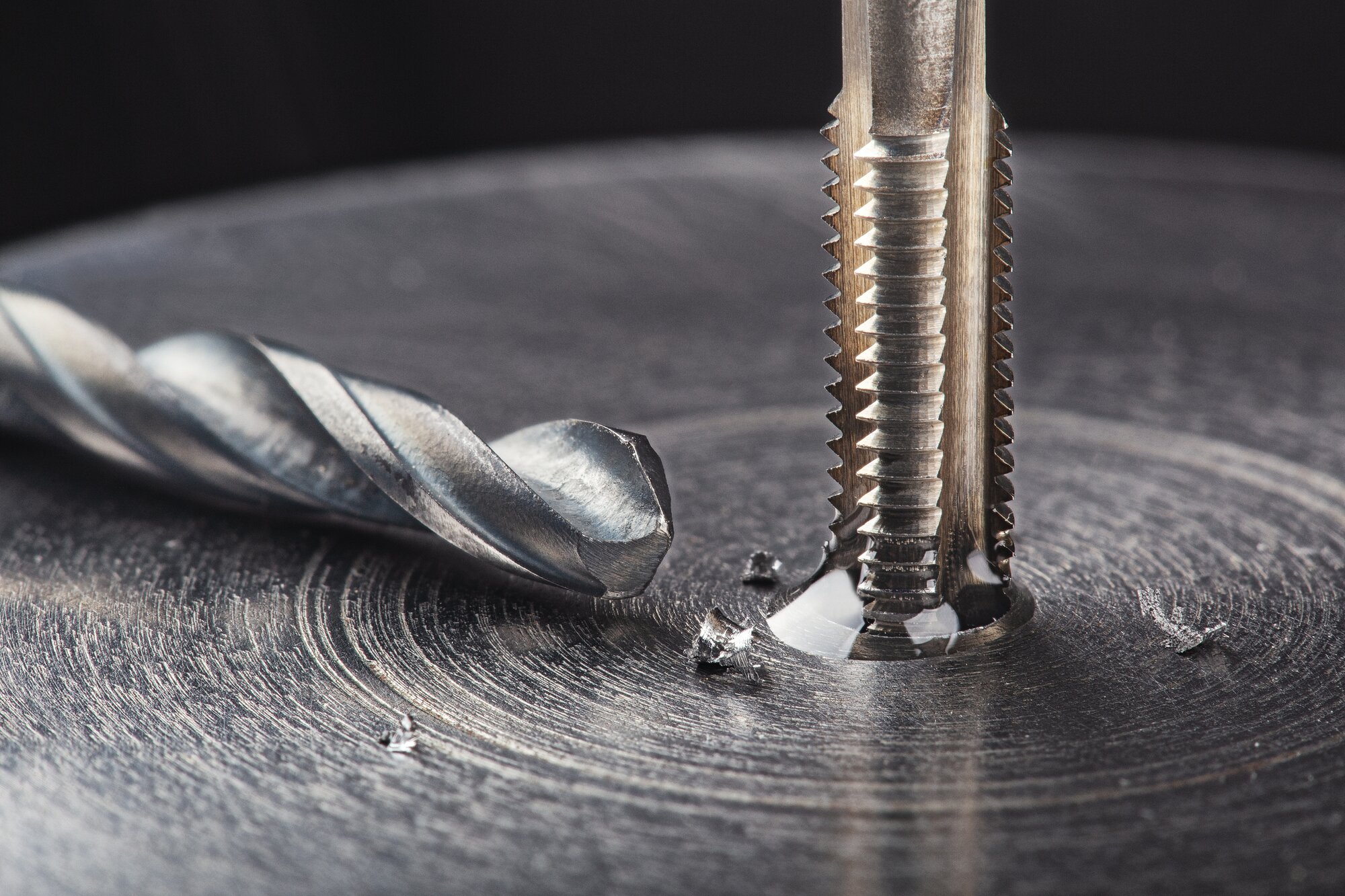
Tap Drill Size Chart
A broken tap in a critical bore is one of the most expensive mistakes on the shop floor — and it's almost always preventable. The right drill size before tapping determines whether your threads come out clean and strong or strip out on first assembly. This tap drill size chart covers the complete range of UNC, UNF, and metric thread sizes so you can drill the correct pilot hole every time, on every job.
UNC and UNF Tap Drill Size Chart
The table below covers the standard tap drill sizes for Unified National Coarse (UNC) and Unified National Fine (UNF) threads from #0 through 1". All drill sizes are calculated for 75% thread engagement, which is the standard recommendation for steel and most structural applications.
| Tap Size | Major Dia. (in) | TPI | Tap Drill | Decimal (in) | Thread Series |
| #0-80 | 0.060" | 80 | 3/64" | 0.0469" | UNF only |
| #1-64 | 0.073" | 64 | #53 | 0.0595" | UNC |
| #1-72 | 0.073" | 72 | #53 | 0.0595" | UNF |
| #2-56 | 0.086" | 56 | #50 | 0.0700" | UNC |
| #2-64 | 0.086" | 64 | #50 | 0.0700" | UNF |
| #3-48 | 0.099" | 48 | #47 | 0.0785" | UNC |
| #3-56 | 0.099" | 56 | #45 | 0.0820" | UNF |
| #4-40 | 0.112" | 40 | #43 | 0.0890" | UNC |
| #4-48 | 0.112" | 48 | #42 | 0.0935" | UNF |
| #5-40 | 0.125" | 40 | #38 | 0.1015" | UNC |
| #5-44 | 0.125" | 44 | #37 | 0.1040" | UNF |
| #6-32 | 0.138" | 32 | #36 | 0.1065" | UNC |
| #6-40 | 0.138" | 40 | #33 | 0.1130" | UNF |
| #8-32 | 0.164" | 32 | #29 | 0.1360" | UNC |
| #8-36 | 0.164" | 36 | #29 | 0.1360" | UNF |
| #10-24 | 0.190" | 24 | #25 | 0.1495" | UNC |
| #10-32 | 0.190" | 32 | #21 | 0.1590" | UNF |
| #12-24 | 0.216" | 24 | #16 | 0.1770" | UNC |
| #12-28 | 0.216" | 28 | #14 | 0.1820" | UNF |
| 1/4"-20 | 0.250" | 20 | #7 | 0.2010" | UNC |
| 1/4"-28 | 0.250" | 28 | #3 | 0.2130" | UNF |
| 5/16"-18 | 0.3125" | 18 | F | 0.2570" | UNC |
| 5/16"-24 | 0.3125" | 24 | I | 0.2720" | UNF |
| 3/8"-16 | 0.375" | 16 | 5/16" | 0.3125" | UNC |
| 3/8"-24 | 0.375" | 24 | Q | 0.3320" | UNF |
| 7/16"-14 | 0.4375" | 14 | U | 0.3680" | UNC |
| 7/16"-20 | 0.4375" | 20 | 25/64" | 0.3906" | UNF |
| 1/2"-13 | 0.500" | 13 | 27/64" | 0.4219" | UNC |
| 1/2"-20 | 0.500" | 20 | 29/64" | 0.4531" | UNF |
| 9/16"-12 | 0.5625" | 12 | 31/64" | 0.4844" | UNC |
| 9/16"-18 | 0.5625" | 18 | 33/64" | 0.5156" | UNF |
| 5/8"-11 | 0.625" | 11 | 17/32" | 0.5313" | UNC |
| 5/8"-18 | 0.625" | 18 | 37/64" | 0.5781" | UNF |
| 3/4"-10 | 0.750" | 10 | 21/32" | 0.6563" | UNC |
| 3/4"-16 | 0.750" | 16 | 11/16" | 0.6875" | UNF |
| 7/8"-9 | 0.875" | 9 | 49/64" | 0.7656" | UNC |
| 7/8"-14 | 0.875" | 14 | 13/16" | 0.8125" | UNF |
| 1"-8 | 1.000" | 8 | 7/8" | 0.8750" | UNC |
| 1"-12 | 1.000" | 12 | 59/64" | 0.9219" | UNF |
Note: TPI = Threads Per Inch. Tap drill sizes shown target 75% thread engagement. For softer materials (aluminum, brass, plastics), a slightly larger drill may be used to reduce tap load and breakage risk.
Metric Tap Drill Size Chart
Metric threads are specified by nominal diameter (M) and pitch in millimeters. The standard tap drill size equals the nominal diameter minus the thread pitch: Tap Drill = Major Diameter - Pitch. The chart below lists standard metric coarse and select fine thread sizes.
| Thread Size | Major Dia. (mm) | Thread Pitch (mm) | Tap Drill Size (mm) |
| M1.6 x 0.35 | 1.6 mm | 0.35 mm | 1.25 mm |
| M2 x 0.4 | 2.0 mm | 0.40 mm | 1.60 mm |
| M2.5 x 0.45 | 2.5 mm | 0.45 mm | 2.05 mm |
| M3 x 0.5 | 3.0 mm | 0.50 mm | 2.50 mm |
| M3.5 x 0.6 | 3.5 mm | 0.60 mm | 2.90 mm |
| M4 x 0.7 | 4.0 mm | 0.70 mm | 3.30 mm |
| M5 x 0.8 | 5.0 mm | 0.80 mm | 4.20 mm |
| M6 x 1.0 | 6.0 mm | 1.00 mm | 5.00 mm |
| M7 x 1.0 | 7.0 mm | 1.00 mm | 6.00 mm |
| M8 x 1.25 | 8.0 mm | 1.25 mm | 6.75 mm |
| M8 x 1.0 (fine) | 8.0 mm | 1.00 mm | 7.00 mm |
| M10 x 1.5 | 10.0 mm | 1.50 mm | 8.50 mm |
| M10 x 1.25 (fine) | 10.0 mm | 1.25 mm | 8.75 mm |
| M12 x 1.75 | 12.0 mm | 1.75 mm | 10.25 mm |
| M12 x 1.25 (fine) | 12.0 mm | 1.25 mm | 10.75 mm |
| M14 x 2.0 | 14.0 mm | 2.00 mm | 12.00 mm |
| M16 x 2.0 | 16.0 mm | 2.00 mm | 14.00 mm |
| M18 x 2.5 | 18.0 mm | 2.50 mm | 15.50 mm |
| M20 x 2.5 | 20.0 mm | 2.50 mm | 17.50 mm |
| M22 x 2.5 | 22.0 mm | 2.50 mm | 19.50 mm |
| M24 x 3.0 | 24.0 mm | 3.00 mm | 21.00 mm |
What Is a Tap Drill?
A tap drill is the drill bit used to create a pilot hole before threading with a tap. The tap drill removes most of the material from the hole but leaves just enough for the tap to cut threads into the remaining wall. Unlike a clearance hole — which is sized to pass a bolt through freely — a tap drill hole is intentionally undersized so the tap has material to engage.
The size relationship between tap and drill is fixed by the thread geometry. For any given thread, the formula is: Tap Drill Size = Major Diameter - (1 / TPI). For a 1/4"-20 UNC thread: 0.250" - (1/20) = 0.250" - 0.050" = 0.200" (closest standard drill is #7 at 0.201"). This formula is the basis of every value in the tap drill size chart above.
Understanding Thread Percentage and Drill Selection
The term "75% thread engagement" appears constantly in machining references, and for good reason — it represents the engineering optimum between thread strength and tap life.
75% Thread Engagement Explained
Thread strength increases with engagement percentage, but only up to a point. Studies have shown that threads at 75% engagement provide approximately 95% of the strength of 100% engagement threads, while requiring significantly less torque to tap and producing far less tap wear. Going above 75% in hard materials dramatically increases tap breakage risk without meaningful strength gains.
Using the tap drill sizes in this chart targets that 75% sweet spot across the full size range. These are the values recommended by Machinery's Handbook and followed by professional machinists in production environments.
When to Use a Larger Tap Drill
There are three scenarios where drilling slightly larger than the 75% chart value makes sense:
• Soft and ductile materials (aluminum, brass, copper, plastics): These materials can cold-flow slightly when tapped, effectively increasing thread contact. Using a drill 0.005" to 0.010" above chart value reduces tap load and dramatically extends tool life in production runs.
• Deep holes (depth greater than 2x diameter): Increased torque from chip packing in deep holes raises the risk of tap breakage. A slightly larger drill eases the cut and improves chip evacuation.
• Hand tapping without a tap handle guide: When tapping by hand in the field, a slightly more open hole reduces the force required and lowers the chance of breaking a tap due to misalignment.
UNC vs. UNF: Which Thread Standard to Use
The choice between UNC and UNF affects both your tap drill selection and the performance of the finished joint.
UNC (Coarse) is the standard for most general-purpose work. The larger thread pitch makes coarse threads faster to assemble and more forgiving of minor thread damage. UNC is specified by default on most hardware, machinery, and structural connections. When in doubt, use UNC.
UNF (Fine) is specified where vibration resistance, thin walls, or precise adjustment are requirements. UNF threads have a higher TPI, which means more thread contact for a given engagement length — useful in short-thread situations like tapped holes in thin sheet metal or for fine adjustment mechanisms. The tradeoff is a smaller tap drill size, higher tapping torque, and more sensitivity to tap alignment.
Always match your tap drill to the specific thread designation — #10-24 UNC and #10-32 UNF require different drills (#25 and #21, respectively) despite having the same major diameter.
How to Tap a Hole Correctly
Having the right drill size from this tap drill size chart is step one. Execution determines whether you get a clean thread or a broken tap.
• Drill the hole to the correct depth. For blind holes, drill at least 1/2 thread diameter deeper than the required thread depth to allow chip accumulation below the cutting zone.
• Deburr the hole opening before tapping. A sharp edge at the top of the hole causes the tap to cut unevenly on entry and can chip the first thread.
• Use cutting fluid. Even for hand tapping, a drop of cutting oil on the tap dramatically reduces friction and extends tool life. In production environments, use flood coolant or paste tapping compound matched to your workpiece material.
• Advance and back off. When hand tapping, advance 1/2 to 1 turn forward, then back off 1/4 turn to break the chip. Continuous forward rotation packs chips in the flutes and is the primary cause of tap breakage.
• Keep the tap aligned with the hole axis. Misalignment is the leading cause of tap breakage, especially in small sizes. Use a tap guide or tap handle for hand work; rely on the machine spindle for CNC or drill press tapping.
Troubleshooting Common Tapping Problems
Tap breaking: Most often caused by wrong drill size (too small), misalignment, insufficient cutting fluid, or drilling too shallow in blind holes. Verify your tap drill against this chart, ensure you're using appropriate cutting fluid, and allow adequate clearance depth.
Torn or rough threads: Usually indicates the drill size was too small (leaving too much material), the tap is dull, or the material work-hardened from a slow feed rate while drilling. Check the drill size, replace worn taps, and maintain consistent feed pressure during drilling.
Thread stripping under load: Often caused by insufficient thread engagement depth rather than incorrect drill size. The general rule is that thread engagement should equal at least 1x the major diameter in steel, 1.5x in aluminum, and 2x in softer materials like brass or plastic.
Tap seizing in the hole: Indicates chip packing from failure to back off or lack of cutting fluid. In production CNC environments, use spiral-flute taps for blind holes — their helix design ejects chips upward out of the hole rather than packing them in the flutes.
Product Compliance and Suitability
The statements contained in this guide are intended for general informational purposes only. Such statements do not constitute a product recommendation or representation as to the appropriateness, accuracy, completeness, correctness, or currentness of the information provided. Information provided in this guide does not replace the use by you of any manufacturer instructions, technical product manual, or other professional resource or adviser available to you. Always read, understand, and follow all manufacturer instructions. Portions of this article were generated in part by ChatGPT.
