


The 4 Most Important Construction Technology Trends for 2025
The construction industry is always evolving, and when it comes to technological advancements, staying ahead of the curve is key to keeping your business competitive in a changing landscape. As we move through 2025, construction firms, contractors, and other businesses are facing new challenges related to new technologies—but there are many opportunities, too. The industry is quickly adapting and finding novel ways to include ideas like AI, digital tools, and wearable technology into the day-to-day of construction work.
In this guide, we’ll take a closer look at 4 of the major technology trends that are likely to shape the construction industry in the years ahead. Understanding these innovations can help your business prepare, adapt, and find ways to grow as these trends continue to evolve.
1. Embracing Digital Tools
While the construction industry hasn't always been known for its willingness to embrace new technologies and digital tools, that reputation is shifting quickly. It's true that many construction businesses still rely on manual tools and older systems for tasks like budgeting, project management, and estimation, but newer digital tools are rapidly helping the most successful businesses catch up with new technology. As a result, construction firms are saving time and money that was previously wasted with outdated processes.
Technology continues to streamline construction management, allowing businesses to operate more efficiently than ever. For example, new software has made it possible to centralize real-time progress data tracking that was once managed through time-consuming manual processes.
With automated workflows powered by software and digital tools, business owners can spend less time on these tedious administrative tasks and more time focusing on strategy, project improvements, and long-term growth. That will in turn lead to even greater efficiency and cost savings. Of course, digital tools have other benefits, too, including better accuracy, increased efficiency, and more streamlined processes.
2. Artificial Intelligence (AI) and Robotics
As the capabilities of AI tools continue to grow, experts in the construction industry see major changes ahead. With the help of AI and AI-powered algorithms, construction businesses may be able to significantly cut down on time spent on tasks like data management, project planning, resource allocation, and scheduling. Generative AI tools could also be deployed to help with design planning, predicting future problems, and even the RFP process.
Looking beyond generative AI, construction companies are already employing robotics in tasks like demolition. Specialized robots are used to automate dangerous jobs, leading to fewer injuries and boosting efficiency. As these technologies continue to improve in the coming years, construction businesses are likely to find even more applications for AI and robotics in day-to-day work, especially when it comes to planning, administrative tasks, and safety.
3. Wearable Construction Technology
Another fast-growing technology in the construction industry is wearable technology. That includes not just everyday wearables like smartwatches but also specialized tech like smart hardhats. These high-tech alternatives can include sensors, built-in cameras, microphones, and Internet-connected communications systems that allow workers to get help or share their locations with the team as they work. Alongside other advanced jobsite tech, these new wearables promise to boost productivity and keep workers safer than ever.
4. Smart Construction Sites
Meanwhile, smart construction sites offer even more opportunities to make construction sites safer, more efficient, and easier to track, potentially saving the overall industry more than $1 trillion per year. These high-tech tools harness the power of the Internet of Things (IoT) and connected sensors to monitor conditions and speed up processes in real time.
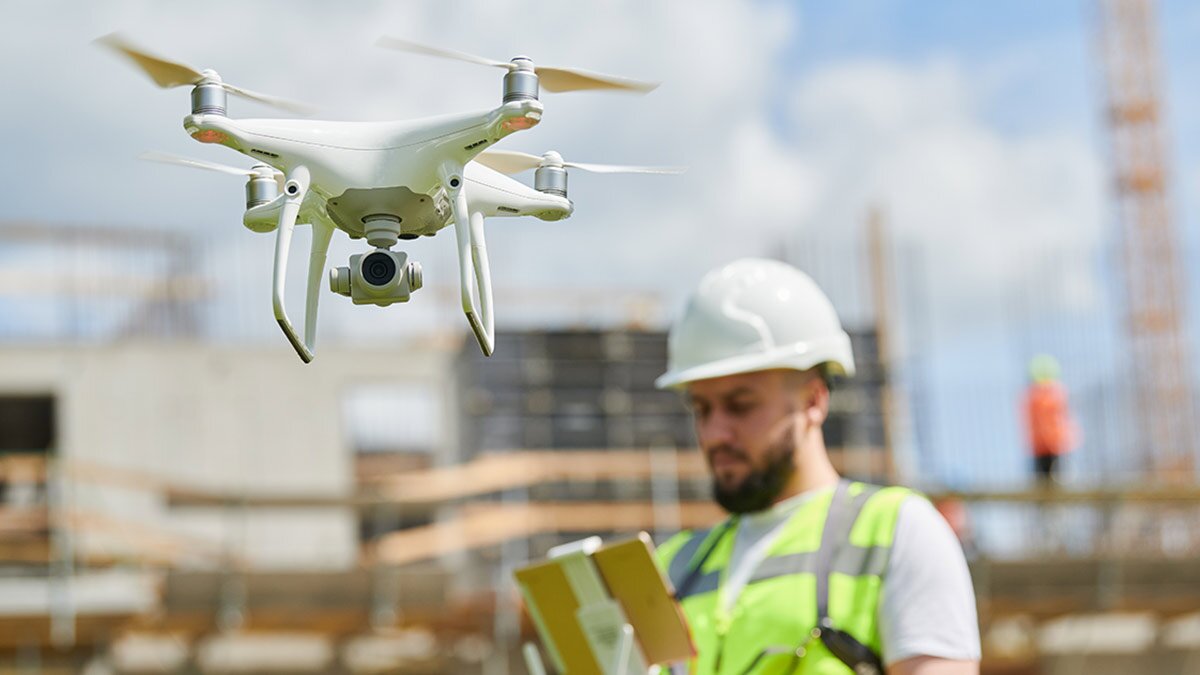
Construction drones also promise to make worksites safer with a bird's-eye view of conditions that allows teams to monitor projects for safety and inspection purposes—even in areas that are difficult to reach or see with any other tool. Drones can also be used to quickly move light materials around the jobsite.
As we move through the year, technology continues to streamline and improve construction work in 2025, allowing small to medium-sized construction businesses to operate more efficiently (and more safely) than ever. From new software and digital tools to smart wearables and even smart jobsites, investing in innovative tech now can help business owners spend less time on the most time-consuming tasks. That ultimately translates to quicker work, greater productivity, money saved, and more time that can be spent growing your business.
Shopping for construction tools and related products for your business? Find everything you need to get the job done at Zoro.com!
Product Compliance and Suitability
The statements contained in this guide are intended for general informational purposes only. Such statements do not constitute a product recommendation or representation as to the appropriateness, accuracy, completeness, correctness, or currentness of the information provided. Information provided in this guide does not replace the use by you of any manufacturer instructions, technical product manual, or other professional resource or adviser available to you. Always read, understand, and follow all manufacturer instructions.
