


Workplace Safety Signage: What Small Business Owners Need to Know
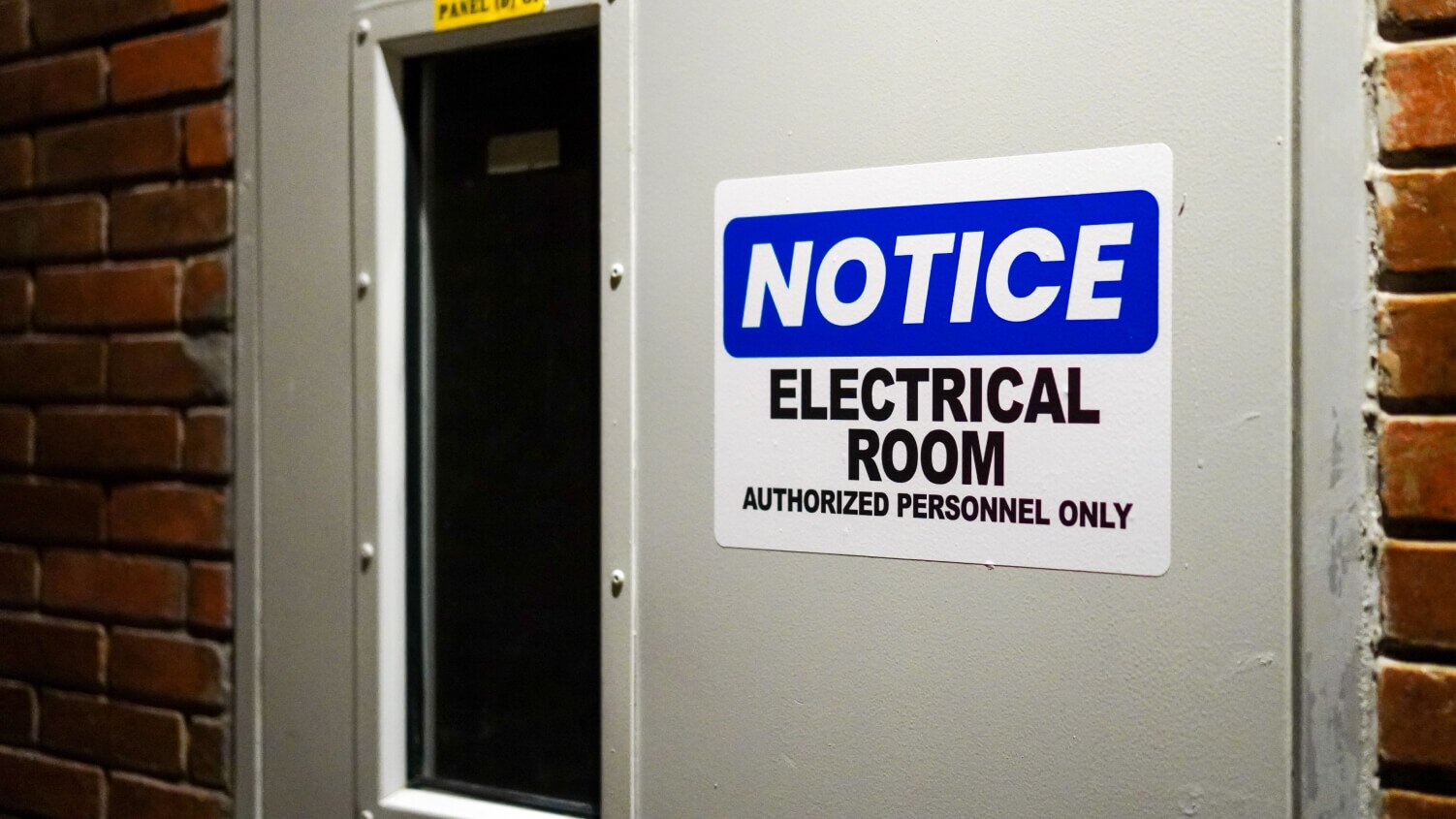
For small business owners in construction or manufacturing, workplace safety signage is a simple but essential part of protecting your team and keeping operations on track. Posting the appropriate safety information can contribute to injury prevention, assist with OSHA compliance efforts, and promote clear communication of hazards. The Occupational Safety and Health Administration (OSHA) and the American National Standards Institute (ANSI) require that safety signs be clearly posted wherever workplace hazards exist. OSHA outlines these requirements in 29 CFR 1910.145. Getting familiar with the basics of signage, what’s required, where to place it, and how to keep it up to date can make a big difference in everyday safety.
Safety Signage Essentials
Understanding the importance of safety signs goes beyond compliance. By getting familiar with OSHA standards, sign classifications, color codes, and symbol meanings, you can support workplace compliance efforts, help inform your team, and contribute to reducing accidents.
OSHA classifies safety signs into three categories: Danger Signs, Caution Signs, and Safety Instruction Signs.
| Danger Signs | Caution Signs | Safety Instruction Signs |
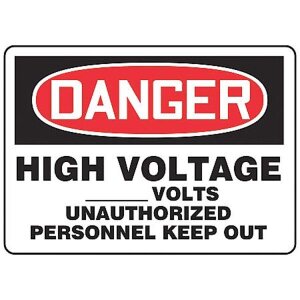 | 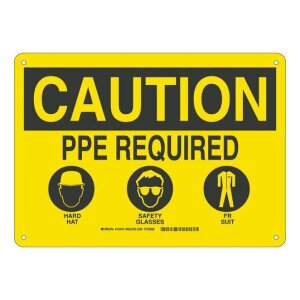 | 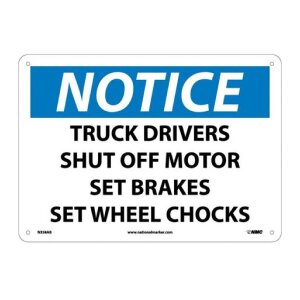 |
| Place danger signs where an immediate safety threat is present and precautions must be taken. | Post caution signs where a potential safety threat is present. They may also be used to warn against unsafe practices. Caution signs are used when a potential hazard is present that could cause moderate property damage or injury. Some examples are hot or uneven surfaces and slippery floors. | Safety instruction signs are used where general safety instructions or suggestions are needed. |
Sign Colors and Their Meanings
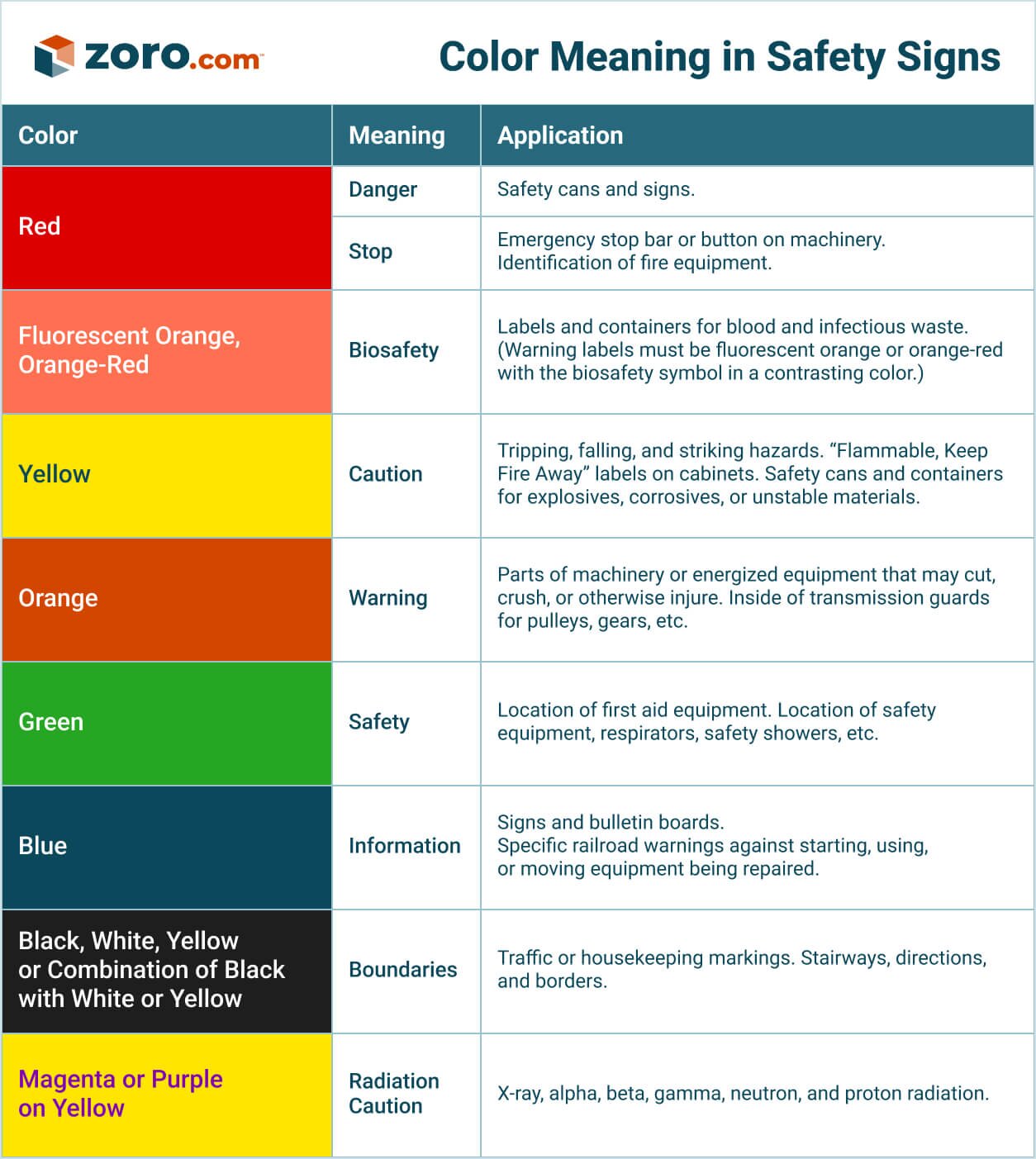
OSHA and ANSI assign meanings to the colors used on safety signage. Read the chart below to learn what each color means.
Safety Symbols on Signs
Safety signs feature many symbols to convey hazards and information. Make sure you familiarize yourself and your employees with the symbols and their important meanings.
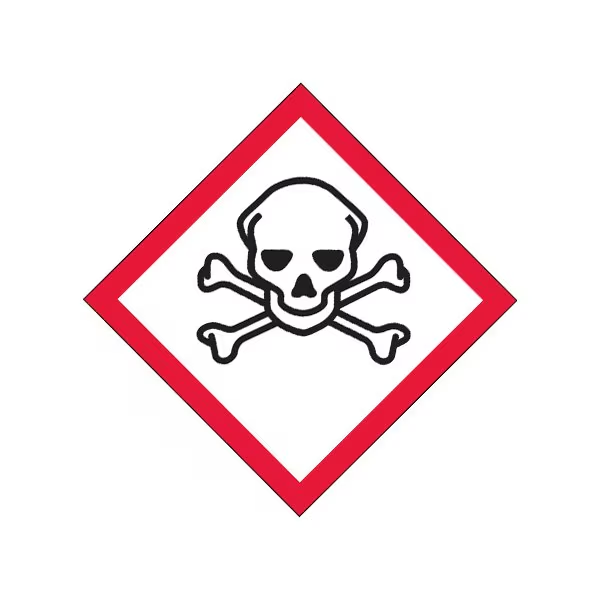 | Skull and Crossbones: Indicates fatal toxicity. |
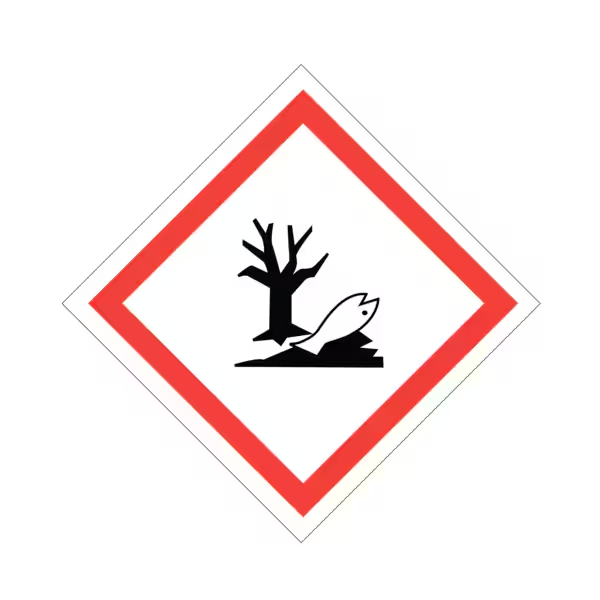 | Environment: Depicted as branches and a fish and indicates aquatic toxicity. |
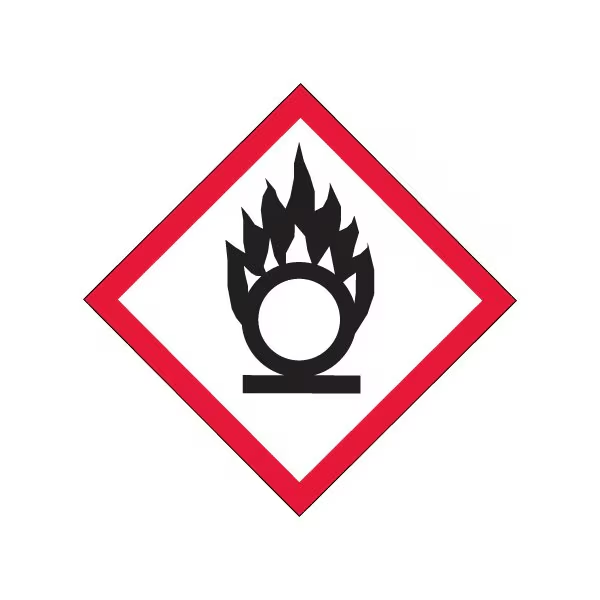 | Flame over a Circle: Depicted as a black circle with flames on top of it, indicating oxidizers. |
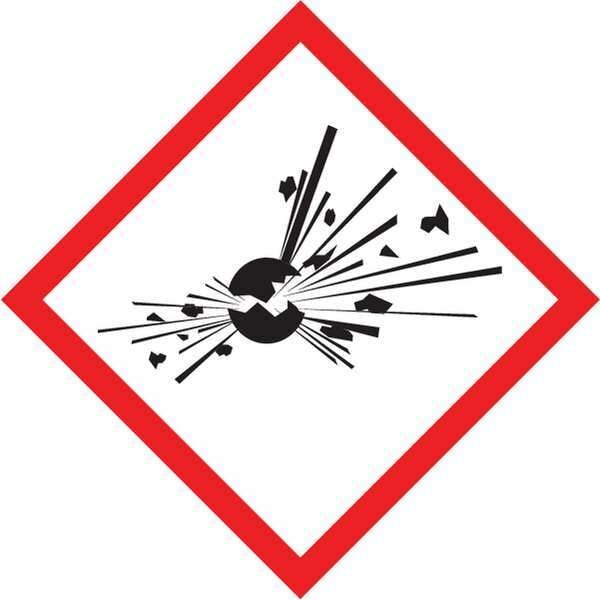 | Exploding Bomb: Depicted as a black bomb with lines coming out of it, indicating explosives, organic peroxides, or self-reactives. |
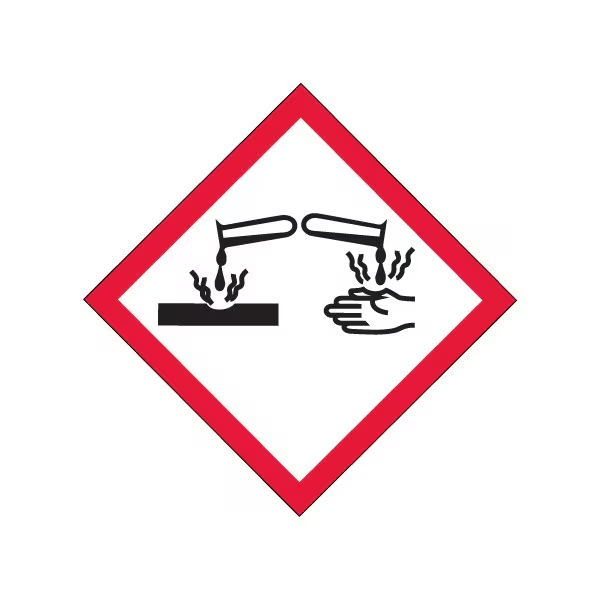 | Corrosion: Depicted as two vials of pouring liquid. One vial pours onto a hand and the other onto a pipe, causing damage to both. Indicates corrosion/burns to skin, eye damage, and metal corrosion. |
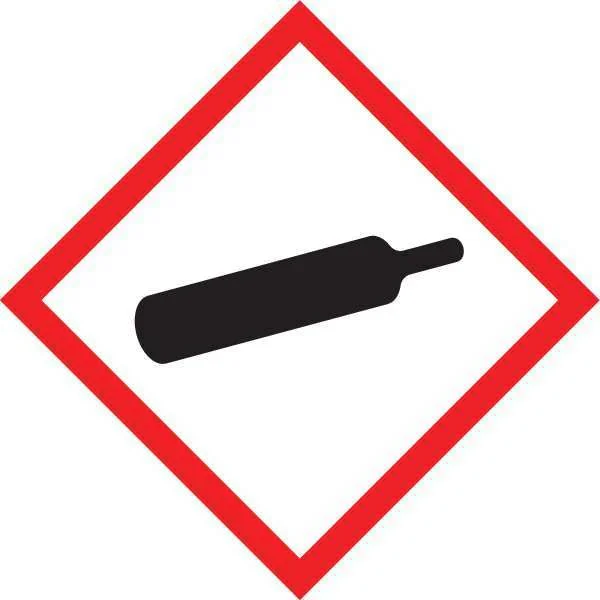 | Gas Cylinder: Depicted as a black gas cylinder, indicating gasses under pressure. |
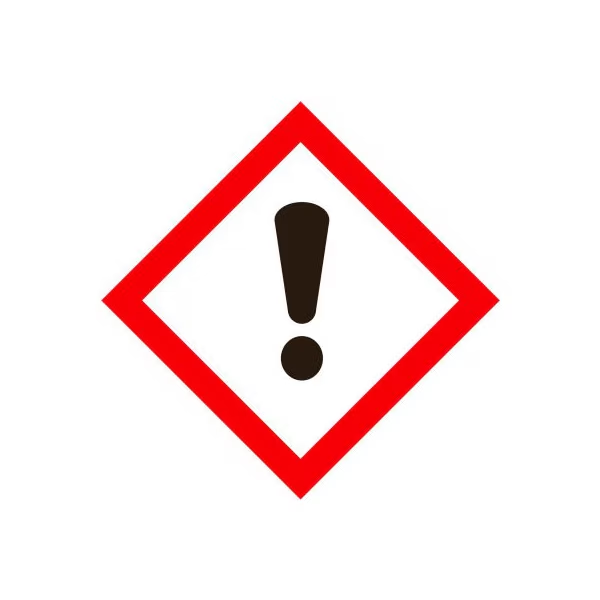 | Exclamation Mark: Depicted as a black exclamation point and indicates hazards to the ozone layer, irritants to the skin and eyes, respiratory tract irritants, skin sensitizers, narcotic effects, and acute toxicity. |
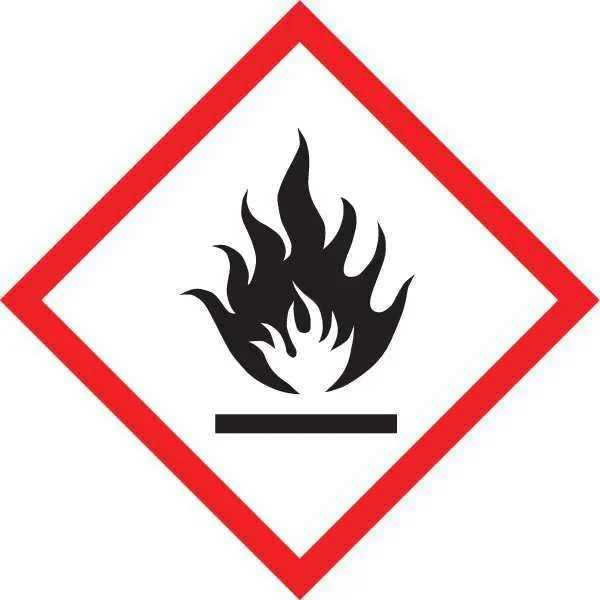 | Flame: Depicted as a fire and indicates flammables, organic peroxides, pyrophorics, self-reactives, self-heating, and flammable gas emissions. |
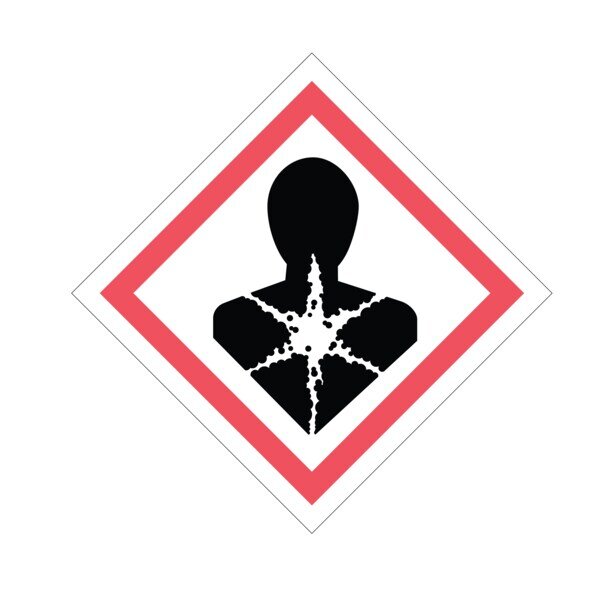 | Health Hazard: Depicted as a human torso with fissures in it and indicates aspiration toxicity, carcinogen, target organ toxicity, mutagenicity, respiratory sensitizer, and reproductive toxicity. |
Types of Safety Signs
Facilities rely on several types of safety signs to keep their employees and visitors safe. The chart gives you insight into some of the most common types.
| Warning Signs | Caution Signs | Mandatory Signs | Emergency Signs |
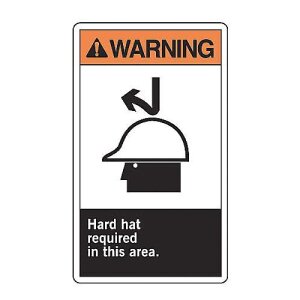 | 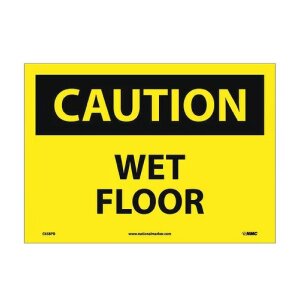 |  | 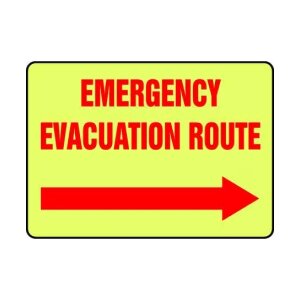 |
| Alert people to a safety hazard in the area. A description of the hazard and any instructions to avoid injury should be included. | Alert people to a potential hazard that is less severe than those indicated by warning signs. They should include instructions to avoid injury where applicable. | Alert people to safety protocols that must be followed. | Alert people to safety risks or provide directional guidance in emergency scenarios. Should include instructions in the event of an emergency. |
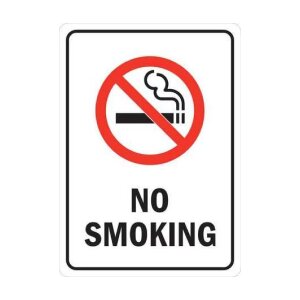
| Prohibition Signs | Fire Signs | Traffic Signs | |
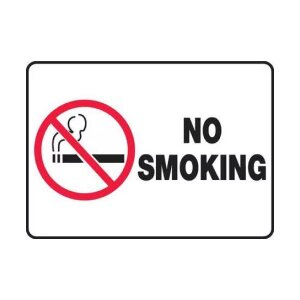 | 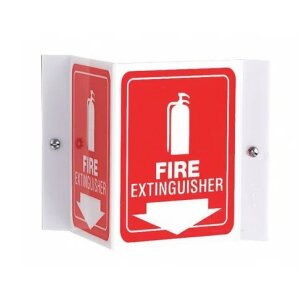 | 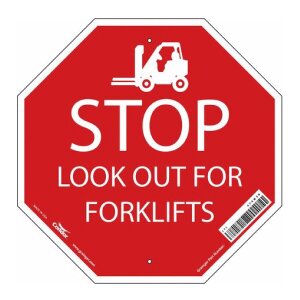 | |
| Alert people to substances or behaviors that are not allowed in certain areas. | Alert people to where fire equipment is located. Other signs caution people about safety risks that could lead to fire. | Alert people to traffic risks in the area and provide instructions on how to avoid collision/injury. |
Lettering Size on Safety Signs
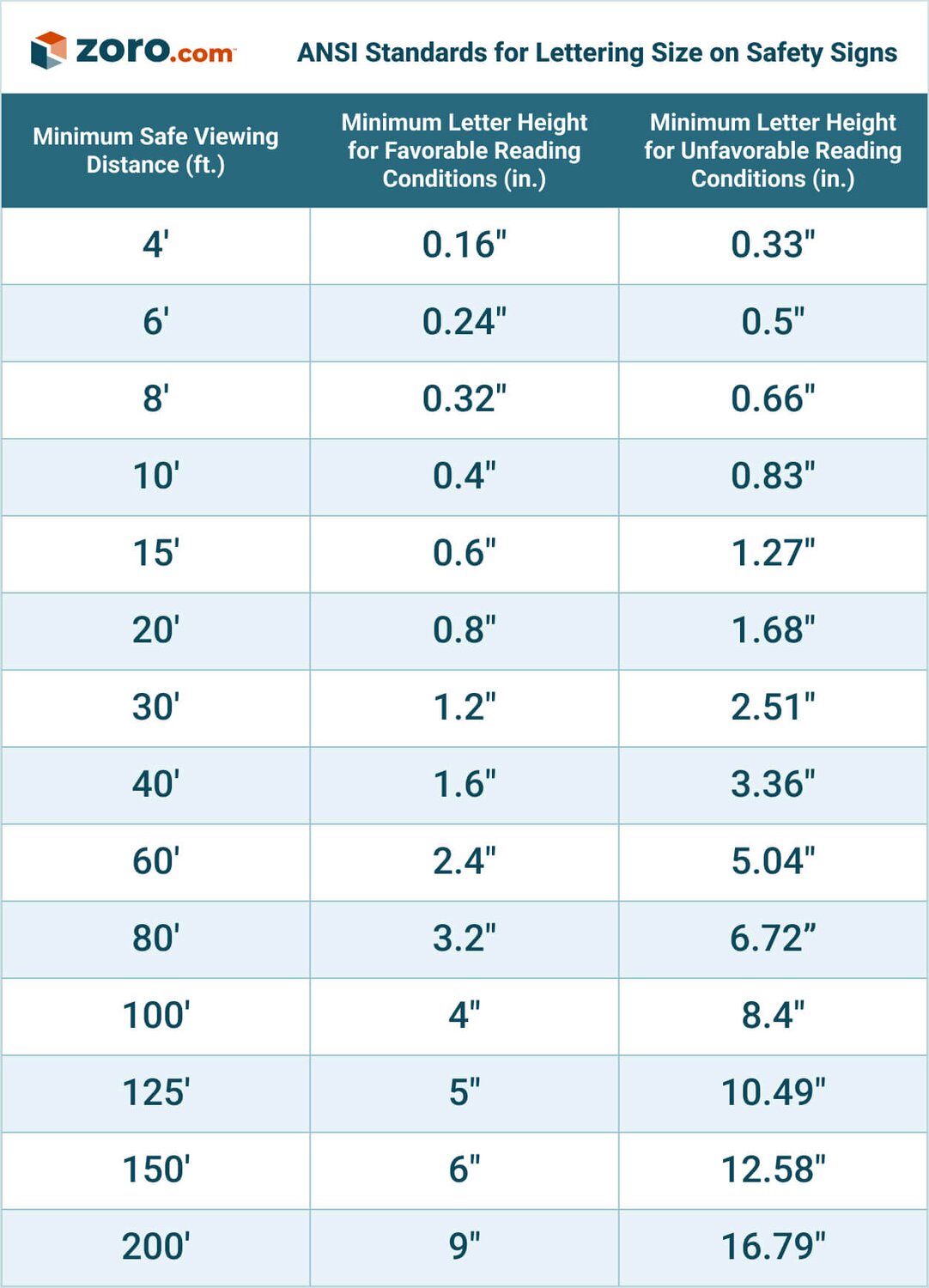
The size of the lettering on signs must be large enough to read and be in a font that’s easy to read. Lettering size standards for safety signs are articulated in ANSI Z535.2-2011 (R2017), Section 8.
Not sure where to start?
Ask yourself these key questions to evaluate your current safety signage and identify where updates may be needed on your shop floor or jobsite.
Walk the Floor or Jobsite
Do a quick safety signage audit. Evaluate whether high-risk zones are appropriately marked. Are emergency exits labeled and unobstructed?
Match Signage to Hazards
Identify hazards unique to your facility or project, such as welding areas, high-noise zones, or cutting tools, and ensure each is clearly marked.
Use OSHA/ANSI-Compliant Signs
Signs should include the proper signal word (DANGER, WARNING, CAUTION), standard colors (red, yellow, etc.), and clear text or pictograms.
Keep It Visible and Durable
Install signage that is at eye level and can withstand your environment (e.g., dust, heat, moisture).
Train Your Team
Make sure your crew knows what the signage means and follows the safety instructions.
Update as Needed
As your shop or jobsite changes, revisit your signage plan. Signs fade, get damaged, or become outdated.
Where to Place Your Safety Signs
ANSI has clear guidelines on where your safety signs should be placed. Here are some highlights.
- When a hazard is present, the sign should be placed at a safe viewing distance according to ANSI Z535.2-2011 (R2017), Sections 11 and 12.
- Safety equipment and fire safety equipment signs must be visible and placed near the equipment.
- Safety signs should be placed in areas where they won’t fade or be exposed to harsh environmental conditions.
- Safety signs should have reflective elements if their placement is in an environment where greater visibility may be needed.
- Use an additional light source when illumination is compromised or sign colors are unclear.
- If the sign is positioned where illumination may be obstructed or compromised, provide emergency lighting or enhance the sign with reflective elements.
- Ensure that your safety signs do not distract from the safety hazard.
- Do not adhere safety signs on or adjacent to movable objects.
Stay Ahead of Safety Risks
A well-signed workplace can contribute to greater safety awareness and may help reduce risks of costly delays, fines, and injuries. Taking a proactive approach to safety signage is one of the easiest ways to support your team and protect your business. Need help finding OSHA-compliant signage for your shop or jobsite? Zoro offers a variety of construction- and manufacturing-grade signs, labels, and PPE reminders designed to support workplace safety efforts.
Product Compliance and Suitability
The statements contained in this guide are intended for general informational purposes only. Such statements do not constitute a product recommendation or representation as to the appropriateness, accuracy, completeness, correctness, or currentness of the information provided. Information provided in this guide does not replace the use by you of any manufacturer instructions, technical product manual, or other professional resource or adviser available to you. Always read, understand, and follow all manufacturer instructions. Portions of this article were generated in part by ChatGPT, and edited by a member of the Zoro team.
