


Toggle Clamp Buying Guide
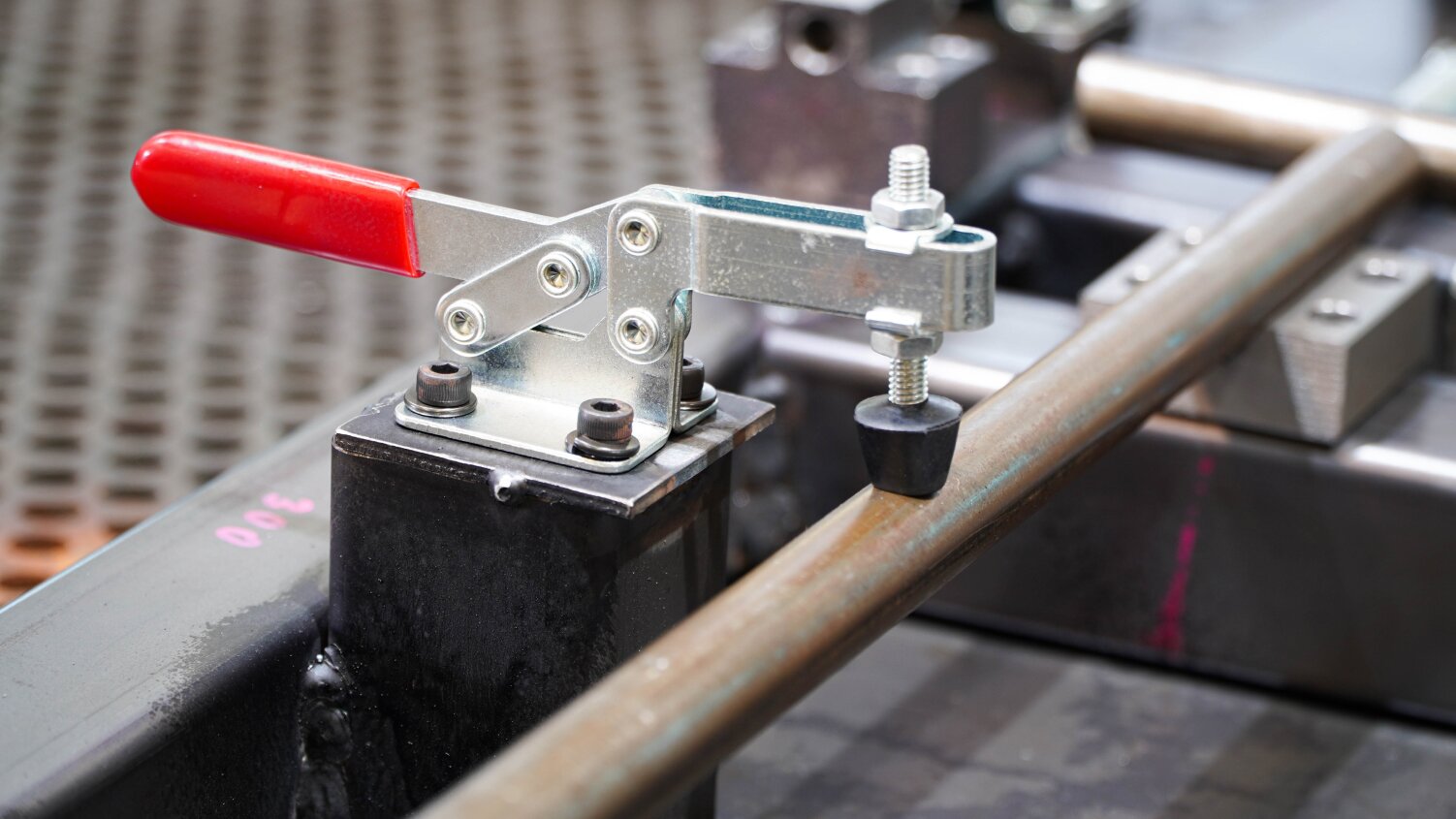
If your business involves welding, woodworking, or metal assembly, you know how important it is to keep parts stable while you work. Toggle clamps provide a steady way to hold materials in place without the need for constant manual pressure. This guide breaks down common toggle clamp styles, size details, and everyday use cases to help make your selection process more straightforward.
What Is a Toggle Clamp?
A toggle clamp is a mechanical tool used to hold workpieces in place during tasks like machining, drilling, welding, or inspection. It uses a pivot and lever system to apply downward clamping force, often locking into position with minimal effort from the operator. Once engaged, the clamp stays in place until released, reducing the need for hands-on pressure.
Common Types of Toggle Clamps
Toggle clamp types come in various configurations, each suited for specific applications.
| Vertical Toggle Clamps | Horizontal Toggle Clamps | Latch-Type Toggle Clamps | Push/Pull Toggle Clamps |
 | 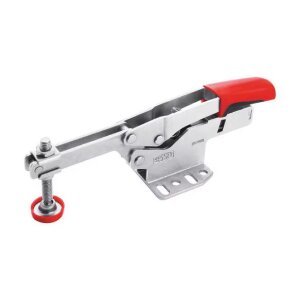 |  |  |
| These clamps have a vertically oriented handle and are commonly used when ample vertical space is available. | The handle lies flat in the locked position. This style is useful in tight spaces or when tools need to operate overhead. | Designed to join two separate parts, like doors or panels, by pulling them together and holding them shut. | These clamps apply force in a linear direction and are used when inward or outward clamping pressure is required. |
Understanding Toggle Clamp Sizing and Specifications
When selecting a toggle clamp, size and specification choices depend on the job’s clamping force requirements, available mounting space, and frequency of use. Here are the most common size-related factors to consider.
- Holding Capacity: This indicates the maximum force the clamp can resist without failure. Always ensure the clamp’s holding capacity exceeds the forces applied during your operation.
- Clamp Reach and Arm Length: The distance the clamp arm extends over the workpiece affects stability and suitability for the task.
- Mounting Base Size: The clamp base must fit securely on your fixture or bench. Ensure mounting hole patterns are compatible with your setup.
- Material Type: Toggle clamps are typically made from steel or stainless steel, sometimes with zinc plating for corrosion resistance.
Safety Considerations
While toggle clamps are straightforward to operate, safe use depends on proper installation and regular maintenance.
- Secure Mounting: Clamps should be mounted on stable surfaces to prevent movement during operation.
- Regular Inspection: Check clamps for wear, especially around pivot joints and locking mechanisms.
- Appropriate Selection: Choose clamps with suitable holding capacities and materials for the specific application to ensure safety and longevity.
How to Use Toggle Clamps
Once you’ve chosen a toggle clamp that matches your specs, getting the most out of it depends on setup, alignment, and consistent use. Here are some key steps and considerations.
1. Mount the clamp on a secure surface.
For safe, stable operation, fasten the clamp to a flat and sturdy fixture, jig, or workbench. Check that mounting holes align properly and hardware is tightened per manufacturer specs.
2. Adjust the spindle or clamping arm.
Many toggle clamps feature adjustable pressure points. Position the spindle so it contacts the workpiece evenly without forcing it. A well-aligned clamp helps maintain grip without over-compression.
3. Position the workpiece.
Place the material under the clamp arm so it sits flat and stable. Avoid clamping over uneven or unstable surfaces that could shift during the task.
4. Engage the handle to lock the clamp.
Press the handle through its pivot point until it locks. This “toggle action” helps hold the workpiece securely until you release it. Always keep hands clear of moving parts during this step.
5. Release and reset as needed.
After the task is complete, pull the handle back to disengage the clamp. If using the clamp repeatedly, make sure the handle mechanism moves smoothly and resets without resistance.
6. Inspect for wear over time.
Regular checks on pivot pins, locking levers, and mounting bolts can help you spot early signs of wear. Proper maintenance supports long-term use and consistent function.
For general guidance on safe tool use, OSHA’s Hand and Power Tools page offers helpful workplace safety tips.
As a business owner, knowing the different types and specifications of toggle clamps can help you choose tools that match the demands of your work. When you factor in clamp style, holding capacity, and how the tool will be used, it becomes easier to select equipment that supports consistent performance and safe handling on the job.
Product Compliance and Suitability
The statements contained in this guide are intended for general informational purposes only. Such statements do not constitute a product recommendation or representation as to the appropriateness, accuracy, completeness, correctness, or currentness of the information provided. Information provided in this guide does not replace the use by you of any manufacturer instructions, technical product manual, or other professional resource or adviser available to you. Always read, understand, and follow all manufacturer instructions. Portions of this article were generated in part by ChatGPT, and edited by a member of the Zoro team.
