
Type 27 vs Type 29 Flap Disc
Learn the differences between Type 27 and Type 29 flap discs to choose the best shape for your metalworking needs.
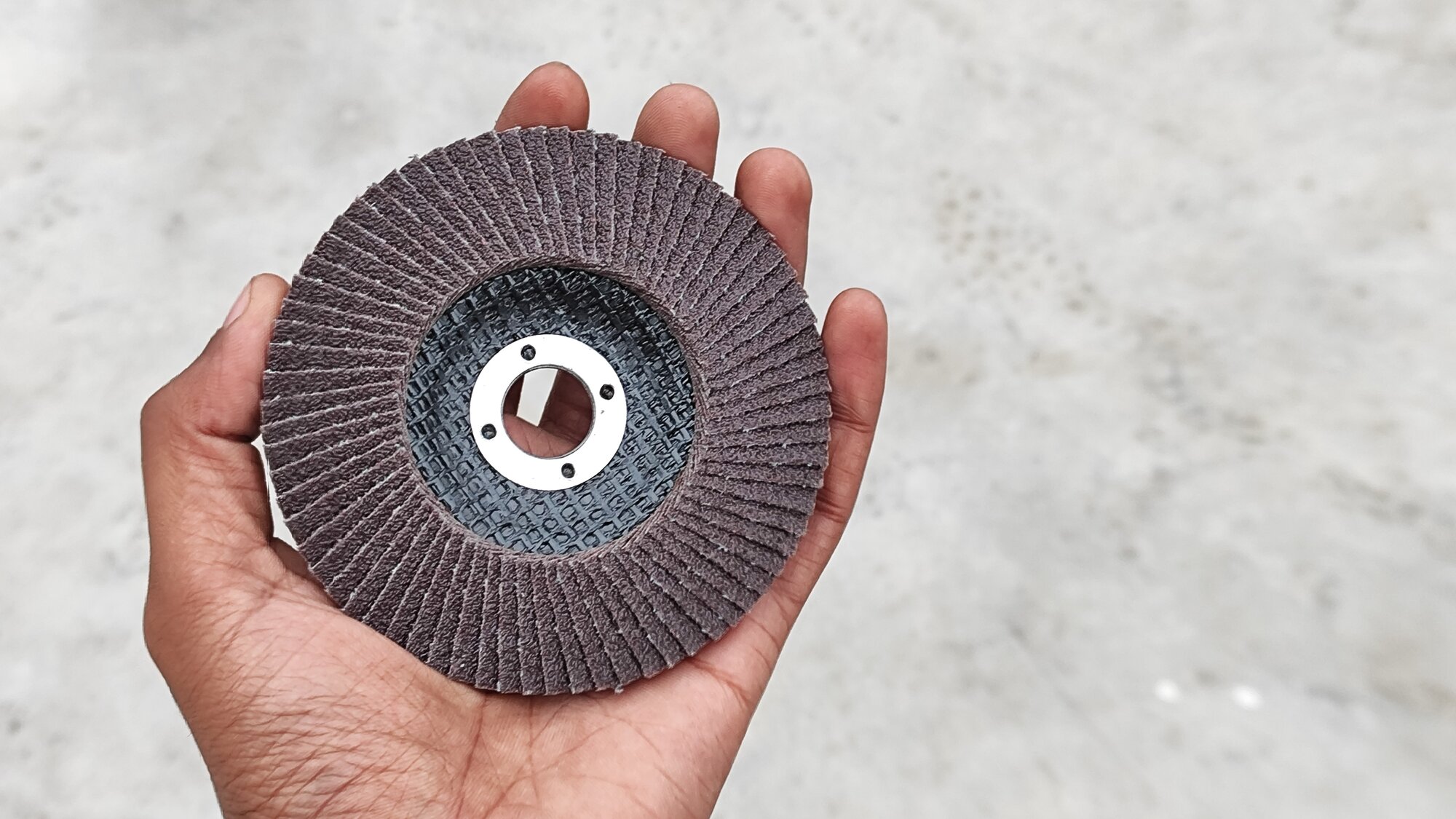
Type 27 vs. Type 29 Flap Disc: Choosing the Right Shape for Your Metalworking
If you have already discovered the longevity and smooth finish of flap discs, you know they are a game-changer for grinding, blending, and finishing metal. However, when you go to replenish your supply, you will run into a specific technical choice that leaves many fabricators scratching their heads: Type 27 vs. Type 29.
At first glance, they look almost identical. They use the same abrasive grains, the same fiberglass backings, and fit on the exact same angle grinders. But look closer at their profiles, and you will see a fundamental difference in shape that completely changes how they interact with metal.
Choosing the wrong shape won't just slow you down—it can ruin your workpiece or wear out your expensive discs prematurely. Here is everything you need to know to make the right choice.
Quick Reference Chart
| Feature | Type 27 (Flat) | Type 29 (Conical) |
|---|---|---|
| Profile Shape | 100% Flat | Angled (10 to 15 degrees slope) |
| Ideal Grinder Angle | Shallow (0 to 10 degrees) | Natural (15 to 25 degrees) |
| Primary Use Case | Finishing, blending, flat surfaces | Heavy stock removal, weld beveling |
| Gouge Risk | Very Low | Moderate to High |
| Operator Clearance | Low (Grinder is close to metal) | High (More room for hands/tool) |
The Core Difference: Flat vs. Conical
The numbers "27" and "29" are industry standard designations regulated by the American National Standards Institute (ANSI) to describe the geometric profile of the disc.
Type 27: The Flat Disc
A Type 27 flap disc has a completely flat grinding surface. The overlapping abrasive flaps are laid parallel to the backing plate. When you look at it edge-on, it forms a straight line.
Type 29: The Conical Disc
A Type 29 flap disc features a distinct upward angle or "cone" shape. The flaps are angled upward at roughly $10^\circ$ to $15^\circ$ relative to the backing plate. When viewed from the side, it has a noticeably crowned or sloped profile.
1. Contact Area and Aggressiveness
The shape of the disc directly dictates how much abrasive material touches the metal when you hold your angle grinder at a natural working angle.
- Type 29 (Conical): Because the flaps are already angled, holding your grinder at a natural $15^\circ$ to $25^\circ$ angle puts the maximum surface area of the flaps flat against the workpiece. This increased surface contact allows you to apply concentrated pressure, making Type 29 discs highly aggressive. They excel at heavy stock removal, hogging out deep welds, and cutting through thick scale quickly.
- Type 27 (Flat): If you tilt a flat Type 27 disc at a $20^\circ$ angle, you are only utilizing the very outer edge of the flaps. To get full surface contact with a Type 27, you have to hold the grinder almost completely flat ($0^\circ$ to $10^\circ$). Because the pressure is spread out across a wide, flat area, it is much less aggressive but highly controlled.
Winner for Heavy Grinding: Type 29
Winner for Controlled Blending: Type 27
2. Finishing and Surface Blending
Once the heavy structural welding is done, aesthetics take over. How you blend those welds into the surrounding metal depends heavily on your disc profile.
- Type 27: This is the undisputed king of surface blending and finishing. Because it operates at a very shallow angle, it distributes your hand pressure evenly across a wide plane. This prevents the disc from creating gouges, valleys, or "sweeps" in flat sheet metal. If you are preparing a flat surface for paint, primer, or powder coating, Type 27 will give you the most uniform, seamless finish.
- Type 29: The angled profile makes it very easy to accidentally dig the edge of the disc into flat metal, creating unsightly gouges. While you can finish with a Type 29 by using a lighter touch, it requires a much higher level of operator skill to avoid leaving deep directional marks.
Winner: Type 27
3. Working on Edges, Contours, and Welds
Not all fabrication happens on wide, flat tables. Often, you are dealing with inside corners, T-joints, or radius edges.
- Type 29: The built-in angle of a conical disc gives your hands and the body of the angle grinder more clearance away from the workpiece. This makes Type 29 ideal for grinding inside corners, prep-beveling structural steel pipe, or working on complex, contoured shapes where a flat disc would constantly bump into surrounding metal.
- Type 27: Because you have to hold the grinder flatter to the surface, your knuckles and the grinder's gear housing are much closer to the metal, which can restrict your movement in tight spaces. However, Type 27 shines when cleaning up the outer edges of a plate or squaring off a sharp corner without rounding it off.
The Verdict: Which One Do You Need?
Instead of choosing just one, most professional shops keep a healthy stock of both, using them sequentially as a two-step system.
Grab a Type 29 if:
You are in the rough-in phase. You have laid down massive structural weld beads that need to be cut down quickly, you need to bevel the edges of thick plate steel before welding, or you are working in tight, awkward angles where you need extra hand clearance.
Grab a Type 27 if:
You are in the finishing phase. The heavy lifting is done, and you now need to blend those weld seams flush with the metal so they disappear. You are working on flat sheet metal, doing light deburring, or preparing a pristine surface for final coat application.
Product Compliance and Suitability
The statements contained in this guide are intended for general informational purposes only. Such statements do not constitute a product recommendation or representation as to the appropriateness, accuracy, completeness, correctness, or currentness of the information provided. Information provided in this guide does not replace the use by you of any manufacturer instructions, technical product manual, or other professional resource or adviser available to you. Always read, understand, and follow all manufacturer instructions. Portions of this article were generated in part by ChatGPT.
