


Types of Clamps Explained
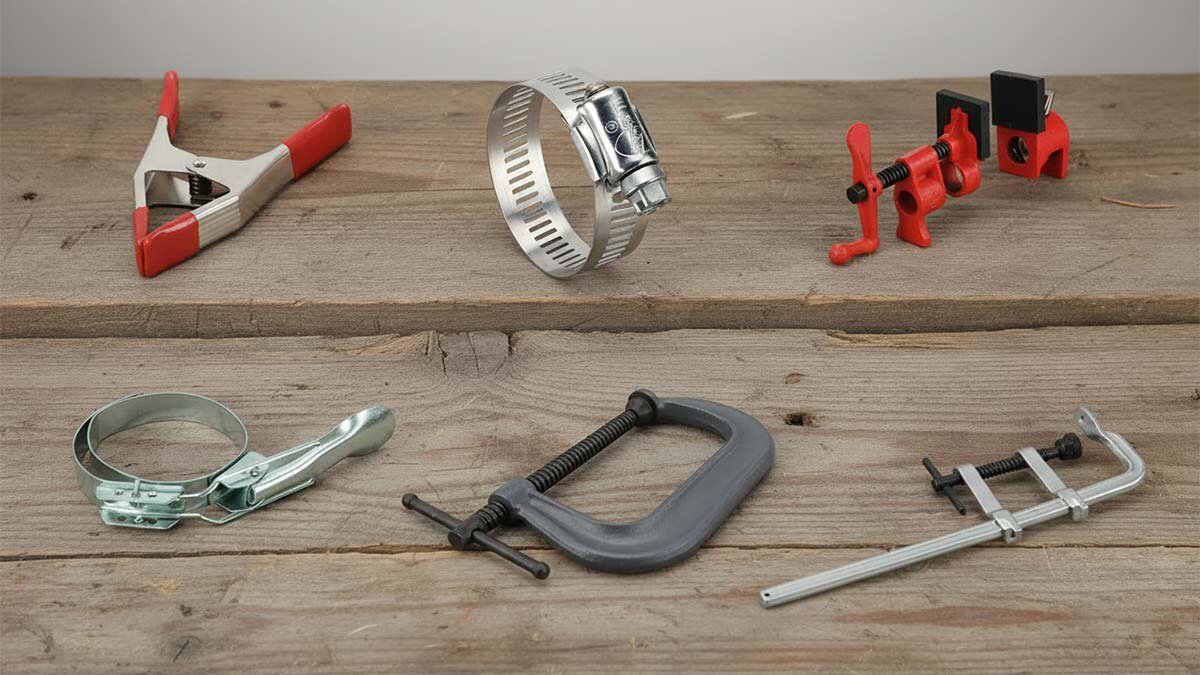
When you’re running a business, every tool you keep in your shop has a job to do. Clamps are no different. Whether you’re securing panels for assembly, holding parts during welding, or keeping workpieces steady while adhesive cures, the right clamp helps you work accurately and consistently. This guide breaks down the most common types of clamps used across construction, manufacturing, woodworking, and metalworking settings.
What Is Clamping Force?
Clamping force is the amount of pressure a clamp applies to hold materials in place. Light-duty clamps, such as spring clamps, provide modest pressure for temporary tasks. Screw-based or bar-style clamps generally offer stronger, adjustable clamping force that supports more precise work. Choosing the appropriate clamping force helps prevent material shifting and reduces the risk of damaging surfaces.
What Is Clamping Force?
Clamping force is the amount of pressure a clamp applies to hold materials in place. Light-duty clamps, such as spring clamps, provide modest pressure for temporary tasks. Screw-based or bar-style clamps generally offer stronger, adjustable clamping force that supports more precise work. Choosing the appropriate clamping force helps prevent material shifting and reduces the risk of damaging surfaces.
Main Types of Clamps
Spring Clamps 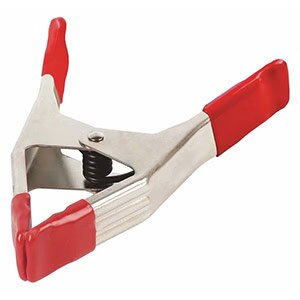 | Use a tension spring to apply constant pressure, similar to a clothespin. Ideal for temporary holds or securing irregular shapes. | |
C-Clamps 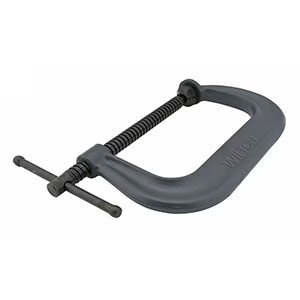 | C-shaped frame with a screw mechanism for strong, adjustable pressure on materials of different thicknesses. | |
F-Clamps 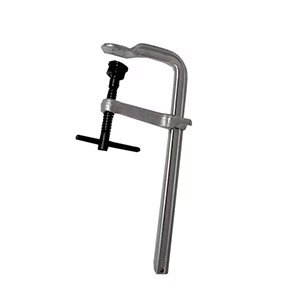 |
| |
Quick-Release Clamps 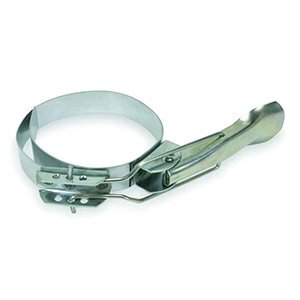 | Trigger-style clamp that tightens and releases quickly with one hand; ideal for repetitive tasks. | |
Hose Clamps 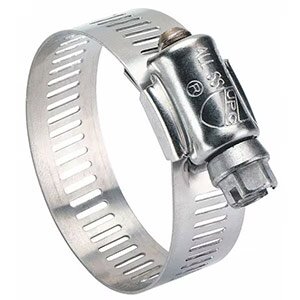 | Adjustable bands or fixtures designed to secure hoses or pipes tightly around fittings. | |
Parallel Clamps 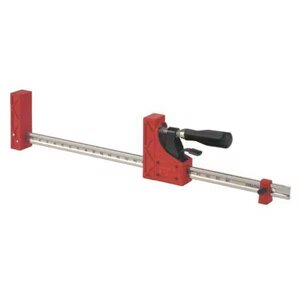 | Designed to keep their jaws perfectly aligned so they apply even, consistent pressure across your entire workpiece. Their wide, flat jaws help materials stay square during assembly, making them a dependable choice for professional shops that work with cabinets, frames, panels, or other projects that call for accuracy. | |
Pipe Clamps 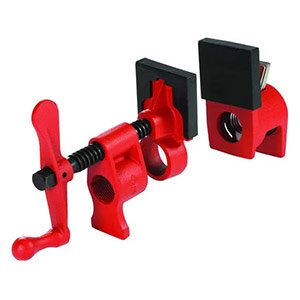 | Use a length of pipe as the backbone for adjustable clamping. A movable jaw slides along the pipe, while a screw mechanism applies strong, even pressure—ideal for woodworking, cabinetry, and assembly of wide panels. |
Choosing Among Different Kinds of Clamps
When selecting a clamp for professional use, focus on these four key factors.
- Material: Steel or cast-iron clamps suit heavy-duty work; plastic or nylon clamps are lighter and gentle on delicate materials.
- Pressure needs: Spring clamps offer moderate force; screw, bar, and C-clamps offer strong, adjustable control.
- Application: Match the clamp to your task—woodworking, metalworking, plumbing, or general assembly.
- Workpiece size and shape: Larger surfaces may require bar, pipe, or parallel clamps to distribute pressure evenly without deforming the workpiece.
There’s no one clamp that does it all. Stocking a mix of sizes and types ensures your shop or facility is ready when any fastening challenge walks in.
Supporting Your Workflow
Your clamp collection is more than just tools—they're part of your workflow infrastructure. By understanding each clamp’s design and use, you’re equipping yourself with the ability to select practical, job-ready tools that minimize downtime, reduce errors, and improve consistency on the jobsite or in the manufacturing setting. These are the kinds of industrial fastening solutions that help your operation run smoothly.
Product Compliance and Suitability
The statements contained in this guide are intended for general informational purposes only. Such statements do not constitute a product recommendation or representation as to the appropriateness, accuracy, completeness, correctness, or currentness of the information provided. Information provided in this guide does not replace the use by you of any manufacturer instructions, technical product manual, or other professional resource or adviser available to you. Always read, understand, and follow all manufacturer instructions. Portions of this article were generated in part by ChatGPT, and edited by a member of the Zoro team.
