


Types of Fuses
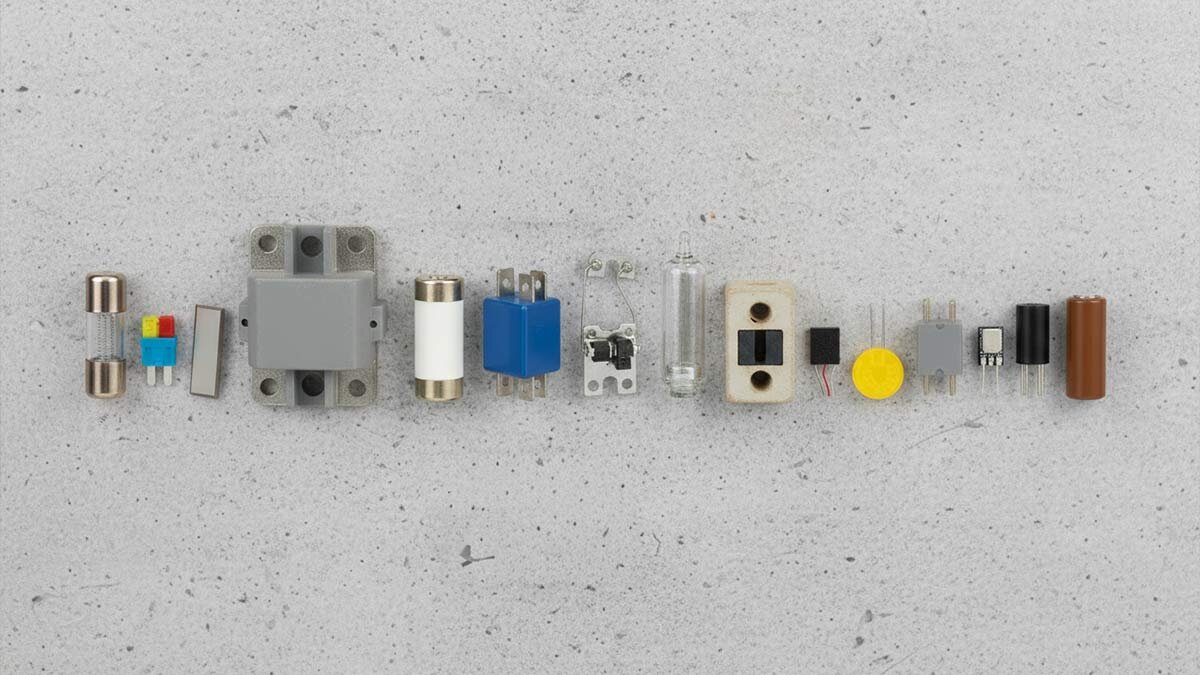
When you’re running a business that depends on electrical equipment, even a small disruption can slow things down. Choosing the right fuse is one of the simplest ways to protect your investment and keep operations running smoothly. This guide breaks down the most common types of circuit protection fuses and how to match them to your equipment and applications.
Why Fuses Matter in Circuit Protection
Fuses act as safety devices that prevent overloads and short circuits. When too much current flows through a circuit, the fuse element melts, cutting off power before damage occurs. In commercial and industrial settings, selecting the correct fuse helps safeguard machinery, minimize downtime, and comply with safety standards.
How to Choose the Right Fuse
Before choosing a fuse, consider:
- Voltage rating—The fuse must handle the circuit’s operating voltage.
- Current rating—Match the fuse’s amperage to the circuit’s normal current load.
- Speed of response—Fast-acting fuses respond quickly to surges, while time-delay fuses handle temporary overloads.
- Application type—Different fuse constructions suit different environments: automotive, industrial, or electronic.
Knowing your system’s voltage, current, and environment will help you select the safest and most effective fuse for circuit protection.
Types of Circuit Protection Fuses
AC Fuse
Used in alternating current systems, these fuses protect against overcurrent in standard AC circuits found in industrial and commercial settings.
Automotive Fuse
Designed for vehicles and mobile equipment, these compact fuses safeguard wiring and electrical components from short circuits and overloads.
Blade Fuse
Common in automotive and low-voltage applications, blade fuses feature a plastic body with two metal prongs for easy installation and replacement.
Bolted Tag Fuse
Built for heavy-duty use, bolted tag fuses are secured with bolts for a solid connection in industrial systems.
Bolted Type Fuse
Similar to bolted tag fuses, these are used where a strong mechanical connection is needed, often in high-current or high-reliability applications.
Cartridge Fuse
A general-purpose fuse with a cylindrical body that houses a metal element. Cartridge fuses are available in both low- and high-voltage ratings.
Cartridge Type HV HRC Fuse
High-voltage versions of cartridge fuses designed for protecting electrical distribution systems with high fault current capacity.
DC Fuse
Designed for direct current applications, DC fuses handle the constant current flow typical of battery systems and solar installations.
Drop-Out Fuse
Used in outdoor power distribution, these fuses physically “drop out” of their holder when blown, providing a clear visual indication of failure.
Fast-Acting Fuse
These fuses open the circuit quickly when exposed to excess current, protecting sensitive electronic equipment from short bursts of overcurrent.
High-Voltage Fuse
Built for systems operating at higher voltages, often found in power distribution networks or large machinery setups.
HRC (High Rupturing Capacity) Fuse
Designed to safely interrupt high-fault currents without explosion, making them reliable for industrial and high-energy applications.
Low-Voltage Fuse
Ideal for circuits operating below 1,000 volts, these fuses protect small motors, lighting systems, and control equipment.
Micro Fuse
Compact fuses designed for small electronic devices where space is limited, such as sensors or control boards.
Miniature Fuse
Slightly larger than micro fuses, these are common in electronic and control equipment for low-current protection.
Resettable Fuse
Unlike single-use fuses, these reset automatically after the fault is cleared, reducing downtime in circuits that experience temporary overloads.
Rewirable Fuse
Used in older or simple installations, rewirable fuses allow the fuse wire to be replaced after it melts, offering a cost-effective maintenance option.
Semiconductor Fuse
These protect delicate semiconductor devices like diodes and transistors, reacting rapidly to even small overcurrents.
SMD Fuse (Surface Mount Device Fuse)
Designed for printed circuit boards, SMD fuses are compact and used in modern electronics for precise circuit protection.
Striker Fuse
These include a spring-loaded striker pin that triggers an external mechanism, often used in switchgear or signaling applications.
Switch Fuse
Combines a switch and fuse in one unit, allowing the circuit to be isolated and protected simultaneously—common in industrial panels.
Thermal Fuse
These open when the temperature rises above a set point rather than when current increases, protecting against overheating hazards.
Time-Delay Fuse
Also called “slow-blow” fuses, these tolerate short-term overloads such as motor startup currents while still providing protection against sustained overloads.
Key Takeaway
Understanding fuse types helps you make informed decisions about electrical safety and equipment protection. By knowing how to choose the right fuse, your business can prevent unnecessary downtime, extend equipment life, and maintain compliance, all while keeping things running smoothly.
Product Compliance and Suitability
The statements contained in this guide are intended for general informational purposes only. Such statements do not constitute a product recommendation or representation as to the appropriateness, accuracy, completeness, correctness, or currentness of the information provided. Information provided in this guide does not replace the use by you of any manufacturer instructions, technical product manual, or other professional resource or adviser available to you. Always read, understand, and follow all manufacturer instructions. Portions of this article were generated in part by ChatGPT, and edited by a member of the Zoro team.
