
Types of Jib Cranes
The Ultimate Overhead Lifting Guide provides a detailed breakdown of different crane options.
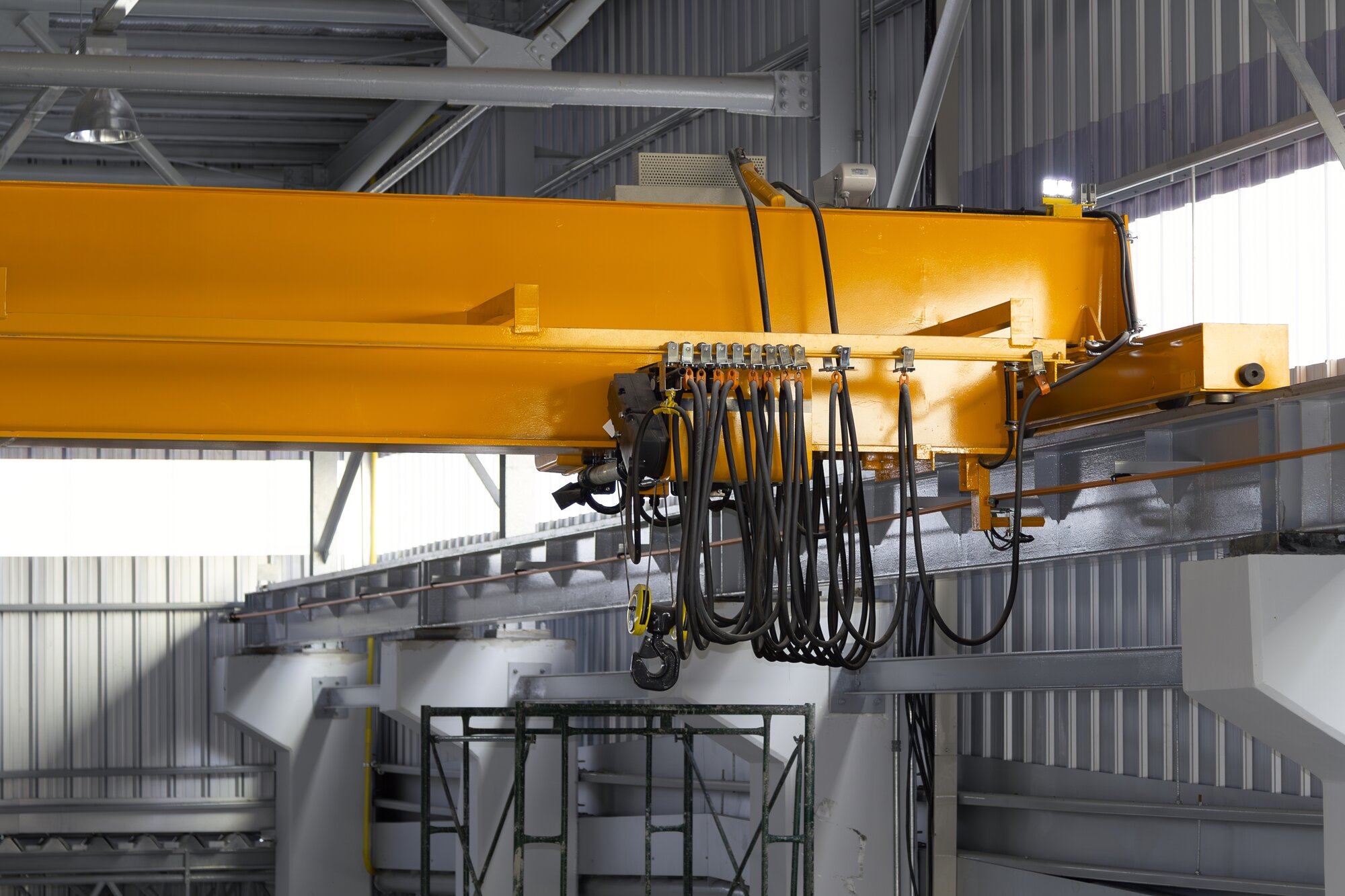
Understanding the Types of Jib Cranes: A Comprehensive Guide to Overhead Lifting
In industrial manufacturing, warehousing, and construction, efficiency relies heavily on how effectively materials are moved. While massive overhead gantry cranes dominate large shipyard and factory floors, jib cranes are the unsung heroes of localized material handling.
Featuring a horizontal member (known as a boom or jib) that supports a movable hoist, these cranes provide dedicated lifting power to specific work cells, assembly lines, or bays. By taking the burden off the main overhead crane, they eliminate production bottlenecks and reduce workplace injuries.
However, selecting the right jib crane requires an understanding of their distinct structural configurations. Here is a comprehensive breakdown of the most common types of jib cranes, their advantages, and their ideal applications.
1. Free-Standing Jib Cranes
Free-standing systems are the most popular and versatile jib cranes on the market. As the name implies, they do not require structural support from a wall or building column. Instead, they feature a heavy-duty steel mast anchored directly into a concrete foundation.
- Rotation: They offer the maximum coverage area with a full 360-degree rotation of the boom.
- Capacity: Capable of handling heavy loads, typically ranging from 0.5 tons up to 15 tons or more.
- Best Used For: Outdoor loading docks, large open assembly floors, and heavy-duty machining centers where building structural support is unavailable.
Key Consideration: Because they bear their own load entirely, free-standing cranes require a deep, heavily reinforced concrete foundation, which increases initial installation costs.
2. Wall-Mounted Jib Cranes
When floor space is at a premium, wall-mounted jib cranes are an exceptional alternative. These units are bolted directly to a building’s structural steel columns or reinforced concrete walls.
- Rotation: They typically offer 180 to 200 degrees of rotation.
- Capacity: Usually limited to lighter capacities (typically up to 5 tons) because they rely entirely on the integrity of the existing building structure.
- Best Used For: Individual workstations aligned along a perimeter wall, or bays situated under a larger overhead bridge crane.
Because they require zero floor space and no dedicated foundation, wall-mounted cranes are highly cost-effective and keep walkways completely clear for forklifts and foot traffic.
3. Wall-Traveling Jib Cranes
Taking the wall-mounted concept a step further, wall-traveling jib cranes are designed for high-production, multi-station assembly lines. Instead of being fixed to a single column, these cranes are mounted on a track system fixed along the length of a building wall.
- Rotation: The boom remains rigid perpendicular to the wall, but the entire crane travels horizontally along the track.
- Capacity: Generally designed for lighter loads (1 to 5 tons) to allow for smooth, rapid transit.
- Best Used For: Long fabrication shops, packaging lines, and warehouses where multiple operators need access to a hoist along a single aisle.
4. Mast-Type Jib Cranes
Mast-type cranes represent a clever middle ground between free-standing and wall-mounted configurations. They utilize a vertical mast that is anchored to both the floor and an overhead building support (such as a roof truss or structural beam).
- Rotation: They offer full 360-degree rotation similar to a free-standing unit.
- Capacity: Capable of lifting medium to heavy loads (up to 10 tons).
- Best Used For: Facilities looking for 360-degree coverage but wanting to avoid the expensive, deep concrete foundations required by standard free-standing cranes.
Because the overhead building structure bears the top-thrust load, the floor foundation requirements are significantly minimized.
5. Articulating Jib Cranes
Standard jib cranes feature a single rigid boom that moves in a fixed arc. Articulating jib cranes, however, feature a boom with two pivoting segments—an inner arm and an outer arm. This closely mimics the movement of a human arm, allowing the operator to reach around obstacles and fold the crane out of the way when not in use.
- Rotation: The inner arm provides 200-degree or 360-degree rotation, while the outer arm provides an additional 360 degrees of rotation.
- Capacity: Typically reserved for lighter ergonomics-focused lifting (up to 1 ton).
- Best Used For: Reaching inside machinery, maneuvering around structural pillars, or working in tight, congested spaces where a straight boom would collide with surrounding equipment.
Choosing the Right Jib Crane: A Quick Reference
When evaluating which types of jib crane fits your facility, ask yourself the following fundamental questions:
| Crane Type | Floor Space Required | Rotation Range | Foundation Needed? | Primary Advantage |
|---|---|---|---|---|
| Free-Standing | Medium | 360° | Yes (Deep Concrete) | Highest capacity and maximum coverage. |
| Wall-Mounted | None | 180°–200° | No | Low cost; maximizes floor space. |
| Wall-Traveling | None | Fixed (Travels) | No | Services multiple workstations linearly. |
| Mast-Type | Low | 360° | Minimal | Full rotation without a massive foundation. |
| Articulating | Low to None | Dual Arcs | Varies | Unmatched flexibility around obstacles. |
Investing in the right jib crane can drastically optimize your workflow, but a wrong choice can result in structural limitations or inefficient coverage. By identifying your weight requirements, available floor space, and necessary structural anchor points, you can easily pin down the exact crane configuration to elevate your facility's productivity.
Product Compliance and Suitability
The statements contained in this guide are intended for general informational purposes only. Such statements do not constitute a product recommendation or representation as to the appropriateness, accuracy, completeness, correctness, or currentness of the information provided. Information provided in this guide does not replace the use by you of any manufacturer instructions, technical product manual, or other professional resource or adviser available to you. Always read, understand, and follow all manufacturer instructions. Portions of this article were generated in part by ChatGPT.
