


Types of Projection Alarm Clocks for Workspaces
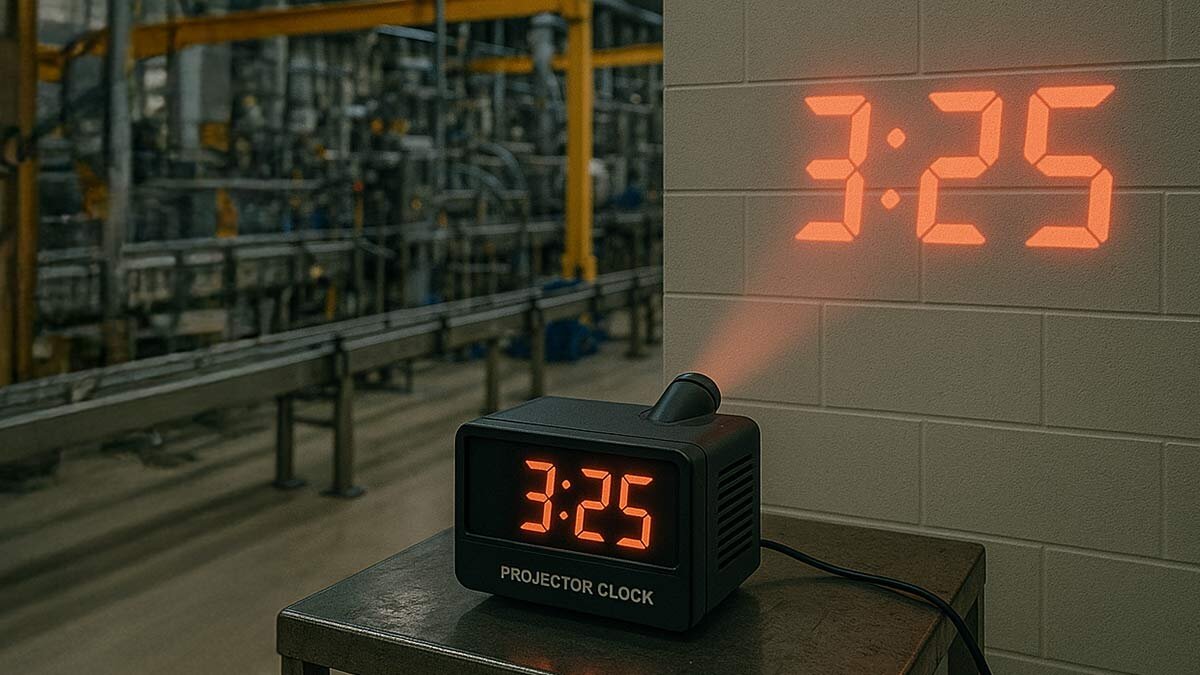
If you run a business, you know every minute counts. Whether your team starts before sunrise, rotates shifts, or manages facilities that run around the clock, keeping time visible and accurate makes the workday smoother. That’s where projection alarm clocks come in.
These clocks project the time on a wall or ceiling so it’s easy to read from anywhere in the room—no squinting, no fumbling for a phone. Below, we’ll explain features to look for on projection alarm clocks, how they work, and why investing in the best projection alarm clock can make a real difference for your staff.
Why Businesses Choose Projection Alarm Clocks
For small business owners, small improvements in visibility and coordination can add up to smoother operations. Projection clocks fit neatly into that idea: they’re practical, easy to install, and adaptable to nearly any workspace.
Here’s why many workplaces, from warehouses to maintenance shops, use them.
Better visibility: Time projected on a wall or ceiling is easy for everyone to see.
Less disruption: Workers don’t need to stop and check a phone or handheld device.
Shift coordination: Visible time helps teams transition between shifts more efficiently.
Increased consistency: Aligned timekeeping supports punctuality and accountability.
Key Features to Look for in the Best Projection Alarm Clock
The following are common features that can make one model more useful than another depending on your team’s environment.
The following are common features that can make one model more useful than another depending on your team’s environment.
Adjustable Projection Brightness and Angle
The best projection alarm clocks allow users to fine-tune the brightness and focus of the projected display. Adjustable projection helps workers see clearly in both dark and brightly lit environments.
Why it helps: In a dim breakroom, a softer projection prevents glare. On a bright factory floor, a stronger projection ensures the time stays visible.
Dual or Multiple Alarm Settings
Many projection clocks let you set more than one alarm time, which is ideal for facilities that run multiple shifts.
Why it helps: You can schedule different alerts for first- and second-shift start times, or use one alarm for breaks and another for end-of-day reminders.
Built-In Temperature and Humidity Sensors
Some projection clocks display and project real-time environmental readings alongside the time.
Why it helps: In manufacturing or maintenance settings, knowing the temperature or humidity at a glance helps maintain comfort and safety without extra equipment.
Rotating or Reversible Projection Lens
Projection clocks often include a rotating lens that lets you aim the display where it’s easiest to read, such as on a wall, ceiling, or angled surface.
Why it helps: You can mount the clock in a convenient spot and still make the projection visible across the workspace.
Adjustable Display and Dimmer Controls
Along with the projection, most clocks have adjustable backlighting or auto-dimming displays.
Why it helps: This keeps screens readable during the day and less intrusive at night, reducing strain and distraction for workers on evening shifts.
Smart Connectivity and Automatic Time Sync
Many modern models connect via Wi-Fi or Bluetooth, syncing automatically with network or atomic clocks.
Why it helps: You don’t have to reset every clock manually after daylight saving time changes or power outages. Consistent time across multiple departments helps operations run smoothly.
Power Backup Capability
Even when the power goes out, the alarm should still work. Models with battery backup ensure timekeeping and alarms stay accurate during outages.
Why it helps: In critical operations or overnight facilities, reliability matters, especially when timing impacts production schedules.
Audio and Radio Options
Some projection clocks include AM/FM radios or programmable alarm sounds.
Why it helps: Workers can start their shift with music or use different tones to signal breaks and meeting times.
Compact, Durable Design
Durability matters in commercial or workshop environments. Look for clocks with stable bases, protective lenses, and easy-to-clean surfaces.
Why it helps: A well-built projection clock withstands daily use and fits comfortably on desks, workbenches, or shelves.
How Projection Alarm Clocks Benefit Workers
When it comes to workplace efficiency, time visibility is one of the simplest tools you can provide. Here’s how projection clocks support your team.
Choosing the Best Projection Alarm Clock for Your Business
When selecting the best projection alarm clock, consider where and how it will be used.
For shops and warehouses, look for bright, adjustable projection and durable design.
For offices and breakrooms, choose models with softer brightness and temperature displays.
For 24-hour operations, smart connectivity ensures consistent time across all shifts.
Final Thoughts
Projection alarm clocks may be small tools, but they can make a meaningful impact in keeping teams coordinated and focused. By choosing models with the right features, like adjustable projection, reliable backup power, and clear visibility, you’re giving your workers one less thing to think about.
Product Compliance and Suitability
The statements contained in this guide are intended for general informational purposes only. Such statements do not constitute a product recommendation or representation as to the appropriateness, accuracy, completeness, correctness, or currentness of the information provided. Information provided in this guide does not replace the use by you of any manufacturer instructions, technical product manual, or other professional resource or adviser available to you. Always read, understand, and follow all manufacturer instructions. Portions of this article were generated in part by ChatGPT, and edited by a member of the Zoro team.
