


Understanding the Types of Circuit Breakers
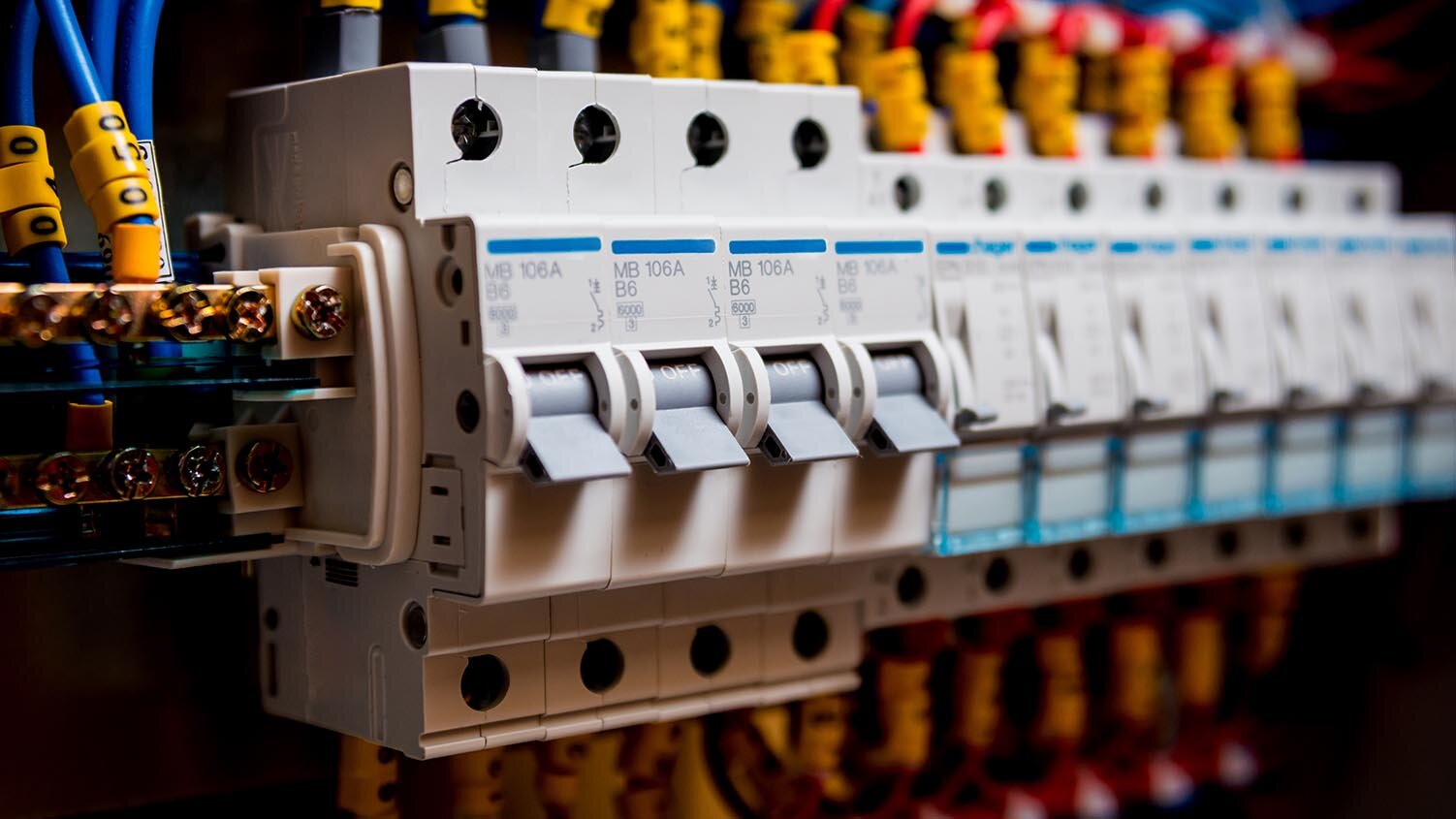
Whether you’re upgrading a facility, building out a production line, or maintaining a jobsite panel, choosing the right circuit breaker isn’t just about safety; it’s about keeping your operation up and running without interruptions. From selecting the proper type of circuit breaker to understanding standard circuit breaker sizes, this guide walks through the essentials with your business needs in mind. Let’s break it down.
What Are Circuit Breakers?
Circuit breakers are protective devices that stop electrical flow when a fault like an overload or short circuit occurs. Unlike fuses, they’re reusable and designed to reset once the issue is resolved.
Knowing the types of circuit breakers available can make it easier to match the right one to your environment whether it’s for lighting, machinery, HVAC, or custom applications.
Main Types of Circuit Breakers
| Breaker Type | Use Case | Function | Common Breaker Sizes | Notes |
| Standard (Single-Pole) | Residential or light commercial circuits | Protects a single hot wire at 120V | 15A, 20A | These are some of the most typical circuit breaker sizes used for lighting and outlets. |
| Double-Pole | Heavy-duty equipment, large appliances (e.g., HVAC) | Controls two hot wires at 240V | 30A, 40A, 50A | Offers reliable protection for high-amperage systems. |
| GFCI (Ground Fault) | Bathrooms, kitchens, outdoor or wet job areas | Trips when ground faults are detected | 15A, 20A | Often required by building codes in moisture-prone environments. |
| AFCI (Arc Fault) | Spaces with aging or vulnerable wiring (e.g., older facilities) | Detects and interrupts dangerous arcing | 15A, 20A | Adds protection against hidden wiring faults and fire hazards. |
| Specialty / Equipment- Specific | Motors, compressors, welders, sensitive or surge-heavy devices | Tailored for specific start-up loads or operational patterns | Varies | Designed for unique applications where standard breakers fall short. |
Understanding Common Breaker Sizes
Choosing the correct breaker isn’t just about type; it’s also about size. Breakers are sized by their amp rating, and matching the load to the ampacity is key to both performance and safety.
| Application | Typical Circuit Breaker Sizes |
| Lighting, Office Equipment | 15A–20A |
| Small Machinery | 20A–30A |
| HVAC Units, Large Tools | 30A–50A |
| Subpanels, High-Load Areas | 100A+ |
These standard circuit breaker sizes align with industry norms and wiring practices. Always verify wire gauge compatibility and consult local building codes before installation.
What Are the 2 Styles of Circuit Breakers?
In general, circuit breakers fall into two main categories based on how they detect electrical faults.
- Thermal Breakers: Use heat from excess current to trip a bimetallic strip—great for slow rises in load.
- Magnetic Breakers: Use an electromagnet to detect sudden surges or short circuits.
Most breakers today are thermal-magnetic, offering both protections in one. Understanding these core mechanisms helps you troubleshoot better and spec your systems more accurately.
Choosing the Right Fit for Your Business
Selecting the right circuit breaker means looking beyond just voltage and amperage. You’ll want to factor in:
- Load type (resistive vs. inductive)
- Environment (moisture, dust, vibration)
- Application (standard wiring vs. sensitive equipment)
- Code requirements (local and national electrical codes)
Whether you’re outfitting a service panel, replacing aging breakers, or expanding your operation, understanding the types of circuit breakers available and their typical use cases can help you build smarter and safer. For more information on circuit breakers, you can visit various online resources that provide detailed explanations and guides on different types of circuit breakers, their uses, and safety precautions. Some useful resources include the National Electrical Manufacturers Association (NEMA), the Electrical Safety Foundation International (ESFI), and the U.S. Consumer Product Safety Commission (CPSC).
Final Thoughts
When you're running a facility or managing a jobsite, the last thing you need is an electrical issue slowing you down. From common breaker sizes to GFCIs and thermal-magnetic designs, using the right breaker helps protect your gear, your people, and your bottom line. Need to stock up or replace a few units? Zoro carries a wide range of industrial-grade circuit breakers to fit your specs—no guesswork, no surprises.
Product Compliance and Suitability
The statements contained in this guide are intended for general informational purposes only. Such statements do not constitute a product recommendation or representation as to the appropriateness, accuracy, completeness, correctness, or currentness of the information provided. Information provided in this guide does not replace the use by you of any manufacturer instructions, technical product manual, or other professional resource or adviser available to you. Always read, understand, and follow all manufacturer instructions. Portions of this article were generated in part by ChatGPT, and edited by a member of the Zoro team.
