


Welding Trends in 2025: What Pros in Manufacturing and Construction Need to Know
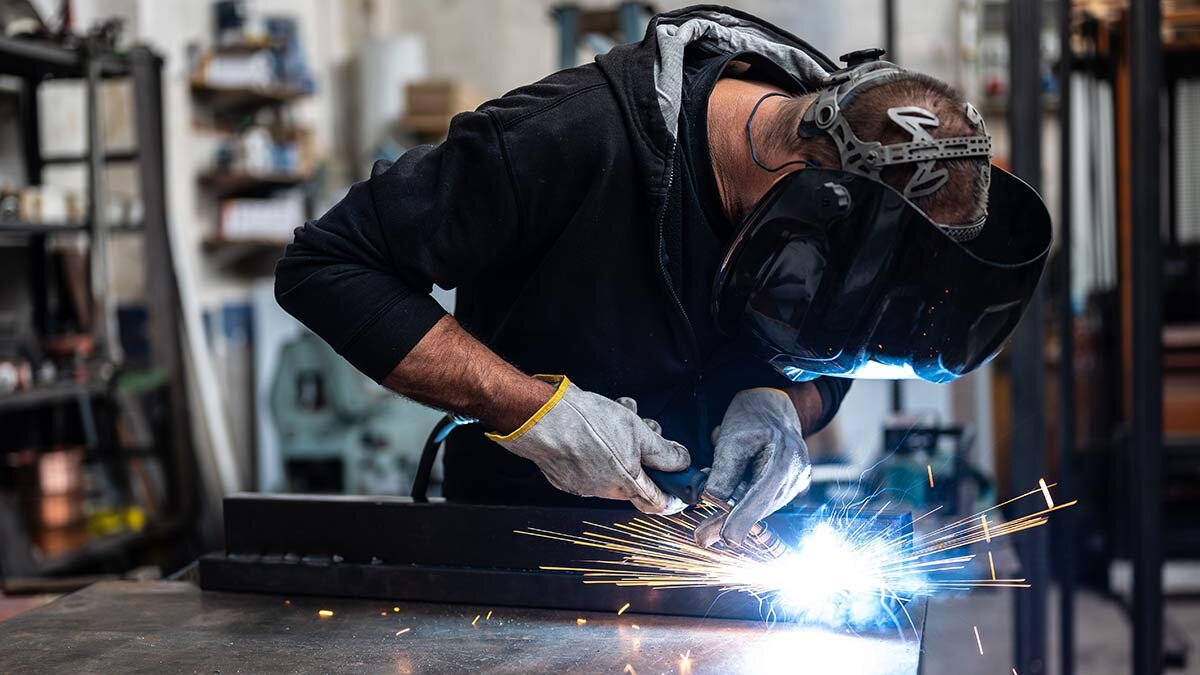
Table of Contents
- 1. Automation and Robotics Are Becoming the Norm
- 2. AI and Machine Learning in Welding Are Boosting Accuracy
- 3. The Skilled Workforce Is Still Critical—And Being Reimagined
- 4. Green Welding and Sustainable Welding Practices Are a Business Priority
- 5. Advanced Materials Are Pushing Advanced Welding Processes
- 6. Additive Manufacturing and Welding Are Intersecting
- 7. Enhanced Welding Safety Measures Are on the Rise
First block of coThe future of welding is being shaped by smarter tools, data-driven processes, and more efficient training methods,all aimed at helping you do more with less. Whether you manage a fabrication shop or lead field operations on a construction crew, staying ahead of welding trends in 2025 can help your business remain competitive and productive. Let’s break down what’s changing and why it matters for professionals like you.ntent, replace me
1. Automation and Robotics Are Becoming the Norm
In 2025, automation and robotics are playing a much larger role in both production and jobsite welding. Robotic welding systems aren’t just for large-scale operations anymore; they’re being scaled down and tailored to smaller shops where repeatability and speed matter.
These systems can now handle traditional welding methods like MIG and TIG welding, but are also capable of more advanced welding processes like orbital welding and laser welding. Whether you’re welding brackets or building frames, automating parts of the process frees up your skilled workers for more technical or custom work.
2. AI and Machine Learning in Welding Are Boosting Accuracy
The integration of AI and machine learning in welding is supporting real-time adjustments based on arc stability, heat input, and material composition. Smart machines can recognize weld flaws and recommend changes on the fly, making it easier for your team to maintain consistent weld quality without second-guessing settings.
Paired with sensors and digital welding solutions, these systems are also simplifying maintenance tracking and part replacement, which is especially helpful for businesses managing multiple welders or workstations.
3. The Skilled Workforce Is Still Critical—And Being Reimagined
Despite all the innovation, the demand for skilled welders is stronger than ever. But the training is changing. Programs are moving toward tailored welder training, VR and AR training, and simulation-based learning to speed up the process without sacrificing quality.
From stick welding to friction stir welding, workers are gaining exposure to a range of techniques through immersive tools. It’s not just about faster learning; it’s about safety, too. Safety improvements and augmented reality welding simulations help reduce the risk of injury while accelerating skill development.
For small businesses, this shift allows more flexibility in how you onboard and upskill your crew.
4. Green Welding and Sustainable Welding Practices Are a Business Priority
Sustainability isn’t a trend; it’s a growing operational necessity. In 2025, many businesses are adopting sustainable welding practices to align with customer expectations, regulatory standards, and internal cost-saving goals.
This includes switching to inverter-based machines for better energy efficiency, improving fume extraction systems, and using lower-emission consumables. Whether you're running a TIG welder, MIG welder, or investing in friction stir welding capabilities, green welding practices can help you reduce power consumption and support workplace safety.
Even plastic welding is gaining attention in industries where lightweight and recyclable materials are on the rise.
5. Advanced Materials Are Pushing Advanced Welding Processes
From aerospace to structural steel, the materials being welded today are more complex. That’s putting pressure on shops to adopt hybrid welding techniques and advanced arc welding tools that allow for more control.
For instance, laser welding is ideal for delicate work where thermal distortion is a concern. Orbital welding continues to gain popularity in pipeline and sanitary applications due to its consistency and clean results.
If you work with high-performance alloys or corrosion-resistant materials, expect these advanced welding processes to become more of a standard in your operations.
6. Additive Manufacturing and Welding Are Intersecting
Additive manufacturing and welding are no longer separate conversations. In some shops, 3D-printed metal parts are being welded directly into assemblies, creating new opportunities for prototyping, tooling, and repair.
These hybrid approaches aren’t limited to large OEMs. More small and mid-size businesses are exploring the value of merging fabrication and printing for custom parts and short-run production.
7. Enhanced Welding Safety Measures Are on the Rise
Safety remains a top priority, and 2025 brings more than just compliance—it brings innovation. From auto-darkening helmets with IoT-enabled diagnostics to enhanced welding safety gear that monitors exposure levels, businesses are investing in tools that actively support worker health.
Many of these safety innovations are integrated into training, helping new welders understand risks before ever striking an arc. And with the growing adoption of Internet of Things technology, even basic PPE and welding machines are becoming smarter and more connected.
Final Thought
The future of welding doesn’t mean giving up what works; it means building on it. Whether you’re upgrading a MIG welder, adding a TIG setup, or training your team on the latest digital welding solutions, the goal remains the same: do quality work safely and efficiently.
At Zoro, we know the value of your time and the pride you put into your craft. That’s why we’re here to help make things easier, from tools and safety gear to supplies that keep your crew moving.
Product Compliance and Suitability
The statements contained in this guide are intended for general informational purposes only. Such statements do not constitute a product recommendation or representation as to the appropriateness, accuracy, completeness, correctness, or currentness of the information provided. Information provided in this guide does not replace the use by you of any manufacturer instructions, technical product manual, or other professional resource or adviser available to you. Always read, understand, and follow all manufacturer instructions. Portions of this article were generated in part by ChatGPT, and edited by a member of the Zoro team.
