
Welding with Gasless MIG Welder
Gasless MIG welding guide: Flux-core tips, DCEN polarity & setup.
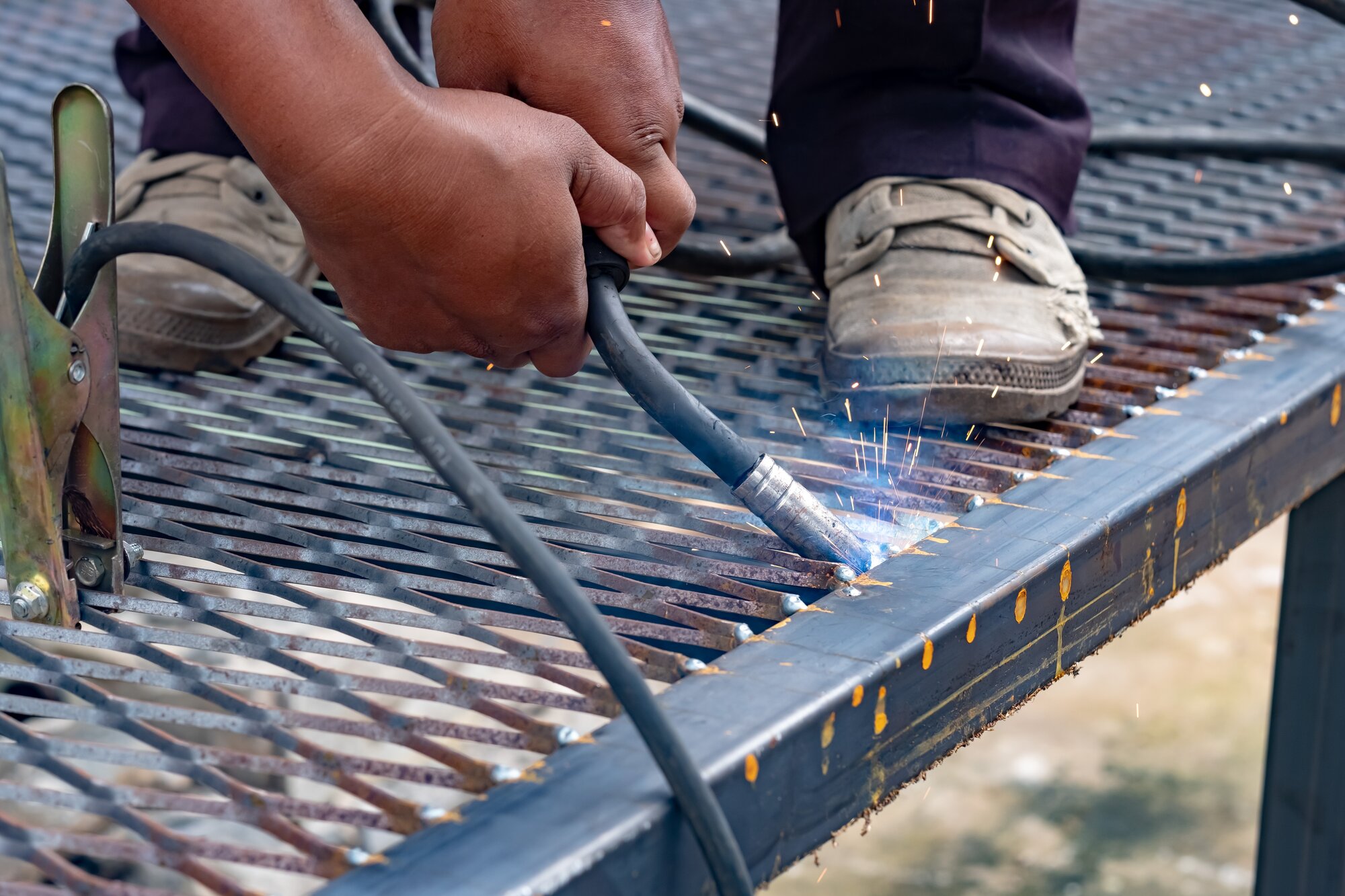
Welding with Gasless MIG Welder
In the fast-paced world of facility maintenance and field fabrication, efficiency and portability are the primary drivers of equipment selection. When the job site moves away from the controlled environment of the shop floor, the traditional MIG setup, with its heavy shielding gas cylinders and sensitive regulators, becomes a logistical burden. This is where welding with gasless MIG welders becomes an essential capability for commercial teams.
While technically known as Self-Shielded Flux-Cored Arc Welding (FCAW-S), this process is frequently referred to as "gasless MIG" in the industry. It offers a unique middle ground between the speed of wire-fed welding and the ruggedness of Stick welding.
The Mechanics of Gasless MIG
To understand the value of this process, one must look at the wire itself. In a standard MIG setup, the wire is a solid strand of metal, and the shielding gas comes from an external tank. In a gasless system, the wire is tubular, containing a core filled with specialized flux compounds.
As the arc is struck, the heat consumes the flux, which then performs three critical functions:
- Shielding: It generates its own gas cloud to protect the molten puddle from nitrogen and oxygen.
- Slag Formation: It creates a protective layer over the cooling weld to prevent contamination.
Deoxidizing: It chemically "cleans" the base metal as it melts.
Key Advantages in Commercial Environments
For facility managers and field supervisors, welding with gasless MIG welders offers several distinct operational advantages over traditional gas-shielded processes.
1. Portability and Mobility
The most obvious benefit is the elimination of the high-pressure gas cylinder. A gasless MIG unit is significantly lighter and more compact, allowing a single technician to transport the machine to rooftops, crawl spaces, or remote agricultural sites without the need for a cart or a second set of hands to manage heavy tanks.
2. Performance in Outdoor and High-Wind Conditions
Gas-shielded MIG is notorious for failing in outdoor environments. Even a light breeze can blow away the shielding gas, leading to porosity (bubbles) and brittle welds. Because gasless flux-cored wire generates its own internal shield, it is virtually unaffected by wind. This makes it the superior choice for repairing perimeter fencing, structural signage, or external HVAC supports.
3. Penetration on Thicker Materials
Flux-cored wire typically operates at a higher temperature and higher current density than solid MIG wire. This results in deeper penetration into the base metal. For commercial repairs on heavy equipment or structural steel, this ensures a stronger bond with fewer passes than a standard gas-shielded unit might provide.
Technical Requirements: Getting it Right
Success when welding with gasless MIG welders depends on specific machine settings that differ from standard steel welding.
Polarity is Paramount
Most standard MIG welding is done using DCEP (Direct Current Electrode Positive). However, the majority of gasless flux-cored wires require DCEN (Direct Current Electrode Negative), also known as "straight polarity." Using the wrong polarity will result in excessive spatter, poor penetration, and an unstable arc.
Wire Delivery: The U-Groove vs. V-Groove
Because flux-cored wire is tubular and relatively soft, it can be easily crushed by the drive rolls in the wire feeder. Professional-grade machines should be fitted with knurled (serrated) drive rolls. These rolls "bite" into the wire to ensure consistent feeding without requiring the high pressure that might deform the wire
Practical Challenges and Solutions
While the process is highly effective, it does come with trade-offs that managers must account for in their project timelines.
- Slag Removal: Unlike traditional MIG, gasless welding leaves a layer of slag on top of the weld. This must be chipped or wire-brushed away before painting or adding a second pass. This adds a small amount of labor time to the post-weld process.
- Increased Fume Production: The burning flux generates significantly more smoke and fumes than gas-shielded MIG. When welding with gasless MIG welders indoors, high-volume fume extraction or specialized respiratory protection for the operator is mandatory.
- Spatter Management: Flux-cored welding is generally "messier" than gas MIG. Technicians should use anti-spatter sprays on the workpiece and the torch nozzle to reduce cleanup time and protect the equipment.
Welding with gasless MIG welders is a tactical necessity for any commercial maintenance or fabrication team. It bridges the gap between the speed of a wire-fed system and the environmental resilience of Stick welding. While it may not be the first choice for aesthetic, high-precision indoor work, its ability to produce high-strength welds in punishing outdoor conditions makes it an invaluable asset for any facility’s tool crib.
Product Compliance and Suitability
The statements contained in this guide are intended for general informational purposes only. Such statements do not constitute a product recommendation or representation as to the appropriateness, accuracy, completeness, correctness, or currentness of the information provided. Information provided in this guide does not replace the use by you of any manufacturer instructions, technical product manual, or other professional resource or adviser available to you. Always read, understand, and follow all manufacturer instructions. Portions of this article were generated in part by ChatGPT.
