


What Are the Laboratory Safety Equipment Essentials for Your Facility?
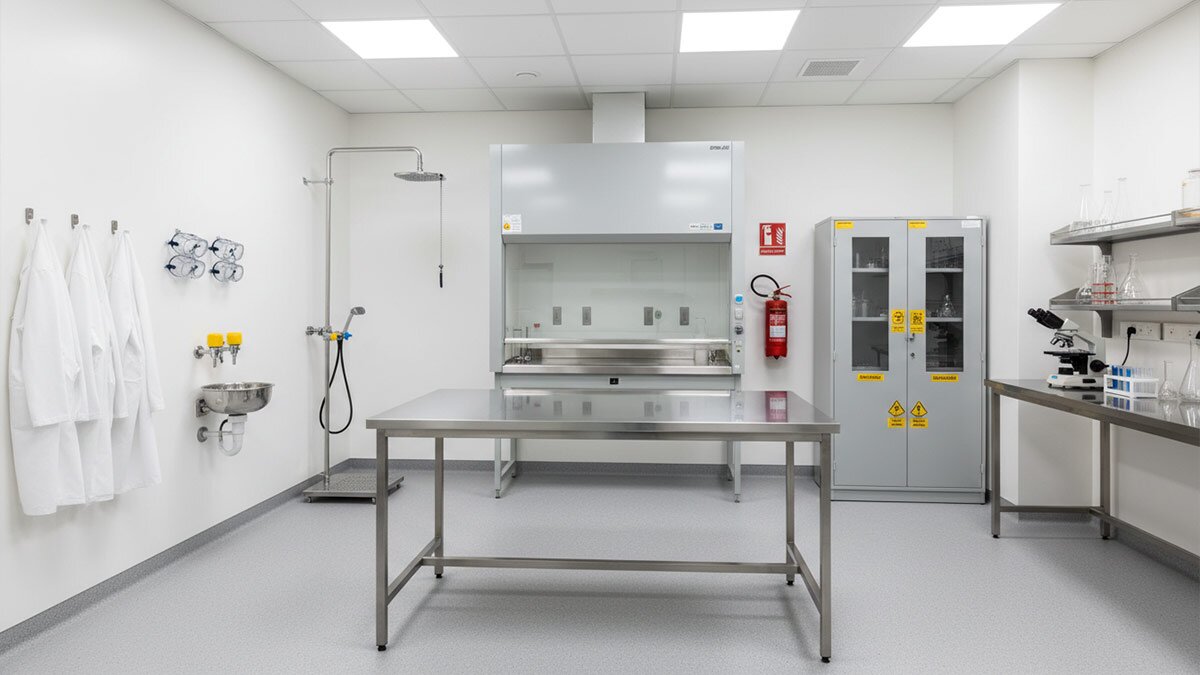
Running a laboratory means looking out for the people who make your work possible. Hazards like chemical exposure, spills, and fire can interrupt operations quickly, so having dependable safety equipment on hand helps your team stay prepared and confident. This guide walks you through the essential laboratory safety equipment every facility should consider, how to use it, and the guidelines that help keep your space running smoothly.
Personal Protective Equipment (PPE)
PPE is your team’s first layer of protection. In most laboratory environments, common PPE includes:
- Safety goggles or face shields to help protect against splashes or flying debris
- Gloves suited to the substances and materials in use
- Lab coats or aprons that help reduce skin contact and contamination
- Closed-toe footwear, which is required in active lab spaces
Fire and Chemical Safety Equipment
Fire and chemical hazards require strong prevention and response measures. Many laboratories rely on:
- Fire extinguishers and fire blankets suited for chemical and electrical fires
- Chemical storage cabinets for flammable, corrosive, or reactive substances
- Fume hoods or local exhaust systems that help remove harmful vapors from the workspace
Emergency Response and Decontamination Tools
Even well-managed labs may face unexpected incidents. Emergency response tools help minimize harm and support quick action.
- Eyewash stations and safety showers placed within 10 seconds of areas where chemicals are used
- Spill kits that include absorbents, neutralizers, and protective supplies
- First aid kits that are clearly marked and restocked on a routine schedule
Hands-on practice helps employees understand how to use each item effectively during an emergency.
Facility Controls and Safety Systems
A safe laboratory doesn’t rely solely on equipment. Your facility layout and systems also play a large role in creating a safer environment. Make sure you invest in:
- Ventilation systems that support airflow and help manage fumes
- Clear signage that identifies hazardous areas, exits, and safety equipment
- Storage systems designed to separate incompatible materials
- Routine maintenance for biosafety cabinets, exhaust systems, and fire suppression units
These controls help create a space that supports daily operations and long-term safety.
Guidelines for Establishing a Safe Laboratory Facility
Creating a sustainable safety program helps keep your team protected while supporting productivity. Consider using the following steps to build your safety plan.
- Identify hazards in every work area and process.
- Select appropriate safety equipment that aligns with those hazards.
- Train employees regularly, using hands-on demonstrations and refresher courses.
- Inspect equipment routinely—especially eyewash stations, fire extinguishers, and ventilation systems.
- Document safety procedures and keep them accessible for every employee.
Building a Culture of Safety
Safety equipment helps create a dependable environment, but a strong safety culture comes from shared commitment. When your team knows what to use, where to find it, and how to respond, they can work with more confidence and focus. At Zoro, we’re here to help make it easier to find the items that help keep your laboratory operating safely and efficiently.
Product Compliance and Suitability
The statements contained in this guide are intended for general informational purposes only. Such statements do not constitute a product recommendation or representation as to the appropriateness, accuracy, completeness, correctness, or currentness of the information provided. Information provided in this guide does not replace the use by you of any manufacturer instructions, technical product manual, or other professional resource or adviser available to you. Always read, understand, and follow all manufacturer instructions. Portions of this article were generated in part by ChatGPT, and edited by a member of the Zoro team.
