


What Do Hazmat Suit Colors Mean? A PPE Guide for Business Owners
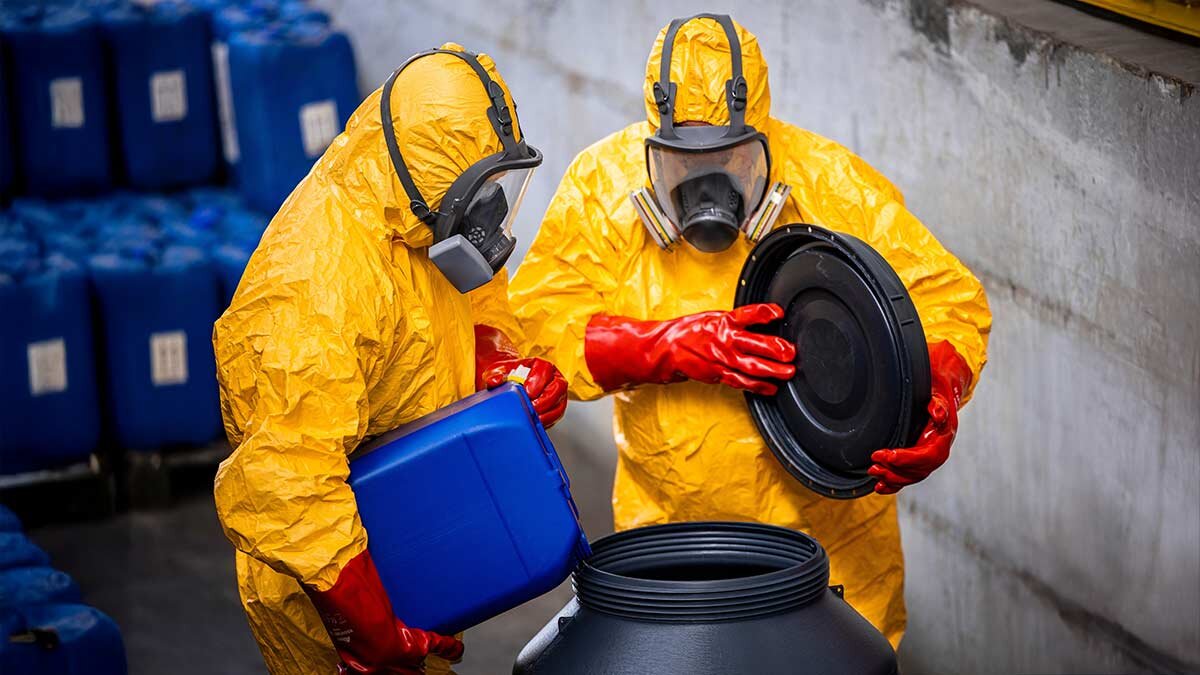
If your crew works around chemicals, gases, or other hazardous materials, understanding the types of hazmat suits, including what their colors indicate, can make a real difference in safety planning. Whether you're reviewing personal protective equipment (PPE) protocols or ordering gear for your team, knowing how suit colors relate to hazmat protection levels helps ensure everyone is properly equipped for the task at hand.
This quick guide explains what a hazmat suit is, what the different hazmat suit colors typically represent, and how they align with hazmat levels A, B, C, and D so you can make informed decisions without digging through dense manuals.
What Do the Different Colors of Hazmat Suits Mean?
Red suits often signal high-risk chemical exposure. Yellow may be used for biohazards. Blue and white suits are common for cleanup or maintenance. Color can indicate role or risk, but always check the suit’s specifications for actual protection level.
What Is a Hazmat Suit?
A hazmat suit is a full-body garment designed to protect the wearer from hazardous materials. In industrial and construction environments, they’re part of personal protective equipment for hazmat exposure, providing barriers against solids, liquids, gases, and vapors depending on the protection level. Hazmat suits are classified by four levels (A through D), and each level has distinct use cases based on the severity of exposure risk.
Hazmat Suit Protection Levels: A Quick Reference Guide
These levels are referenced in OSHA and EPA guidelines and should be part of your site-specific safety plan.
| Protection Level | Respiratory Protection | Skin Protection | Typical Use Cases | |
| Level A | Highest | Fully encapsulating suit with SCBA (Self-Contained Breathing Apparatus) | Maximum—gas-tight suit | Unknown or highly toxic environments, confined spaces, chemical spills |
| Level B | High | SCBA or supplied-air respirator | High—splash protection | Known chemical hazards requiring high respiratory protection |
| Level C | Moderate | Air-Purifying Respirator (APR) | Moderate—splash protection | Known contaminants with adequate oxygen levels |
| Level D | Minimal | None required | Basic—coveralls, gloves, safety boots | Non-hazardous environments, general maintenance |
What Do Hazmat Suit Colors Mean?
Red | 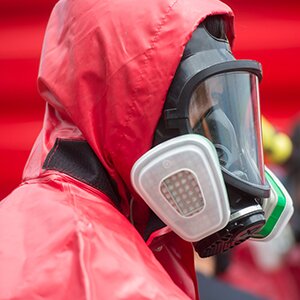 | Typically used for high-risk scenarios such as chemical spills or fire hazard zones. Often paired with Level A or B protection. |
Yellow |  | Common in biohazard or medical environments, yellow suits often signify Level B or C protection depending on respiratory needs. |
Blue |  | May indicate training suits or be used in decontamination roles. These are often Level C or D. |
White |  | White suits are commonly used in radiological settings to help protect against alpha, beta, and gamma radiation. You’ll often see them worn by nuclear plant workers, researchers, and emergency responders. Depending on the setup, they typically correspond to Level B or C protection. |
Green |  | Sometimes used by military or specialized teams for chemical or radiological work. Levels vary based on configuration. |
Hazmat Protection Levels and PPE Selection
When choosing personal protective equipment for hazmat exposure, consider these steps:
- Identify the hazard: Chemical, biological, particulate, gas, etc.
- Determine the required hazmat level (A–D).
- Match gear to the exposure risk. This includes respiratory equipment, gloves, and suit features.
- Train your team. Suit colors can support quick recognition in the field, but they’re not substitutes for safety procedures.
Final Thoughts: PPE Isn’t One-Size-Fits-All
Whether you're overseeing a cleanup, outfitting a maintenance crew, or evaluating your spill response plan, knowing how hazmat suit colors and hazmat protection levels align helps keep your team prepared without over- or under-equipping them.
Need to source suits, gloves, or respirators? We make it simple to find PPE that fits your jobsite's real-world demands without overcomplicating the process.
Product Compliance and Suitability
The statements contained in this guide are intended for general informational purposes only. Such statements do not constitute a product recommendation or representation as to the appropriateness, accuracy, completeness, correctness, or currentness of the information provided. Information provided in this guide does not replace the use by you of any manufacturer instructions, technical product manual, or other professional resource or adviser available to you. Always read, understand, and follow all manufacturer instructions. Portions of this article were generated in part by ChatGPT, and edited by a member of the Zoro team.
