
What is a Solenoid Valve
What is a solenoid valve? Learn how electromagnetic flow control works.
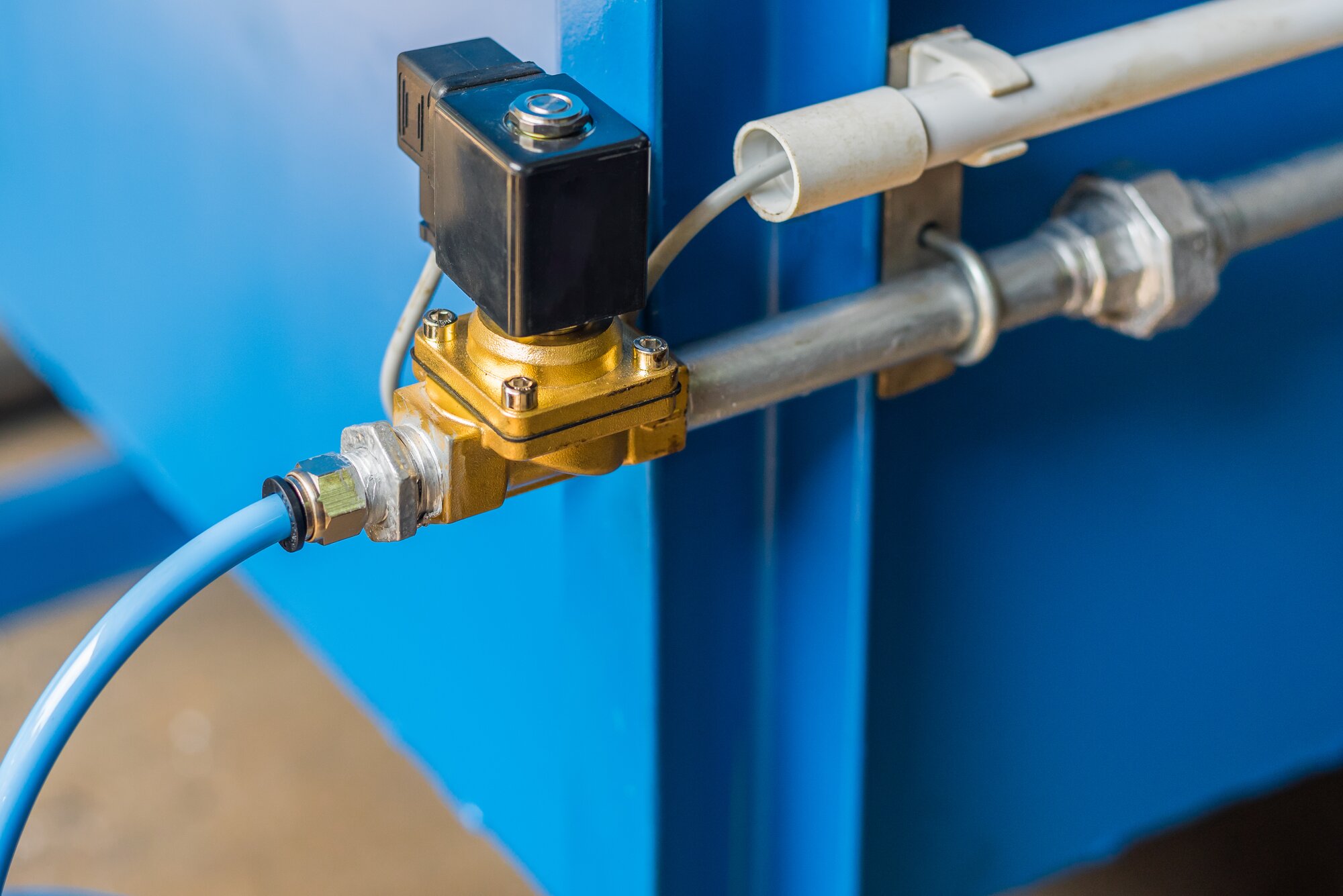
What is a Solenoid Valve?
In the world of industrial automation and home appliances, few components are as ubiquitous yet invisible as the solenoid valve. From the dishwasher in your kitchen to the massive pneumatic lines in an automotive assembly plant, the solenoid valve serves as the primary interface between electronic control systems and fluid mechanics.
At its core, a solenoid valve is an electromechanical device used to control the flow of liquids or gases. It is essentially a gatekeeper that opens, closes, or diverts fluid based on an electrical signal.
How It Works: From Electricity to Motion
To understand a solenoid valve, one must break it down into its two primary functional parts: the Solenoid (Electromagnet) and the Valve Body.
1. The Solenoid (The Operator)
The "solenoid" portion is an electromagnetic coil of wire wrapped around a central core. When an electrical current passes through this coil, it creates a magnetic field. According to the laws of electromagnetism, this field exerts a force on a ferromagnetic plunger (often made of stainless steel) located inside the coil.
2. The Valve Body (The Gate)
The valve body is the part connected to the pipes or hoses. Inside the body is an orifice—a hole through which the fluid flows. Attached to the plunger mentioned above is a seal or a disc. When the coil is energized, the magnetic force pulls the plunger up (or pushes it down), moving the seal away from or toward the orifice to control the flow.
The Two Main Types of Operation
Not all solenoid valves function in the same way. The choice between them usually depends on the pressure of the fluid being controlled.
Direct-Acting Valves
In a direct-acting valve, the electromagnetic force of the coil directly lifts the plunger to open the valve. These are simple and reliable but are limited in size. Because the coil has to fight the pressure of the fluid to open the "gate," direct-acting valves are typically used for smaller orifices or low-pressure applications.
Indirect-Acting (Pilot-Operated) Valves
For high-pressure systems or large pipes, a standard coil isn't strong enough to lift a heavy seal against the force of the fluid. Indirect-acting valves use a clever trick of physics: the solenoid opens a tiny "pilot" hole first. This creates a pressure imbalance that uses the energy of the fluid itself to push a large diaphragm or piston open. In this scenario, the electricity acts as the "trigger," while the fluid pressure does the "heavy lifting."
Categorizing the "Ways" and "Positions"
As discussed in technical standards, solenoid valves are classified by their configuration, which determines how many ports they have and how many "states" they can exist in.
- 2-Way Valves: These are the most common. They have one inlet and one outlet. They are either "Normally Closed" (NC)—meaning they stay closed until power is applied—or "Normally Open" (NO)—meaning they stay open until power is applied.
- 3-Way Valves: These have three ports. They are typically used to apply pressure to a device (like a cylinder) and then exhaust that pressure once the task is finished.
4-Way Valves: These are the workhorses of the pneumatic industry. They feature four or more ports and are used to drive double-acting actuators, allowing a machine to move both forward and backward.
Materials and Compatibility
The "media"—the substance flowing through the valve—dictates what the valve must be made of. This is known as chemical compatibility.
| Fluid Type | Common Valve Material |
|---|---|
| Water | Brass or Stainless Steel with EPDM seals. |
| Fuel/Oil | Steel or Brass with Viton (FKM) seals to prevent swelling. |
| Corrosive Chemicals | Plastic (PVC/PTFE) or specialized Stainless Steel. |
| High Temperature Steam | Stainless Steel with Teflon (PTFE) seals. |
Using the wrong seal material can lead to "swelling," where the internal rubber expands and jams the plunger, or "degradation," where the seal literally dissolves into the fluid stream.
Common Applications
The versatility of the solenoid valve is staggering. You can find them in:
- Medical Equipment: Controlling the flow of oxygen in ventilators.
- Agriculture: Automated irrigation systems that turn on based on soil moisture sensors.
- Manufacturing: Sorting arms on a conveyor belt that flick items into bins using puffs of compressed air.
- Transportation: Air brake systems on heavy trucks and trains.
What is a solenoid valve? It is a masterpiece of engineering efficiency. It takes the "thinking" of a computer and turns it into the "doing" of a mechanical system. Without it, the high-speed automation that defines modern life would be impossible. Whether it is a tiny valve controlling a drop of ink in a printer or a massive valve managing the cooling system of a power plant, the principle remains the same: a simple coil of wire, a magnetic field, and the controlled movement of fluid.
Product Compliance and Suitability
The statements contained in this guide are intended for general informational purposes only. Such statements do not constitute a product recommendation or representation as to the appropriateness, accuracy, completeness, correctness, or currentness of the information provided. Information provided in this guide does not replace the use by you of any manufacturer instructions, technical product manual, or other professional resource or adviser available to you. Always read, understand, and follow all manufacturer instructions. Portions of this article were generated in part by ChatGPT.
