
What is a Valve Timing Solenoid?
What is a VVT solenoid? How oil pressure controls your engine timing.
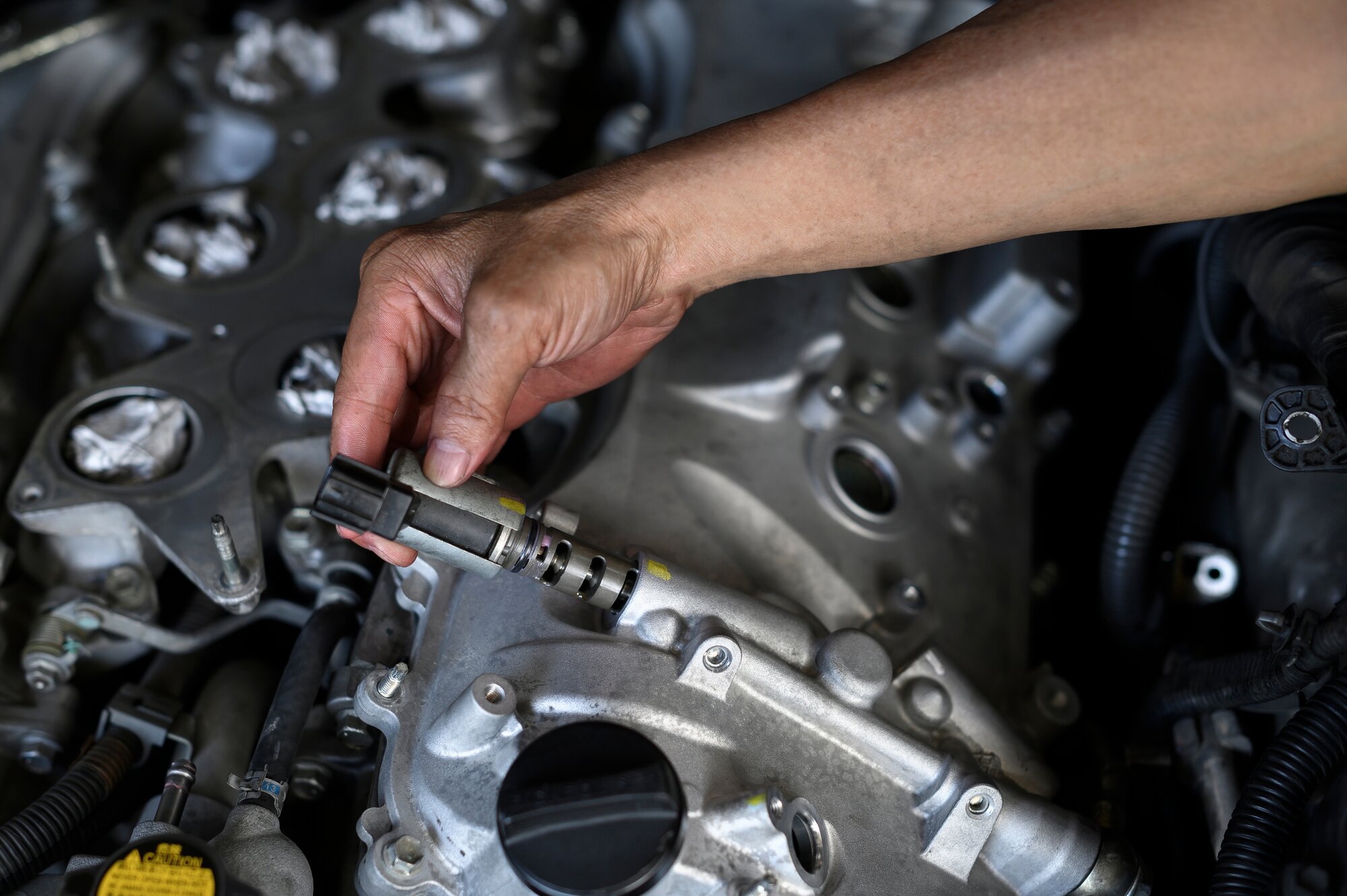
What is a Variable Valve Timing Solenoid (VVT)?
In the pursuit of the perfect balance between fuel efficiency and raw power, automotive engineering has evolved far beyond the static mechanical linkages of the past. One of the most critical components in a modern internal combustion engine is the Variable Valve Timing (VVT) Solenoid, often simply called a Valve Timing Solenoid.
To understand what this component is, we must first understand the problem it solves.
The Concept of "Valve Timing"
Every four-stroke engine relies on intake and exhaust valves to breathe. Traditionally, these valves were driven by a camshaft with fixed lobes. This meant the timing—exactly when the valves opened and for how long—was a compromise.
- At low speeds (idling): You want shorter valve opening times for a smooth, stable idle.
- At high speeds (accelerating): You want the valves to stay open longer to "gulp" more air and exhaust, maximizing horsepower.
A fixed camshaft is like a runner who can only breathe at one rhythm, regardless of whether they are napping or sprinting. The Valve Timing Solenoid is the component that allows the engine to change its "breathing" rhythm on the fly.
How the Valve Timing Solenoid Works
The Valve Timing Solenoid is an electro-hydraulic actuator. It acts as the bridge between the car's Engine Control Unit (ECU) and the mechanical VVT Phasers located on the end of the camshafts.
1. The Electrical Signal
The ECU monitors sensor data, including throttle position, engine load, and RPM. When it determines that the engine needs a timing adjustment (for example, when you floor the gas pedal to pass someone), it sends an electrical current to the solenoid.
2. The Hydraulic Action
The solenoid contains an electromagnetic coil and a plunger. When energized, the plunger moves, opening a specific pathway for pressurized engine oil. This oil is then directed into the VVT phaser (a gear-like mechanism on the camshaft).
3. The Mechanical Shift
As the oil fills chambers within the phaser, it physically rotates the camshaft a few degrees relative to the timing chain or belt. This "advances" or "retards" the timing.
- Advancing the timing means the valves open earlier.
- Retarding the timing means they open later.
Once the desired timing is reached, the solenoid adjusts to a "holding" position to maintain that oil pressure and keep the camshaft locked in its new orientation.
Signs of a Failing Valve Timing Solenoid
Because these solenoids rely on precise electrical signals and clean hydraulic fluid, they are prone to wear over time. When a solenoid fails, the engine can no longer optimize its breathing, leading to several distinct symptoms:
- Check Engine Light (CEL): The ECU is constantly monitoring camshaft positions. If the solenoid fails to move the cam to the requested angle, it will trigger codes like P0011 or P0014.
- Rough Idling: If the solenoid sticks in the "advanced" position (high-speed mode) while the car is stopped, the engine will stumble or stall.
- Decreased Fuel Economy: Without the ability to retard timing during cruising, the engine burns more fuel than necessary.
Engine Noise: A failed solenoid can cause the VVT phaser to "rattle" because it isn't receiving the proper oil pressure to stay stable.
Maintenance: The Role of Clean Oil
If there is one "kryptonite" for valve timing solenoids, it is dirty engine oil.
The passages inside the solenoid and the VVT phaser are incredibly narrow—often no wider than a pinhead. When oil isn't changed regularly, carbon deposits and sludge build up. This sludge can clog the solenoid's screen or cause the internal plunger to seize. In many cases, "repairing" a VVT issue is as simple as performing a high-quality oil change, though a badly clogged solenoid usually requires replacement.
The Valve Timing Solenoid is a small but mighty component that transformed the modern engine from a rigid machine into an adaptive one. By using electromagnetism to control hydraulic pressure, it allows your vehicle to be a fuel-sipper on the highway and a performance machine on the on-ramp.
Keeping your oil clean is the best way to ensure this component lives a long life, but should it fail, understanding its role as the "gatekeeper of engine breath" makes troubleshooting much simpler.
Product Compliance and Suitability
The statements contained in this guide are intended for general informational purposes only. Such statements do not constitute a product recommendation or representation as to the appropriateness, accuracy, completeness, correctness, or currentness of the information provided. Information provided in this guide does not replace the use by you of any manufacturer instructions, technical product manual, or other professional resource or adviser available to you. Always read, understand, and follow all manufacturer instructions. Portions of this article were generated in part by ChatGPT.
