


What Is the 5S System?
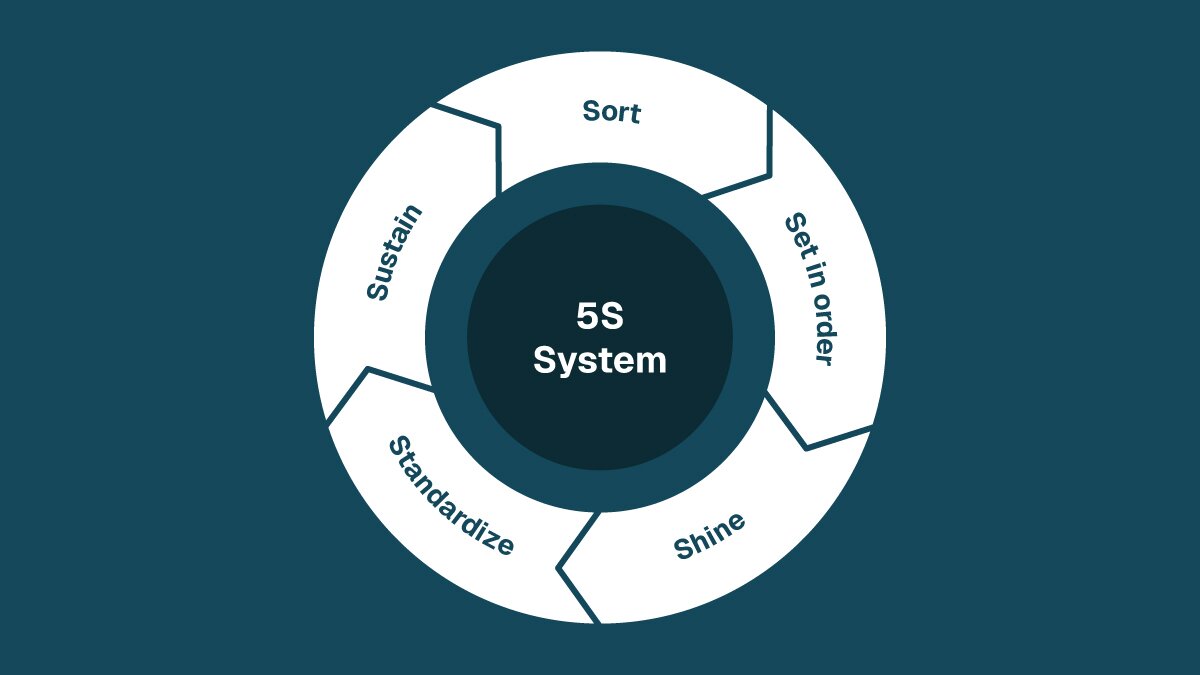
If you run a small manufacturing or maintenance operation, you know time, space, and consistency matter in every manufacturing or industrial process. That’s where the 5S system comes in. It’s not a fancy gadget; it’s a straightforward set of workplace-organization practices that cultivate clarity, efficiency, and continuous improvement. Let’s walk through what the 5S system is, why it matters, and how you can train employees in it to improve industrial efficiency, use visual management tools, and support lean manufacturing principles.
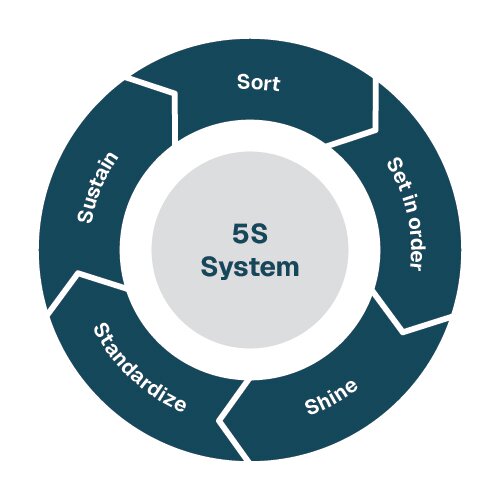
What Is the 5S System?
The 5S system is a way to organize any workspace so your team can work more efficiently, safely, and with less frustration. Originating as part of the Toyota Production System, the method is derived from five Japanese words.
| Japanese | Translation to English |
| Seiri | Sort |
| Seiton | Set in Order |
| Seiso | Shine |
| Seiketsu | Standardize |
| Shitsuke | Sustain |
Together, these steps create a clean, uncluttered environment where everything has a clear place and visual cues help guide daily routines. By reducing waste and encouraging consistent habits, 5S supports both productivity and morale in any setting, from a single workstation to an entire shop floor, while also shaping the first impression customers and visitors have of your operation.
Why the 5S System Matters for Your Business
The 5S system gives small manufacturing and maintenance teams a clear way to build a safer, more organized workplace. When every tool has a place and daily routines are consistent, work feels smoother, cleaner, and easier to manage. For many businesses, 5S becomes a practical path toward increased productivity, improved efficiency, and a stronger sense of ownership across the team.
Here are the advantages 5S helps support:
- Better use of floor space
- Fewer non-value-added activities
- Improved safety practices
- Reduced equipment downtime
- More consistent work quality
- Stronger habits that support continuous improvement
- Clear visual systems that help eliminate waste in motion, time, and materials
Together, these benefits contribute to a workplace where people spend less time hunting for tools, waiting on materials, or working around clutter, and more time staying productive. By eliminating waste and creating dependable routines, the 5S system helps teams work with fewer interruptions and greater confidence day after day.
Implementation Roadmap for Your Business
Here’s a streamlined roadmap you can adapt.
- Scope & launch—Pick a manageable area (tool crib, production cell). Set objectives: reduce motion, free floor space, improve safety.
- Sort—Identify and remove unneeded items. Use red-tagging for uncertain items.
- Set in Order—Arrange what’s left. Place tools at point-of-use, mark locations, apply visual cues.
- Shine—Clean the area, perform inspection, create cleaning routines.
- Standardize—Develop checklists, visual standards, roles & responsibilities.
- Sustain—Audit regularly, engage employees, measure results, make continuous improvements.
How to Train Employees in the 5S System
Training your team in the 5S system is critical to make it stick. Here’s how to approach it in a way that aligns with lean manufacturing principles and emphasizes workplace organization and visual management tools.
1. Introduce the concept
Start with a session so all team members understand what each "S" is in 5S—the five pillars, why you’re doing it, and what change you expect. Use real-world examples of cluttered vs. organized areas.
2. Walk the space
Pick a workstation or area and run a live example of Sort and Set in Order. Ask your team: What don’t we need? Where should this tool live? What visual cue will tell us something’s missing? Use red-tagging for items under review.
3. Establish Shine routines
Make cleaning and inspection part of the daily rhythm, not just a cleanup once in a while. When your people consistently shine the area, they begin to notice abnormalities (leaks, wear, debris) rather than ignore them.
4. Define "Standardize"
Create visual standards: labeling, floor markings, tool shadow boards, and checklists. Be explicit about who does what, when, and how. This makes organization repeatable.
5. Sustain & audit
Make 5S a habit. Set regular audits and feedback loops, and celebrate improvement. Sustaining the program keeps your gains from sliding back into disorder.
6. Track key indicators
Measure and keep track of time to locate tools, area utilization, near misses, or quality defects. Over time you’ll see improved workflow, fewer interruptions, and stronger employee ownership.
Examples of 5S in Manufacturing and Maintenance
- Tool Cribs
Shadow boards, labeled drawers, color-coded bins
- Fabrication Areas
Floor markings for welding stations, PPE storage locations, cable management
- Maintenance Shops
Red-tag corners for parts under review, checklists for daily inspection, waste-oil disposal standards
- Assembly Lines
Point-of-use tool placement, standardized work instructions, visual parts bins
Bringing It All Together
The 5S system gives small manufacturing and maintenance operations a clear, practical approach to workplace organization. By helping teams sort what they need, set tools in order, keep areas clean, and follow consistent standards, the method supports safer work, stronger productivity, and continuous improvement.
Product Compliance and Suitability
The statements contained in this guide are intended for general informational purposes only. Such statements do not constitute a product recommendation or representation as to the appropriateness, accuracy, completeness, correctness, or currentness of the information provided. Information provided in this guide does not replace the use by you of any manufacturer instructions, technical product manual, or other professional resource or adviser available to you. Always read, understand, and follow all manufacturer instructions. Portions of this article were generated in part by ChatGPT, and edited by a member of the Zoro team.
